Sunday, November 29, 2009

2009 Influenza Pandemic: Border Entry Issues

The Congressional Research Service recently prepared a report on the 2009 Influenza Pandemic for Congress. The report provides a brief overview of selected legal issues including emergency measures, civil rights, liability issues, and employment issues. The report also contains interesting snippets on inadmissibility under INA, border quarantines and border closure.

Inadmissibility of Infected Aliens

Those most easily excluded from the United States are aliens already infected with the influenza A(H1N1) virus. The Immigration and Nationality Act (INA) specifically bars aliens who are determined to have “a communicable disease of public health significance,” from receiving visas and admission into the United States. “A communicable disease of public health significance” is defined by the Secretary of Health and Human Services by regulation. Although the regulatory definition does not specifically include influenza A(H1N1), it does include, by reference, communicable diseases as listed in a Presidential Executive Order issued pursuant to section 361(b) of the Public Health Service Act. The relevant order, Executive Order 13295, as amended by Executive Order 13375, specifies “[i]nfluenza caused by novel or reemergent influenza viruses that are causing, or have the potential to cause, a pandemic” as a communicable disease for purposes of section 361(b). Thus, for purposes of the INA, the influenza A(H1N1) virus is a ground for inadmissibility into the United States. Of course, this law only applies to aliens, not citizens, and prior to inadmissibility being triggered, the alien must be diagnosed with the influenza A(H1N1) virus. These considerations could therefore prevent this provision from being the most effective means to interdict individuals infected with the influenza A(H1N1) virus from entering the country.

Border Quarantines of Citizens or Aliens

There are currently no legal provisions that can exclude American citizens from the United States solely because of an infection with a communicable disease. The primary means to prevent infected citizens from introducing these diseases into the United States is to place them into quarantine or isolation at the border rather than deny them entry outright. As noted above, the Secretary has the authority to promulgate regulations to prevent the entry and spread of communicable diseases from foreign countries into the United States. The implementing regulations at 42 C.F.R. Part 71 specify that when there is reason to believe an arriving person is infected with “any communicable disease listed in an Executive Order, as provided under section 361(b) of the Public Service Act,” the person may be isolated, quarantined, or placed under surveillance or disinfected if deemed necessary to prevent the introduction of the communicable disease. “Influenza caused by novel or reemergent influenza viruses that are causing, or have the potential to cause, a pandemic” is one such disease that can warrant quarantine.

Closing the Border

The most drastic measure discussed so far is “to close the borders.” Presumably, this would entail a blanket bar on all aliens and citizens seeking entry into the United States regardless of their health. There appear to be no laws specifically authorizing an executive agency to take such action. However, Congress could presumably enact a law to do so, at least with regard to aliens, because the Supreme Court has long recognized “the power to expel or exclude aliens as a fundamental sovereign attribute that is largely immune from judicial control. However, United States citizens cannot be barred from entering the United States. Thus, if Congress were to theoretically “close the borders,” it could do so only by excluding aliens. In the absence of an act of Congress, it may be possible for the President to “close the borders” to aliens by Executive Order. However, this course of action appears to be fraught with legal and practical challenges, which would likely result in extensive litigation. Because Congress has not given the President authority to conduct blanket closings of borders, it would appear that the President could do so only if the exclusion power is one where he has concurrent authority with Congress. Although this exclusion power is characterized as a power “exercised by the Government’s political departments largely immune from judicial control,” the President appears to have rarely exercised any authority within this realm outside of the authority expressly delegated by an act of Congress. Considering the rather extensive inadmissibility regime codified within the Immigration and Nationality Act, it would appear unlikely that the President can exercise this power without express congressional authorization.

Read the whole thing here.

Fm the Good News Dept: Mobile Computing for State

Mobile ComputingImage by angermann via Flickr

Last week, I wrote about the Hard Skills Training Center, one of the State Department’s $600 million projects with funds from the American Recovery and Reinvestment Act of 2009. There are projects funded under ARRA at FSI and also at passport offices. Part of the Capital Investment Fund for FY 2009 (Stimulus Funds) are the following projects for $33,500,000 under the IT Platform:

Project One: Diplomatic Facility Telephone Systems Replacement - $10,000,000

Project Two: Replacement of Aging Desktop Computers (Global Information Technology Modernization (GITM) - $13,000,000

Project Three: Mobile Computing - $10,500,000

I’m quite sure the replacement of telephone systems and desktop computers would be welcomed everywhere, but the third project on mobile computing and remote access will probably be the most exciting news since Colin Powell got every desk wired for Internet access in the early part of this decade.

Below is a quick summary of the project from the Department’s ARRA plan:

This project will provide technological improvements to the Department of State Mobile Computing platform, increase the number of employees that have mobile access, and ensure continuity of operations for services such as Passport, Visa, and American Citizen Services. This project contains two parallel initiatives designed to expand remote access beyond the current 16,000 employees.

The first initiative will provide all new direct hire employees (approximately 5,000) remote access capabilities in FY2009 using the current systems. The second initiative will overhaul the existing Mobile Computing platform to provide full access to the Department of State’s unclassified resources and applications.

Mobile access is a key business requirement; however, the current infrastructure and devices are limited and do not provide the full functionality that the user requires to fulfill their mission anytime/anywhere. This initiative also increases the ability of employees worldwide to telework, both in support of “green” initiatives as well as responding to a crisis that might limit movement either domestically or overseas.

Objectives

1) Provide all new direct hire employees with remote access capabilities.

2) Provide diplomats and staff with the full suite of unclassified computer applications and resources when accessing the network from a computer that is outside the Department of State’s network (e.g. home or government provided computer).

3) Increase the number mobile devices supported.

4) Increase the infrastructure to support twice the current mobile workforce.

5) Reduce the carbon footprint of Department of State by enabling more users to telework.

6) Migrate existing Mobile Computing users to the new system.

Savings/Costs

1) It is estimated that an additional $600,000 is required for FY11 and beyond due to the increased customer base for mobile computing and additional operational staff will be required.

2) These costs will be funded via the Working Capital Fund (WCF) so the out-year costs will be provided by Mobile Computing subscribers, as is the current practice.

Measures

The primary measures of project success are:

1) Increasing the number of users that have remote access to unclassified resources

2) Increasing the number of applications available to mobile computing users

Related Item: American Recovery and Reinvestment Act of 2009: External Program Plan

SFRC Report: How We Failed to Get Osama bin Laden

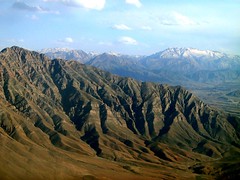
Tora BoraImage by Michael Foley Photography via Flickr

The Senate Foreign Relations Committee (SFRC) posted today its report titled “Tora Bora Revisited: How We Failed to Get Bin Laden and Why It Matters Today.” And in black and white print, it points fingers -- “the decision not to deploy American forces to go after bin Laden or block his escape was made by Secretary of Defense Donald Rumsfeld and his top commander, Gen. Tommy Franks.” Elsewhere in the report, and much harsher: “The responsibility for allowing the most wanted man in the world to virtually disappear into thin air lies with the American commanders who refused to commit the necessary U.S. soldiers and Marines to finish the job.”

You think maybe one of those guys named in the report would take to the air waves or the op-ed pages to rebut this in the next 24-48 hours? Quick excerpts below:

Fewer than 100 American commandos were on the scene with their Afghan allies and calls for reinforcements to launch an assault were rejected. Requests were also turned down for U.S. troops to block the mountain paths leading to sanctuary a few miles away in Pakistan. The vast array of American military power, from sniper teams to the most mobile divisions of the Marine Corps and the Army, was kept on the sidelines. Instead, the U.S. command chose to rely on airstrikes and untrained Afghan militias to attack bin Laden and on Pakistan’s loosely organized Frontier Corps to seal his escape routes. On or around December 16, two days after writing his will, bin Laden and an entourage of bodyguards walked unmolested out of Tora Bora and disappeared into Pakistan’s unregulated tribal area. Most analysts say he is still there today.

The decision not to deploy American forces to go after bin Laden or block his escape was made by Secretary of Defense Donald Rumsfeld and his top commander, Gen. Tommy Franks, the architects of the unconventional Afghan battle plan known as Operation Enduring Freedom. Rumsfeld said at the time that he was concerned that too many U.S. troops in Afghanistan would create an anti-American backlash and fuel a widespread insurgency. Reversing the recent American military orthodoxy known as the Powell doctrine, the Afghan model emphasized minimizing the U.S. presence by relying on small, highly mobile teams of special operations troops and CIA paramilitary operatives working with the Afghan opposition. Even when his own commanders and senior intelligence officials in Afghanistan and Washington argued for dispatching more U.S. troops, Franks refused to deviate from the plan. […] After bin Laden’s escape, some military and intelligence analysts and the press criticized the Pentagon’s failure to mount a full-scale attack despite the tough rhetoric by President Bush. Franks, Vice President Dick Cheney and others defended the decision, arguing that the intelligence was inconclusive about the Al Qaeda leader’s location. But the review of existing literature, unclassified government records and interviews with central participants underlying this report removes any lingering doubts and makes it clear that Osama bin Laden was within our grasp at Tora Bora. […] Regardless of the exact number of enemy fighters, assaulting Tora Bora would have been difficult and probably would have cost many American and Afghan lives. The Special Operations Command’s history offered this tightly worded assessment: ‘‘With large numbers of well-supplied, fanatical AQ troops dug into extensive fortified positions, Tora Bora appeared to be an extremely tough target.’’ For Dalton Fury, the reward would have been worth the risk. ‘‘In general, I definitely think it was worth the risk to the force to assault Tora Bora for Osama bin Laden,’’ he told the Committee staff. ‘‘What other target out there, then or now, could be more important to our nation’s struggle in the global war on terror?’’ […] The responsibility for allowing the most wanted man in the world to virtually disappear into thin air lies with the American commanders who refused to commit the necessary U.S. soldiers and Marines to finish the job. […] For American taxpayers, the financial costs of the conflict have been staggering. The first eight years cost an estimated $243 billion and about $70 billion has been appropriated for the current fiscal year—a figure that does not include any increase in troops. But the highest price is being paid on a daily basis in Afghanistan and Pakistan, where 68,000 American troops and hundreds of U.S. civilians are engaged in the ninth year of a protracted conflict and the Afghan people endure a third decade of violence. So far, about 950 U.S. troops and nearly 600 allied soldiers have lost their lives in Operation Enduring Freedom, a conflict in which the outcome remains in grave doubt in large part because the extremists behind the violence were not eliminated in 2001.

Read the entire report here.

Saturday, November 28, 2009

Video of the Week: Ian Goldin: Navigating our global future

As globalization and technological advances bring us hurtling towards a new integrated future, Ian Goldin warns that not all people may benefit equally. But, he says, if we can recognize this danger, we might yet realize the possibility of improved life for everyone.

Take a look at Ian Goldin's jam-packed CV and you'll see why he was appointed the first Director of Oxford University's new think tank-cum-research center, the 21st Century School: Goldin battled apartheid in his native South Africa, supported freedom movements in Chile and Nicaragua, worked as an agriculture consultant around the globe in the '80s, served as a development adviser to Nelson Mandela and, as the VP of the World Bank, led collaborations with the UN on global development strategy.

At the 21st Century School, with a diverse brigade of top researchers from the hard and social sciences, he plans to bring fresh thinking to bear on the big, looming issues of the next 100 years: climate change, disruptive technological advancements, aging, bio-ethics, infectious disease, poverty, political conflict.

"End poverty, reverse climate change, eliminate infectious diseases, stop global conflict. It sounds like a Miss World contestant's wish-list. But when Oxford University's latest baby has these aspirations as its stated goals, you have to take them rather more seriously." - John Crace, The Guardian. (Video duration: 7:07)

From ted.com | See interactive transcript of talk here.

Related links:

21st Century School

Ian Goldin’s Webpage

Friday, November 27, 2009

What Are We Doing in Afghanistan?

Hamid Karzai reviews troops of the first gradu...Image via Wikipedia

I’ll tell you but it’s off the record …

The Deputy Ambassador of US Embassy Kabul, Frank Ricciardone was apparently over at the Watson Institute for International Studies at Brown University recently for an evening lecture titled, “What Are We Doing in Afghanistan?” He sat down with The Herald staff writer Monique Vernon to talk about his life as a diplomat and about American relations with Afghanistan but requested that his lecture be “off the record.”

He was asked about his advice for students who are considering a career in foreign policy? His response:

"I had five years of being a schoolteacher in Italy and then Iran, and I’m really glad I did that rather then jumping right into federal service. You can see the world in a different way, and I think I am a better diplomat for having lived among people in Iran and all over Europe on a very low budget."

He was asked about our biggest foreign policy challenge in the AfPak region, and he had this to say:

“Our mission is to disrupt, dismantle and defeat Al Qaeda and its extremist allies in Pakistan and Afghanistan and prevent their return to either country in the future. Within that, we try to boil it down to a three-word motto, and the words that the Afghans like to hear are peace, justice and prosperity.”
He had a couple more paragraphs here.

As to why the lecture was open to the public but off the record, Ambassador Ricciardone gave a nice spin that sounds reasonable enough:

"There is kind of a custom, an interface between government and diplomacy and academia … It’s good to have that freedom where I don’t have to worry about someone extracting something and making a headline out of it at a moment of intense public interest in the foreign policy question of Afghanistan. I am a government official after all, and … I need to take great care that I faithfully represent the programs and the policies of the United States of America.

I thought that by making it off the record we could have a slightly more candid conversation with the question and answer part. Especially being around students as bright as Brown students are, I wanted to be able to give everyone a freer reign … It adds a level of protection, I think, for the decision-makers (in Washington)."

Huh? Read the entire Q&A here.

Did “gotcha journalism” cross his mind when he thought “bright Brown students?”

I am trying hard to be sympathetic to Ambassador’s Ricciardone’s position here. But I am having a mighty hard time. Here is one of our top career diplomats talking about what is currently our top foreign policy engagement. I am wondering on the purpose of giving a lecture titled “What Are We Doing in Afghanistan?” if one can only explain it off the record to a limited number of seats populated by Brown University students?

“Someone extracting something…” well now, how can one not extract a bite given this President’s position on transparency and open government? The question I have is really quite simple. How can one engage the public effectively on Afghanistan given that a simple lecture is treated like an NIE?

As to adding a level of protection “for the decision makers (in Washington)” – whoops! Sorry, I think I fell off my chair when I read that.

Ambassador Neumann on Corruption in Afghanistan

Ronald E.Image via Wikipedia

"Corruption in Afghanistan has evolved over the years of war. Senior leaders taking a cut of projects may not be liked but the practice is long standing and has not traditionally sparked enormous discontent. But the years of warfare have produced a much more wide spread corruption in the society. When there is a pervasive sense of insecurity, when officials are not sure their government will continue, wonder whether they may have to flee to exile and lack any reason to believe they will ever enjoy a pension or even a living wage there is every incentive to profit from any position to safeguard themselves, their families and their friends. Without confidence in the future there is no basis for a sense of civic duty. This is the situation we face today. If every corrupt official were fired tomorrow I have no reason to doubt that the problem would shortly reemerge with the new cadre. This is not a counsel of despair. Other societies have emerged from prolonged period of instability. But it is a reminder that change will be slow and difficult and there are no silver bullets on single policy choices that will provide rapid change. In doing so we will have to pay attention also to the frequent assertions that our and other donors aid is fueling corruption through the actions of contractors and their interaction with Afghan subsidiaries."

Ronald E. Neumann US Ambassador to Afghanistan ((2005-2007) Testimony at the Subcommittee on National Security and Foreign Affairs Committee on Oversight and Government Reform November 17, 2009

Reconsider the Role of the PRTs?

Col. Mark Fields, commander, 189th Infantry Br...Image via Wikipedia

Gilles Dorronsoro, a Visiting Scholar at the Carnegie Endowment for International Peace gave a testimony last week at the Subcommittee on National Security and Foreign Affairs Committee on Oversight and Government Reform. Part of his testimony questions the role of the PRTs in Afghanistan; something that frankly, I have not heard brought up before. The prevailing wisdom seems to be that this war cannot be won militarily and that we need the civilians over there pronto. Since we are ramping up the civilian uplift with 974 additional personnel in the next couple of months, the question about the role of the PRTs in Afghanistan is an interesting and relevant one. Below is an excerpt:

Development is not the key in Afghanistan. The Afghans do not choose their political allegiances based on the level of aid. Economic aid is not a practical way to gain control of a territory, and it plays a marginal role in the war. Rather, whoever controls the territory is the most important factor in Afghans’ political allegiances. In other words, development must come after military control in the strategic areas, as a consolidating process. Aid is also not instrumental in ddressing the central issues of an exit strategy. Development should be territorially concentrated in the strategic areas, where it can reinforce the institutions.

If this analysis is correct, the Coalition should reconsider the role of the Provincial Reconstruction Teams (PRTs). What is their supposed strategic impact? I would argue that the PRTs are ineffective in state building and also of limited utility in preparing for withdrawal; hence, they should not be a priority. The PRT concept is technically useful in some cases, but it is a long-term liability for Western forces because it takes the place of the Afghan state, marginalizing Afghan players. If Western troops are in charge, there is no reason not to give civil operations to real NGOs or Afghan institutions. Moreover, the PRTs are unable to significantly change the perceptions of the Afghan population. Local populations are essentially dependent on whoever controls the territories in which they live.

Read the whole statement here.

Thursday, November 26, 2009

Happy Thanksgiving!

Diplopundit wishes you a Happy Thanksgiving with loved ones and good friends! The ISS astronauts send their greetings from space. Aboard the International Space Station, Expedition 21 Flight Engineers Jeff Williams and Nicole Stott of NASA demonstrated some of the food they will enjoy on Thanksgiving Day and shared their thoughts on the holiday season from 220 miles above the Earth.

Video from NASAtelevision

Wednesday, November 25, 2009

SFRC Website Finally Gets a Make Over, Sort Of

Screen Capture of New SFRC Website

The much awaited make-over of the Senate Foreign Relations Committee page is finally here. The new website looks classy, has a better layout than the previous one and much better photos (except that they’re still using Senator Lugar’s old photo). The main page includes a welcome message from the SFRC Chairman, photos of both the chairman and the ranking member on its landing page, as well as the names of committee members and the list of subcommittees. It has links to the hearings page, and the press sites for both the chairman and the ranking member. The “About” page includes links to Committee History and Committee Rules and Jurisdiction.

There is a link to the contact page at the very bottom of each page. But don’t get your hopes up because it looks like a “cut and paste” thingy from the previous website:

U.S. Senate Committee on Foreign Relations 446 Dirksen Senate Office Building Washington, DC 20510-6225

Majority Phone: (202) 224-4651 Minority Phone: (202) 224-6797 For internship information with the Majority Office, please send email to democrat_interns@foreign.senate.gov. For internship information with the Minority Office, please send email to katie_lee@foreign.senate.gov.

Back in February Brian Young, the new webmaster on the Senate Foreign Relations Committee staff had a piece on TPM about updating the SFRC website. Part of what he posted at TPM below:

Because we're not just looking to spruce up the website, drag it into the 21st century with links to press releases, video of hearings, etc, etc. We want to do more than that; we want to create a website worthy of the Committee. Of all Committees in Congress, this is the one most suited for a powerful, interactive website. This is a priority for Senator Kerry. He hired me with this in mind. He wants a site that creates a portal into the foreign policy deliberations this nation needs to have to meet the challenges of the 21st century.

This site will be designed to involve people in a conversation about the future of this country's foreign policy.

I don’t know if this site has been officially rolled out. My old link just went dark and so I had to look this up. I can find the links to the prepared testimonies but can find no links to the hearing videos at this time nor any of the promised “interactive” thingies.

Something that would also not make the general constituents happy is the absence of a a real contact page for the committee staff. I hope this is still a work in progress.

Recently somebody wrote to us about a certain ambassadorial nomination. When told to contact the SFRC, the writer complained that he/she had already contacted the senator representing his/her state. And that trying to contact the chairman or the ranking member of the SFRC was almost impossible. The offices wanted to know if you’re a constituent before they talk to you. I can understand the need for this when it comes to the individual offices of the senators. But the Committee has its own staff; can’t they – you know, assign a catch-all email or a fax number for the interested public?

Related Post: SFRC Website Make Over - When?

Hard Skills Training Center at Old Smelting Plant Site?

The emblem of Recovery.gov, the official site ...Image via Wikipedia

Our blog friend TSB over at The Skeptical Bureaucrat recently had an interesting post on the Contaminated Industrial Site Proposed for Diplomatic Security Training Center.

A local official was quoted saying "Given that Eastalco was there smelting aluminum and there was enough of a buffer," the 150-acre training center in the middle of a 2,000-acre site shouldn't be a problem.”

TSB’s translation: “By which he apparently meant that the training center's presence shouldn't bother local residents because the center will be right smack in the middle of the hazardous waste left behind by decades of aluminum smelting, and not close to them. Whether that should be a problem for the hundreds of DSS employees who would work and train at the center, Delegate Weldon didn't say.”

The site can be cleaned up for a mere cost of roughly $200 million -- “sufficiently to use it as a landfill.” Politicians are getting into the act, lobbying for the center to be built in their own backyards. Read TSB’s whole post here. Also read this on Eastalco’s plan on marketing the site for new uses.

The State Department is overseeing $600 million of investment for seven projects and a funds transfer to the U.S. Agency for International Development (USAID) under the American Recovery and Reinvestment Act of 2009. The training center at issue here is the Hard Skills Training Center, one of its seven projects. The plan calls for its location within 150 miles of Washington, D.C., The Eastalco site is located about 45 miles from D.C.

Here is State Department’s summary for the training center:

Construct a training facility capable of supporting hard skills security-related training for the Department and the wider foreign affairs community. The existing security training infrastructure is not sufficient to meet current and projected training needs. Recovery Act funds along with regular Worldwide Security and Protection (WSP) appropriated funds will enable the Department to construct a hard skills training campus that meets the increased demand for security training and makes the delivery of security training more efficient than the current arrangement of 15 separate locations throughout the United States. Specifically, the Foreign Affairs Counter Threat course, already mandated for federal employees assigned to only five specific posts, will be expanded to include all critical and high threat posts worldwide. This project will enable the Department to provide vital security training to law enforcement and security staff and all foreign affairs employees; especially those assigned to critical and high threat posts.

This hard skills training facility will use both ARRA stimulus funds and WSP funding. Currently, the Department has $105.5 million programmed to support this project ($70 M ARRA, $17.55M FY 2009 WSP, and another $18M in WSP) in FY2009. Subsequent phases of the project will be funded through WSP. The FY 2010 budget request seeks an additional $12.5M to bring annual WSP funding for this project to $30 million/year. As requested in the joint explanatory statement accompanying the Department of State, Foreign Operations, and Related Programs Appropriations Act, 2008 (Div. J, P.L. 110-161), the Department produced a report in May 2008 outlining the Department’s increased need for security training and provided the initial project concepts for a training facility as part of a consolidated security training complex. The report called for the development of a master plan starting with an Architectural & Engineering (A&E) study to help frame the project scope, cost and timelines. Those initial project studies will be completed with ARRA and WSP funds.

In addition, ARRA and FY 2009 WSP funds will be used to complete Phase 1 of the training facility. The consideration and funding of any possible future phases will be subject to annual funding availability and prioritization in the annual budget process. The project concept is to deliver functioning training facilities at the completion of each phase of the project and not have any partially completed training venues.

The State Department is also using ARRA funds for a Data Center – “The Data Center program ($120 million) will build an enterprise data center in the western United States and consolidate all domestic servers into four enterprise data centers.”

I wonder if anyone is interested in pitching for that...

Warning on Espionage Got China’s Attention

Non-Imperial Chinese dragon in ShanghaiImage via Wikipedia

AP report: China Slams US Report Warning Of Spying By Beijing (via HuffPo). The report that got the sleeping dragon’s attention is the U.S.-China Economic and Security Review Commission’s Annual Report to Congress which was released last week. The Report cites trends for U.S. economic and national security interests, and offers 42 recommendations for Congressional action. On US-China trade and economic relationship, the report says:

“China’s trade surplus with the United States remains near record levels, despite the global economic slowdown that has reduced imports from other nations. While the U.S. trade deficit in goods with China through August 2009 was $143.7 billion, representing a decline of 17.6 percent over the same period in 2008, China now accounts for an increasing share of the U.S. global deficit in goods. By September 2009, China had accumulated more than $2.27 trillion in foreign currency reserves.”

Not really surprising, is it? But the part that presumably offended China appears to be the following conclusions from the Committee report:

China’s Human Espionage Activities that Target the United States, and the Resulting Impacts on U.S. National Security

  • The intelligence services of the Chinese government are actively involved in operations directed against the United States and against U.S. interests. China is the most aggressive country conducting espionage against the United States, focusing on obtaining U.S. information and technologies beneficial to China’s military modernization and economic development.

  • Some of the espionage carried out on behalf of China is conducted by nonprofessional collectors. These nonprofessional collectors may be motivated by profit, patriotism, feelings of ethnic kinship, or coercion. Even in many cases where there is no obvious direct state involvement in the theft or illegal export of controlled technology, the Chinese government encourages such efforts and has benefited from them.

  • Recent cases of espionage involving China show evidence of more focused efforts at information collection employing sources outside of the Chinese-American community.

  • Chinese operatives and consular officials are actively engaged in the surveillance and harassment of Chinese dissident groups on U.S. soil.

The AP report did not say if the Chinese also protested on the Commission's report on its cyber activities:

China’s Cyber Activities that Target the United States, and the Resulting Impacts on U.S. Security Interests

  • The quantity of malicious computer activities against the United States increased in 2008 and is rising sharply in 2009; much of this activity appears to originate in China.

  • The direct attribution of such activities targeting the United States presents challenges due to hackers’ ability to conceal their locations. Nonetheless, a significant and increasing body of circumstantial and forensic evidence strongly indicates the involvement of Chinese state or state-supported entities.

  • The Chinese government has institutionalized many of its capabilities for computer network operations within elements of the People’s Liberation Army. The PRC is also recruiting from its growing population of technically skilled people, including those from the private sector, to increase its cyber capabilities. It is recruiting skilled cyber operators from information technology firms and computer science programs into the ranks of numerous Information Warfare Militia units.

  • China’s peacetime computer exploitation efforts are primarily focused on intelligence collection against U.S. targets and Chinese dissident groups abroad.

  • In the early stages of a conflict, the PLA would employ computer network operations against opposition government and military information systems.

  • Critical infrastructure in the United States is vulnerable to malicious cyber activity. Chinese military doctrine calls for exploiting these vulnerabilities in the case of a conflict.

The Commission has 10 key recommendations to Congress including the following:

Meeting the rising challenge of Chinese espionage. The Commission recommends that Congress assess the adequacy of resources available for intelligence, counterintelligence, and export control enforcement programs to ensure that U.S. government agencies are able to meet the rising challenge of Chinese human intelligence and illicit technology collection.

Ensuring adequate funding to respond to computer exploitation and computer attacks. The Commission recommends that Congress assess the effectiveness of and resourcing for law enforcement, defense, and intelligence community initiatives that aim to develop effective and reliable attribution techniques for computer exploitation and computer attacks.

The complete list of 42 recommendations appears at the Report’s conclusion on page 325.

The Commission was created on October 30, 2000 by the Floyd D. Spence National Defense Authorization Act for 2001. Its purpose: To monitor, investigate, and submit to congress an annual report on the national security implications of the bilateral trade and economic relationship between the United States and the People’s Republic of China, and to provide recommendations, where appropriate, to Congress for legislative and administrative action. Public Law 109-108 directs the Commission to focus its work and study on the following eight areas: proliferation practices, economic transfers, energy, U.S. capital markets, regional economic and security impacts, U.S.-China bilateral programs, WTO compliance, and the implications of restrictions on speech and access to information in the People’s Republic of China.

Related Items:

  • View the complete report. (PDF)
  • Executive Summary (PDF)

Squirrels Are Us?

Squirrel eating nutsImage by Lynoure via Flickr

Edmund Andrews reported over the weekend on the Wave of Debt Payments Facing U.S. Government (NYT | November 22, 2009):

The United States government is financing its more than trillion-dollar-a-year borrowing with i.o.u.’s on terms that seem too good to be true.

But that happy situation, aided by ultralow interest rates, may not last much longer. Treasury officials now face a trifecta of headaches: a mountain of new debt, a balloon of short-term borrowings that come due in the months ahead, and interest rates that are sure to climb back to normal as soon as the Federal Reserve decides that the emergency has passed. […] The problem, many analysts say, is that record government deficits have arrived just as the long-feared explosion begins in spending on benefits under Medicare and Social Security. The nation’s oldest baby boomers are approaching 65, setting off what experts have warned for years will be a fiscal nightmare for the government.

“What a good country or a good squirrel should be doing is stashing away nuts for the winter,” said William H. Gross, managing director of the Pimco Group, the giant bond-management firm. “The United States is not only not saving nuts, it’s eating the ones left over from the last winter.”

But Nobelist Paul Krugman calls it The Phantom Menace.

Cyril the squirrel up for a challenge 15:54:50Image by exfordy via Flickr

Still -- a tad scary, I supposed, when one realize a simple thing. It’s not only that we’re not saving nuts, or munching the bad ones left from last winter for that matter, but that we’re also giving “our” nuts away …

See -- there’s also Jon Boone in Kabul with more worrisome news from Afghanistan. He’s reporting that we are pouring millions into anti-Taliban militias in Afghanistan (Guardian | November 22, 2009). Apparently the Special Forces are funding fighters in Afghanistan and there are fears the strategy could further destabilize Afghanistan. “According to some western officials, the US government will make a pot of $1.3bn (£790m) available for the programme, although the US embassy said it could not yet comment on CDI.” He also writes that “senior generals in the Afghan ministries of interior and defence are also worried about what they see as a return to the failed strategies of the Soviet Union during its occupation of Afghanistan.”

Wait, wait a minute! Didn’t the we armed the somebodies out there in the 1980s against the Soviet occupation? What? We're not supposed to talk about that? The Guardian also reports that “in return for stabilising their local area the militia helps to win development aid for their local communities, although they will not receive arms, a US official said.”

How sure are we that they will not turn their aid money into arms to shoot at our guys?

This is just so, so confusing.

But I do feel sorry for squirrels like us. Are we ever going to enjoy our nuts again in peace like normal squirrels? Or is this as good as it gets?

Tuesday, November 24, 2009

There are families at US Embassy Kabul?

Scientific classification of living things use...Image via Wikipedia

Secretary Clinton’s US Embassy Kabul meet and greet last week was labeled a “Meet and Greet at Embassy Kabul with Employees and Their Families.” This almost gave the impression of “normal” with dependent family members in the warzone.

Of course, family denotes the traditional basic unit consisting of two parents and children or spouse and children, or the not so traditional one parent/child/ren composition. As far as I know, the US Embassy in Kabul is still a fully unaccompanied post. Well, unaccompanied except for the ambassador’s wife, Ching Eikenberry and the spouse of the deputy ambassador, Dr. Marie Ricciardone. Both are reportedly working for the US mission in Kabul. Are there any other spouses, senior or otherwise, working at the mission there? Are there children in Kabul? Or is that post still, really for adults only and the title of the meet and greet was simply a "cut and paste" lapse?

I see that Liz of Nick and Liz Go Global will be joining Nick in Kabul in late November. But other than those couples, I don’t really know how many family members are on official orders in Kabul (local employees excepted).

There are six fully unaccompanied posts in the Foreign Service, according to the FSJ in March 2009: Baghdad, Kabul, Islamabad, Karachi, Lahore, and Peshawar. The adult family member is able to accompany the employee if he/she is authorized by the Under Secretary for Management. But this is on a case by case basis. I understand that the adult family member must secure employment at the mission before authorization is granted.

In any case, if you are a spouse and looking for a job in Kabul – there are about 170 jobs posted for Afghanistan right now. A bunch of the jobs are on Limited Noncareer Appointment (LNA), which is usually what you get when you work at any overseas mission, anyway. These positions are limited in time – usually for about one year. But your employee-spouse will most probably be on a one-year assignment to Afghanistan, too.

Terror Charges: From Minneapolis to Somalia

Muslims in Mumbai protest against terrorismImage by Bird Eye via Flickr

Yesterday, terrorism charges were unsealed in the District of Minnesota against eight defendants. According to the charging documents, the offenses include providing financial support to those who traveled to Somalia to fight on behalf of al-Shabaab, a designated foreign terrorist organization; attending terrorist training camps operated by al-Shabaab; and fighting on behalf of al-Shabaab.

The charges were announced November 23 by David Kris, Assistant Attorney General for National Security; B. Todd Jones, U.S. Attorney for the District of Minneapolis; and Ralph S. Boelter, Special Agent in Charge of the Minneapolis field office of the Federal Bureau of Investigation.

"The recruitment of young people from Minneapolis and other U.S. communities to fight for extremists in Somalia has been the focus of intense investigation for many months," Assistant Attorney General Kris said. "While the charges unsealed today underscore our progress to date, this investigation is ongoing. Those who sign up to fight or recruit for al-Shabaab’s terror network should be aware that they may well end up as defendants in the United States or casualties of the Somali conflict."

According to court documents, between September 2007 and October 2009, approximately 20 young men, all but one of Somali descent, left the Minneapolis area and traveled to Somalia, where they trained with al-Shabaab, a designated terrorist organization. Many of them ultimately fought with al-Shabaab against Ethiopian forces, African Union troops, and the internationally-supported Transitional Federal Government (TFG).

Court documents also state that the first group of six men traveled to Somalia in December 2007. Prior to their departure, the six men, as well as others in the Minneapolis area, raised money for the trips and held meetings in which they made phone calls to alleged co-conspirators in Somalia.

Upon arriving in Somalia, the men from Minneapolis allegedly stayed at safe-houses in Somalia and attended an al-Shabaab training camp. The al-Shabaab training camp included dozens of other young ethnic Somalis from Somalia, elsewhere in Africa, Europe and the United States. Purportedly, the trainees were trained by, among others, Somali, Arab and Western instructors in the use of small arms, machine guns, rocket-propelled grenades and military-style tactics. Allegedly, the trainees also were indoctrinated with anti-Ethiopian, anti-American, anti-Israeli and anti-Western beliefs.

According to court documents, on Oct. 29, 2008, Shirwa Ahmed, one of the men who left Minnesota in December 2007 and attended the al-Shabaab training camp, took part in one of five simultaneous suicide attacks on targets in northern Somalia. The attacks appeared to have been coordinated. Shirwa Mohamud Ahmed, also known as "Shirwa," drove an explosive-laden Toyota truck into an office of the Puntland Intelligence Service in Bossasso, Puntland. Other targets included a second Puntland Intelligence Service Office in Bossasso, the Presidential Palace, the United Nations Development Program office and the Ethiopian Trade Mission in Hargeisa. Including the suicide bombers, approximately twenty people were killed in the attacks.

Read the whole thing here.

Vice Consul James Hogan: 1,440 Hours Missing

Now that's what I call missing.Image by robpatrick via Flickr

US Vice Consul James Edward Hogan disappeared on the night of September 24. He was reported missing by his wife, the following day. As of today, he has been missing for 60 days with no new report on the development of the search in the Netherlands Antilles. He has now been missing for 1,440 hours.

It seems like the only site that still continues to track news of his disappearance is the Scared Monkeys Missing Persons Site.

The State Department addressed the disappearance of Mr. Hogan, from best I could tell, on three occasions during the Daily Press Brief in October.

Daily Press Briefing - October 1

Daily Press Briefing - October 2

Daily Press Briefing - October 5

An email inquiry sent to Timothy J. Dunn, the Chief of Mission/Consul General at the US Consulate General in Curacao has not been returned. Nothing on its website indicates that one of its three officers has gone missing or that there is a search going on.

In contrast, when US Defense Attaché, Thomas Mooney disappeared from the US Embassy in Cyprus on June 28, 2007, the U.S. Embassy there issued a public appeal for information on the whereabouts of Colonel Mooney. The NYT reported that “an announcement posted on the embassy’s Web site urged anyone with information “which might be helpful in locating him” to contact the police.”

And at the sad conclusion of LTC Thomas Mooney’s disappearance, then Ambassador Ronald Schlicher released an official statement also posted on its embassy’s website.

Monday, November 23, 2009

Quickie: Senator LeMieux, Brazil is Waiting

Today’s editorial of The Miami Herald calls on the state’s newbie Senator LeMieux to release his hold on the nomination of Thomas Shannon to be US Ambassador to Brazil. Excerpts below:

Unblock ambassador nomination OUR OPINION: Sen. LeMieux should allow Senate vote on nominee for Brazil post When George LeMieux was appointed three months ago to replace retiring U.S. Senator Mel Martinez, the 40-year-old former chief of staff to Gov. Charlie Crist vowed to focus on making government more efficient and effective. He has a strange way of going about it.

In his first foray into foreign affairs, Sen. LeMieux has placed a ``hold'' on the nomination of President Obama's choice to become ambassador to Brazil, putting a freeze on the Senate confirmation process. This ensures that U.S. relations with the largest country in Latin America are neither efficient nor effective. […] ``I feel like I have a role and a responsibility far greater than other senators do in terms of anything that deals with Latin America,'' he said.

If that's the case, he would not stand in the way of this nomination. Brazil, the fifth most populous country in the world, is the most influential nation in our region, an economic powerhouse and Florida's No. 1 trading partner overseas -- by far. […] Sen. LeMieux has an obligation to either raise specific, serious questions about Mr. Shannon or allow the nomination to go forward. The U.S. relationship with Brazil is too important to be undermined by domestic political squabbles.

Read the whole thing here.

Ambassador David Jacobson: Applicant for the Day

I have seen this done in some overseas mission, usually for new consular officers just starting out on their first tours at a Consular Section. They go through what is often called the “Applicant for the Day” routine. The routine is part of section’s training program to acquaint new officers with the process that applicants go through when they apply for consular services. But this is the first time I’ve heard of an ambassador try out the routine and blog about it.

From Ambassador Jacobson’s post: November 13, 2009 — Ottawa

Like many of you in Ottawa, and in other large cities in Canada, I had seen lines of people waiting outside US Embassies or Consulates holding packets of papers. Today I joined the line to find out for myself what people experience when they come to our Embassy for consular services. For U.S. citizens this typically means coming for passports or other documents and for non-Americans it means visas. (Generally, Canadians do not need visas to go to the U.S. So most of our consular work in Canada is for people from third countries who are here in Canada and who need US visas.) Consular services are the aspect of our work that most directly impacts people’s lives. In responses to my blog, many of you have asked me several questions about our consular services. I wanted to see what “applicants” see. So I became an applicant for the day. I went through the security screen, which is similar to the screening at airports. I saw where people pay the required fees and where they are interviewed by the American consular officers. I even took part in a brief interview myself. Although the consular process is rigorous, the consular staff made every effort to be friendly, efficient, and thorough.

It's not every day that you hear an ambassador pitch for the consular section, or visit it for that matter. Now if you can get all ambassadors to go through this routine from Albania to Zimbabwe, that would go a long way in making post leadership understand the challenging and demanding work done at the Section. And I don't mean just the political ambassadors but also career appointees -- even if career ambassadors have once done their consular tours twenty years ago. The Wang computers, the microfiche, the Burroughs machine that they may remember from all those years are all things for the visa museum now. Continue reading the ambassador's post here.

Espionage Conspiracy: Myers Couple Pleads Guilty

31/03/2008 (Day 2.91) - EspionageImage by Kaptain Kobold via Flickr

The Department of Justice announced on November 20 that a former State Department Official and his wife have pleaded guilty in a 30-year espionage conspiracy:

A former State Department official and his wife have pleaded guilty to federal charges stemming from their roles in a 30-year conspiracy to provide classified U.S. national defense information to the Republic of Cuba. […] At a hearing before Judge Reggie B. Walton, defendant Walter Kendall Myers, 72, aka "Agent 202," pleaded guilty to a three-count criminal information charging him with conspiracy to commit espionage and two counts of wire fraud. His wife, Gwendolyn Steingraber Myers, 71, aka "Agent 123," and "Agent E-634," pleaded guilty to a one-count criminal information charging her with conspiracy to gather and transmit national defense information.

As part of his plea agreement, Kendall Myers has agreed to serve a life prison sentence and to cooperate fully with the United States regarding any criminal activity and intelligence activity by him or others. As part of her plea agreement, Gwendolyn Myers has agreed to serve a sentence of between six and seven and a half years in prison and to cooperate fully with the United States.

Both defendants have agreed to the entry of a monetary judgment against them in the amount of $1,735,054. The assets that will be forfeited to the government towards satisfaction of that judgment include: an apartment in Washington, D.C., a 37-foot sailing yacht, a vehicle, and various bank and investment accounts.

According to the plea agreements, factual proffers and other documents filed in court today by the United States:

Kendall Myers began working at the State Department in 1977 as a contract instructor at the Department’s Foreign Service Institute (FSI) in Arlington, Va. After living briefly with Gwendolyn in South Dakota, he returned to Washington, D.C., and resumed employment as an instructor with FSI. From 1988 to 1999, in addition to his FSI duties, he performed work for the State Department’s Bureau of Intelligence and Research (INR). He later worked full-time at the INR and, from July 2001 until his retirement in October 2007, was a senior intelligence analyst for Europe in INR where he specialized on European matters and had daily access to classified information through computer databases and otherwise. He received a Top Secret security clearance in 1985 and, in 1999, his clearance was upgraded to Top Secret / SCI.

Gwendolyn Myers moved to Washington, D.C., in 1980 and married Kendall Myers in May 1982. She later obtained employment with a local bank as an administrative analyst and later as a special assistant. Gwendolyn Myers was never granted a security clearance by the U.S. government.

Read the whole thing here including the background of the case, the CuIS recruitment, and the undercover operation that lead to the couple’s arrest.

Related Post: Alleged Cuban Spies Fall for a Cigar

Related Item: Cryptome: USA v. Walter and Gwendolyn Myers Page

Sunday, November 22, 2009

JFK - November 22, 1963

Forty-six years ago today, President John F. Kennedy was assassinated in Dallas, Texas at 12:30 p.m. Central Standard Time.

Below is an audio excerpt featuring CBS-TV anchorman Walter Cronkite as he eloquently signs off the air on 11/25/63, the day of President John F. Kennedy's funeral. "[And] that's the way it is....Monday, November 25th, 1963."

Many more videos devoted mainly to the 35th President of the United States, John F. Kennedy are in the You Tube channel of David Von Pein.

Saturday, November 21, 2009

Video of the Week: Pranav Mistry's Trilling SixthSense Technology

The Minority Report comes to life! Spectacular and smashingly exciting - imagine dialing a phone using your palm, or checking out the time in a clock you've just drawn on your wrist! At TEDIndia, Pranav Mistry demos several tools that help the physical world interact with the world of data -- including a deep look at his SixthSense device and a new, paradigm-shifting paper "laptop." In an onstage Q&A, Mistry says he'll open-source the software behind SixthSense, to open its possibilities to all. (Video duration 13:51)

Pranav Mistry is a PhD student in the Fluid Interfaces Group at MIT's Media Lab. Before his studies at MIT, he worked with Microsoft as a UX researcher; he's a graduate of IIT. Mistry is passionate about integrating the digital informational experience with our real-world interactions.

Some previous projects from Mistry's work at MIT includes intelligent sticky notes, Quickies, that can be searched and can send reminders; a pen that draws in 3D; and TaPuMa, a tangible public map that can act as Google of physical world. His research interests also include Gestural and Tangible Interaction, Ubiquitous Computing, AI, Machine Vision, Collective Intelligence and Robotics.

From ted.com. The interactive transcript of talk is here.

Updated: 11/23: See Fareed Zakaria’s clip on TED, SixthSense, and India as Innovation Nation.