Friday, April 30, 2010

A Collection of 2010 Crime and Safety Reports (Laos, Mexico, Indonesia, El Salvador, Sudan, Bahamas, Niger, Burkina Faso)

I think US Embassy Laos' 2010 Crime and Safety Report deserves an award for Simple English and Straight-forward Reporting:

Laos 2010 Crime & Safety Report
East Asia / Pacific - Laos |23 Apr 2010

Crime Threats
Bag snatching, residential/guesthouse room thefts, and arrests by police to extort money are among the most common crimes in Laos.

Road Safety
Motorcycle riding is extremely dangerous.  Driving between cities at night is extremely dangerous due to night hazards (cars/animals, people in middle of road sleeping, blind turns and high cliffs in mountainous regions).

Industrial and Transportation Accidents
There are numerous reports of buses getting into accidents while transiting between cities. There have also been frequent (about once a year) plane crashes by Lao Airlines.  There is no railroad in Laos.

Civil Unrest
Civil unrest is illegal in Laos.

Kidnappings
The only kidnappings are by police to extort money

How to Handle Incidents of Police Detention or Harassment
There is no concept of “Rule of Law” within Laos.  It would be better to say that there is an environment where the population is expected to pay for the police’s protection and involvement.  If the police detain you, refusing to negotiate a settlement will most likely only cause more police involvement, which will cost you more in the long run. 


I don't know about you, but after somebody threw a dangerous device at US ConGen Nuevo Laredo, we are tempted to give the following report the Most Understated Reporting Award:

Mexico 2010 Crime & Safety Report: Nuevo LaredoAmericas - Mexico | 20 Apr 2010
The security situation along the U.S.-Mexican border remains fluid and unpredictable. In contrast to the violence seen in the border cities of Tijuana and Ciudad Juarez, Nuevo Laredo has continued to show a drop in violent crimes in recent years. However, this is due in large part to one cartel maintaining a firm grip on organized crime within the city. While reports of violent crimes and kidnappings have considerably decreased from years past, the threat of violence remains. Visitors traveling in this area have been victims of armed robberies, sexual assaults, auto thefts, and kidnappings. Although there is no indication that U.S. citizens are being specifically targeted, they too have been victims of such crimes.


US Embassy Jakarta's 2010 report is Most Enlightening in terms of the size of the AmCit communities in the country and their security precautions:

Indonesia 2010 Crime & Safety Report
East Asia / Pacific - Indonesia |19 Apr 2010
Crime can be a problem in Indonesia, particularly in major urban centers like Jakarta and Surabaya, but it did not significantly affect the American community in 2009.  This may be a result of the continued security awareness of many official and private American citizens due to the ongoing terrorism threat in Indonesia.  Most American businesses have active security briefing programs with full-time professional security officers familiar with the latest criminal trends.  Considering the size of the official and private American communities (current consular data show 23,000 American residents in Indonesia), there were few reports of crimes against Americans in 2009.

The Most Graphic and Number Intensive report goes to US Embassy San Salvador's 2010 Crime Report. See Jesus Flores: The Hidden El Salvador for the most extensive photo essays on crime and security in the country.  I understand that the photographer is an EFM who was assigned to El Salvador a couple years back.  Here is his blog; which does not mention any connection to the official community. 


El Salvador 2010 Crime & Safety Report
Americas - El Salvador | 20 Apr 2010
El Salvador is considered one of the most violent countries in the world. The threat of violent crime within San Salvador, including the neighborhoods in which many U.S. citizens live and work, increases isolation and impinges upon recreational activities. Crimes of every nature occur throughout the country; unfortunately, daylight is not a deterrent for criminals.

A country of roughly 5.8 million people, El Salvador has street gangs totaling more than 25,000 members.  Violent, well-armed,street gangs continue to grow in El Salvador. Los Angeles' 18th Street and the Mara Salvatrucha, or MS-13, are the largest gangs in the country. Gangs concentrate on extortion, narcotics, arms trafficking, murder for hire, car jacking, and violent street crime. Gang members and other criminal elements roam freely, day and night, targeting affluent areas for burglaries. Gang members are quick to engage in violence, even when resistance is offered. Many gangs are now comprised of unemployed youth who do not hesitate to use deadly force when perpetrating crimes. The U.S. government is working with the government of El Salvador to combat the country’s gang problem.

 Due to lax customs enforcement and porous borders, weapons are readily available and easily obtained by criminals, gangs, and anyone else who wishes to obtain them. The number of illegal weapons on the streets is estimated at 400,000; including AK-47s and M-16 assault rifles, various handguns, grenades, and military grade weaponry. The number of weapons caches, with non-decommissioned weapons that survived the civil war, is unknown. Crimes committed by criminals armed with automatic weapons are routine.

Generally, U.S. interests and citizens are not specifically targeted  by criminals, but they are not exempt from crimes either. Most members of the U.S. private sector are able to conduct their daily activities without security-related incidents by following basic security precautions.
[...]
The homicide rate in El Salvador for 2009 was 37 percent higher than 2008. The total number of homicides nationwide in 2009 was 4,365. This represents an average of 12 homicides per day. Other statistics are based on crimes reported by victims and those statistics vary widely among El Salvadorian government agencies. Nevertheless, the overall crime reports received by the police in 2009 were eight percent higher than 2008.


We are somewhat familiar with Sudan from Facts Are Strictly Optional but we did not realized that it is also a "must carry laminated card with you at all times detailing a request to take you to a hospital with higher standards" place.

Sudan 2010 Crime & Safety Report
Sub-Saharan Africa - Sudan | 21 Apr 2010
Sudan is a country of contrasts pertaining to crime. North and central Sudan, including Khartoum, experience relatively low crime rates compared to capital cities in sub-Saharan Africa. The U.S. Embassy has almost no crime reports against Americans in north and central Sudan.  However, in Darfur carjacking of non-governmental organizations (NGO) and UN vehicles by militia groups was reported almost daily until many organizations discontinued use of pick-up trucks and four-by-four sport utility vehicles in late 2008. Most organizations now rent secondhand, sub-compact sedans or minivans from private owners.  Such vehicles cannot be converted into technical vehicles (jeeps or pick-up trucks with mounted machine guns,) and do not have significant resale value for rebel groups seeking income.  In Darfur, there were 51 NGO, UN, and UN contracted vehicles carjacked and 30 NGO compound invasions by armed perpetrators reported to the African Union/UN hybrid operation in Darfur (UNAMID) in 2009.
[...]
The U.S. Embassy Khartoum suggests you carry a laminated card with you at all times detailing a request to take you to a hospital with higher standards, listing your blood type and any medical issues in Arabic.

Bahamas is not so magical a place as paradise.  There have been reports of harassment and killings of persons based on sexual orientation:

Bahamas 2010 Crime & Safety Report
Americas - Bahamas |22 Apr 2010
The Bahamas is a renowned tourist destination with cruise line ports of call and numerous luxury resorts.  The over 700 Bahamian islands, which make up the archipelago, are roughly equivalent in size to California, and has a combined population of about 330,000. Only about 30 of the 700 islands have significant populations, and about two-thirds of all Bahamians live on the small island of New Providence, where the capital Nassau is located, and which is also the center of commerce.
[...]
There were 87 murders in the Bahamas in 2009, nearly all the victims were Bahamian. In late 2009, three separate groups of tourists were held at gunpoint and robbed at popular tourist sites in and near Nassau; each of these incidents occurred during daylight hours and involved groups of more than eight persons. Several other tourist groups were allegedly victims of armed robbery at more remote locations. U.S. Embassy Nassau has received reports of assaults, including sexual assaults, in diverse areas such as casinos, outside hotels, or cruise ships. In several incidents the victim had reportedly been drugged.

The Bahamas has the highest incidence of reported rape in the world according to a 2007 United Nations report on crime, violence, and development trends. Two American citizens were murdered in Nassau in 2009, both in residential areas.  Home break-ins, theft, and robbery are not confined to any specific part of the island. The upsurge in criminal activity has also led to incidents which, while not directed at tourists, could place innocent bystanders at risk. An altercation at a major resort resulted in the shooting of two security officers, while several daytime robberies in Nassau led to exchanges of gunfire on busy streets.

The embassy has not received reports of harassment or hate crimes motivated by race, religion, or citizenship. However, the embassy does receive frequent reports about discrimination and harassment of Haitians. There have been reports of harassment and killings of persons based on sexual orientation. In addition, women have reported incidents of verbal harassment and unwanted attention.
Niger gets a double whammy... not only is it a high crime country, it is also a high threat country for political violence.

Niger 2010 Crime & Safety Report
Sub-Saharan Africa - Niger |21 Apr 2010
Niger is designated as a high crime threat country by the U.S. Department of State. As a land-locked country in West Africa, Niger shares borders with seven countries. These borders amount to over 1,000,000 miles, a distance that is nearly impossible to closely monitor. Niger’s central location in West Africa and the vast Sahara Desert in the north makes the country an ideal transit point for criminals, weapons, migrants, contraband, and illegal drugs.

Niger is also designated by the U.S. Department of State as a high threat country for political violence.  Niger is currently in the midst of a political crisis. There have been four coup d’états in the country’s history since its independence in 1960. Up until this current political situation, there was a very good relationship between the United States and Niger. Due to the sanctions imposed by the U.S. Government, the current bilateral relation is tepid.  However, this has not translated into an anti-American sentiment among the general population.
Burkina Faso is also a high crime threat country and a transit point for all sorts of bad stuff. But one of our readers previously informed us that he/she had a great time in Burkina Faso, except for the dust storm.


Burkina Faso 2010 Crime & Safety Report
Sub-Saharan Africa - Burkina Faso | 21 Apr 2010
Burkina Faso is a land-locked country in the center of West Africa and is designated a high crime threat country by the U.S. Department of State. Due to its geographic location it is a transit point for criminals, weapons and illegal drugs. Home invasions and street crimes such as pick pocketing, purse snatching, backpack theft, and cell phone theft are pervasive in Ouagadougou and other cities throughout the country. Although daytime robberies have been reported, most street crimes are committed after dark and are often perpetrated by one or two individuals on motorbikes. Criminals in urban areas will normally carry a knife or other edged weapon in order to cut the strap on bags, purses or backpacks. In general, thieves do not directly threaten victims with their weapons, although recent thefts and attempted thefts have involved the use of knives in an aggressive manner. Two recent thefts involved the victims being stabbed resulting in minor injuries. Home invasions and residential thefts normally occur after dark and are usually not confrontational in nature. Thieves utilize stealth when entering residences and confrontation with occupants is typically avoided.

That's it from the OSAC collection for now. I probably need not mention this, but in addition to the Post Reports, the Real Post Reports, and Google, the OSC reports is a good stop when checking out posts in your next bid list.   


Diplopundit Blog Index | April 2010


Wednesday, April 28, 2010

Smile! You're a background on YouTube!

From US Embassy Manila (under new management):


US Embassy Manila is also sporting a new website. It's not the template version that we see in most embassy websites, but it is also less elegant than the previous version. I must say that the old website was getting a tad too crowded and probably needed the redesign, anyway. But the new website feels more cramped; surfing it makes me feel as if I'm in a tiny elevator going slowly to nowhere, you know. 

Please, folks! The last time I counted them, the Philippines has 7,100 islands.  Can't you make your website reflect that span of space and water in your design? It's hard to breath online under such cramp quarters. Seriously. 

Although the Tagalog button is non-functional as of this writing, it looks like, the website will eventually become bilingual (Tagalog and English).  This in a country with 175 languages, where at least 10 are considered major and at least 8 are considered co-official.  Heh! It is also a country strong in regionalism, to a point where residents sing their own version of the Philippine National Anthem, so as not to sing it in Tagalog or Filipino, considered the language of Manila — the political and economic capital of the Philippines during the Spanish and American eras.    

While we're on the subject of the Philippines, you might want to go over to WhirledView and read Patricia Kushlis' A Macabre Filipino Election Tale – Where the Past Intrudes Upon the Future


FS Blog: As Some Blogs Go Private, “The Slow Move East” Goes Public

Free speech has a timeboxImage by hey skinny via Flickr
This blog has been around a while but until recently has been a closed blog. Written by an “Arkansan on the move,” who is also an admitted Type A personality seeking temporary residence abroad. Looking for challenging work, intellectual stimulation, and good stories. Aquarian,” the blog sports a straight forward disclaimer:
The views and opinion I express are my own and do not in any way reflect those of the U.S. Government or any of its agencies or officials. All the information and materials I present, or link to, are in the public sphere and are fair game for public comment.

Her recent post,
Going Public, or How I Learned to Manage My Healthy Awareness of Diplomatic Security caught my attention and made me wonder if we are at the start of a wave of the coming Generation Next in the FS.  As Gen Next comes of age in the old bureaucracy (established in 1789 and almost as old as this country) they will be crucial in dragging this organization in words and deeds into the 21st century. It’s worth watching …

Excerpt from HD | The Slow Move East:

After seeing the shaming of a new FSO last January over her public blog, I've been thinking a lot about going public with this site, and what that might mean for me.

The simplest thing, of course, is that DS or Management just tells me to shut this down, with no further consequences.  That has happened to a few of my friends who maintained sites that were little more than travel blogs - certainly no policy discussions.  I don't intend to weigh in much on the most pressing issues of FS life (like Digger admirably does) or the greater scope of State policy (such as Diplopundit does).  Frankly, I'm not experienced enough in State to be able to pick up on a lot of the nuances of the debates that rage on other, bigger blogs.  And I'm certainly not a subject matter expert in a technical field, like Madam Le Consul, so I doubt that any of my posts will catch my superiors' eyes.

The shakedown of FSO Rookie really struck me as emblematic of the battle between the Old School State people and the newbies in the Department.  I certainly don't want to disparage the old hands, who have knowledge and experience that will take me years to accumulate.  However, I think that things have changed in the Department, and those of us in the new generation don't have quite the same point of view that our superiors have on a number of FS traditions.  This job is wonderful, but it's not the only thing in my life - I'm not sacrificing my sanity and my personal life to uphold the self-imposed ideal of a US diplomat.  As programs like Pickering, PMF, and Rangel bring in a younger, more technologically connected, and more diverse set of FSOs, the face of our diplomatic corps is changing, as is our attitude towards the work-life balance, the way that we interact with and engage the world, and the values we hold dear.

This is a long way of saying that I'm opening up this blog as a way to stake out my position on free speech for federal employees and our right to talk about our lives in a mature, logical way online.  I understand the need to stay on message and the need to be secure.  Neither of those concerns should preclude me from writing generally about my job, its benefits and difficulties, and the joys and struggles of living overseas as an American with an unusual position in my host country's society.


Sunday, April 25, 2010

State Dept's WarZone Deployment Incentives, Programs, Training and Medical Support

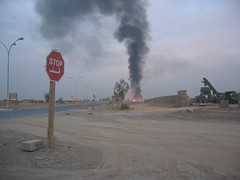
trash-pit-fireImage by octal via Flickr
Still no post deployment medical screenings  as of April 2010

This one excerpted from the GAO:
Although agency policies on medical benefits are similar, GAO found some issues with medical care following deployment and post deployment medical screenings. Specifically, while DOD allows its treatment facilities to care for non-DOD civilians after deployment in some cases, the circumstances are not clearly defined and some agencies were unaware of DOD’s policy. Further, while DOD requires medical screening of civilians before and following deployment, State requires screenings only before deployment. Prior GAO work found that documenting the medical condition of deployed personnel before and following deployment was critical to identifying conditions that may have resulted from deployment. GAO recommended, among other things, that State establish post-deployment screening requirements and that DOD establish procedures to ensure its post-deployment screening requirements are completed. While DOD and State agreed, DOD has developed guidance establishing procedures for post-deployment screenings; but, as of April 2010, State had not provided documentation that it established such requirements. 

Read more here.

Ambassador Patrick Kennedy who is the State Department's Under Secretary for Management was one of the witnesses in the Deployed Federal Civilian hearing on April 14. Note that he made mention of the High Stress Outbrief Program but made no mention of post deployment medical screenings recommended by the GAO. Really, the briefing is great, medals are welcomed, I'm sure, handbooks are helpful, but the post deployment medical screening for deployed personnel is actually more important. Why is State not doing that? We've been in this warzones exactly seven years going on eight in Iraq and nine years this October in Afghanistan.  You'd think that the smart folks would figure this out by now.

Okay, okay, we now know that there are no/no WMDs in Iraq, yok, nada -- and we might be tempted to say that well -- there are no harmful exposure over there.  But, you've heard about those burn pits, right?  This report from Navy Times says that "A 2008 study that fine particulate matter at Balad and 14 other deployment sites is well above both World Health Organization and U.S. military standards." The Senate Democratice Policy Committe even had a hearing on burn pits and this testimony from a VA doctor testifying in his own personal capacity is worth reading. He said in part that "Inhalation of PM [particulate matters] air pollution can lead to premature death from respiratory and cardiovascular causes, including strokes. Inflammation and reduced lung function may even be seen in lung tissue from healthy adults. Year-round exposure to PM has been associated with small airway disease and increased risk of dying from lung cancer and cardiovascular disease." Also see this one on toxins in Iraq and Afghanistan.  Big yikes!

On additional work hours, Ambassador Kennedy also had this to say: "employees receive overtime, or a comparable payment, to compensate for the long hours that extend the work week far beyond 40 hours." Pray tell, what does "comparable payment" actually means in simple English? Is that comp time? Or something else? Remember that the US Embassy Kabul staff are reportedly working 80 hour workweeks. If employees get comp time instead of overtime, does that mean 40 hour comp time a week for a year? How do you actually spend that?  Just asking... 

In any case, if you've been to the warzones and were ever extended post deployment medical screening by MED, would you let us know? Curious minds would like to know; although we can't really imagine why State would not tell GAO if the program already exists.  Excerpt below from Ambassador Kennedy's testimony:   


DEPLOYMENT INCENTIVES AND PROGRAMS
Our missions in Afghanistan and Iraq always have been fully staffed with volunteers. In turn, the Department has focused on ensuring that these volunteers are prepared, trained, compensated and supported before, during and after their assignments. In recognition of the personal risk and hardship to our employees, we have strengthened the compensation and benefit package received when serving in Iraq and Afghanistan.

These employees receive a compensation package of incentives and benefits comprised of the following. All receive the maximum hardship differential and danger pay allowance allowed by law, totaling an additional 70% of an employee’s basic pay. With the exception of political appointees, Senior Foreign Service, and the Senior Executive Service, employees receive overtime, or a comparable payment, to compensate for the long hours that extend the work week far beyond 40 hours. Employees also are offered several Rest and Recuperation (R&R) trips during their one-year tours and can choose to return to the U.S. or take R&R within the region. We offer administrative leave to facilitate the employee’s ability to actually take these R&R trips. And we supported legislation that increased the annual premium pay cap to equal the Vice President’s salary and eliminated the aggregate pay cap for eligible employees serving in Iraq and Afghanistan.

We also established certain incentives specific to the Foreign Service. For example, Selection Boards are reminded that as they consider those eligible for promotion, they recognize that service at posts, like Iraq and Afghanistan, is done under exceptionally challenging circumstances in fulfillment of our foreign policy priorities. Moreover, support for our employees and their families during and after their assignments is critical. With 18 posts around the world designated by the State Department as ―unaccompanied or ―partially unaccompanied posts, we realized the importance of addressing the challenges invariably faced when families are separated for extended periods. Our Family Liaison Office (FLO) addresses these specific challenges. For example, we have established two positions in that office dedicated solely to working with the families of employees serving on an unaccompanied tour. These professionals provide the families with a single point of contact for information, referrals, emotional support, and assistance through personal consultations, e-mails, newsletters, phone calls, print and online publications, and group briefings. The Department also contracted with MHN (formerly Managed Health Network) to provide 24/7 access to a customized Web portal, telephone hotline, and face-to-face counseling sessions with a clinician for any family members residing outside the Washington, D.C. area. In addition, to address the unique needs of children with deployed parents, we developed individualized, age-appropriate handbooks to help State Department children understand and cope with the stress of having a parent serving on an unaccompanied tour. The Department recognizes the sacrifices of these children and therefore created a special ―medal that is presented to each child along with a certificate of recognition.

REQUISITE TRAINING AND MEDICAL SUPPORT FOR WORKING IN THE HIGH STRESS ENVIRONMENTS
Training is a prerequisite for all employees serving overseas. Through training offered at the Department’s National Foreign Affairs Training Center and elsewhere, we ensure that our employees have the cultural awareness and necessary knowledge to perform in all overseas environments. In particular, we emphasize this training requirement for civilians serving in combat zones. The existing mandatory training for all U.S. government civilians assigned to Afghanistan is extensive. In addition to a one-week mandatory security training course, we provide a one-week Afghanistan Familiarization course for all Federal government civilians from 10 agencies assigned to Afghanistan. All civilians who will work outside Kabul in the provinces, districts, or regional platforms, and those who will support them from our embassy in Kabul, are required to take two additional weeks of training, a field-work focused "Provincial Reconstruction Team Orientation" course for all civilians plus integrated civilian-military field training at the the Department of Defense’s Muscatatuck Urban Training Center in Indiana. This integrated civilian-military training ensures that civilians are prepared to work with their military counterparts in Afghanistan from the first day they arrive in-country. And, training waivers are rare.

Civilians serving in combat zones are exposed to stress levels comparable, at times, to those experienced by military personnel. To facilitate the capacity of our employees to recognize and handle the inherent stress of working in these types of environments, all employees assigned to Afghanistan and Iraq attend mandatory pre-departure sessions designed specifically to familiarize them with security issues unique to combat zone assignments, alert them to the causes and the signs of stress-related conditions, and provide them with techniques for managing the stress of being in a combat zone. In addition, they receive information about resources available that can provide needed support and assistance while they are in the field. Following any high stress assignment—including, but not limited to, those in Afghanistan and Iraq — our training operation, supported by the Office of Medical Services, conducts a mandatory ―High Stress Outbrief‖ program intended specifically to assist employees in recognizing Post Traumatic Stress Disorder (PTSD). Employees who cannot attend the course in Washington, can arrange to receive this outbrief through our health units at our Embassies abroad. We also offers over an INTRANET links a distance learning course to help those who are managing employees who previously worked at high-stress posts.

Recognizing the need for additional support services, the Office of Medical Services (MED) established a Deployment Stress Management Program (DSMP) with a board-certified psychiatrist serving as the Director supported by two social workers. It provides information, referrals, initial assessment, and brief treatment for all stress-related problems, including PTSD. It also provides resiliency training as an important element of our overall training for all deploying civilians under the Ambassador’s authority. This medical support unit is not working alone. Additional mental health practitioners are assigned to the Health Units in Kabul and Baghdad and supported by our regional psychiatrists in Amman, New Delhi, and Washington, D.C. They are tasked to provide strategies for stress management, PTSD screening, and initial treatment for all personnel under the Ambassador.

Employees who are identified as possibly suffering from stress-related disorders and who require treatment that is not locally available can return to Washington, D.C. for a six- to seven-week program of treatment. The goal of this program is to enable the majority of participants to return to full-duty and so far all five employees treated within the program have returned to work. Employees who incur work-related medical conditions are eligible for a wide variety of benefits under the Federal Employees' Compensation Act, including medical and wage loss benefits. To facilitate continued monitoring, there is a follow-up PTSD screening initiative for Department of State employees who have served in combat zones since 2002 and we are in the process of establishing a personnel tracking mechanism for civilians deployed to Iraq and/or Afghanistan.

Read his full testimony here.

Read the witness testimonies here:

Talk to AFSA. Talk to your congressional representatives. We need to get that post-deployment medical screening in place. I don't think calling for this makes me a red-haired child running around with my hair on fire -- um, okay you can call me that, too.  But what  if you or your spouse/partner develop severe respiratory problems 2-3 years after service in the warzones.  How would you know where you pick that up? Or know for sure, that these two are related?  "Health is wealth" -- except that we do not fully recognize this until we're in poor health.


Senate Hearing on Deployed Federal Civilians

Dirksen Senate Office BuildingImage via Wikipedia
Deployed Federal Civilians: Advancing Security and Opportunity in Afghanistan
Subcommittee on Oversight of Government Management, the Federal Workforce, and the District of Columbia

Wednesday, April 14, 2010
02:30 PM - 04:30 PM
Dirksen Senate Office Building, room 342

[view archive webcast]


Witnesses

    * The Honorable John Berry [view testimony]
      Director
      U.S. Office of Personnel Management

    * The Honorable Patrick Kennedy [view testimony]
      Under Secretary for Management
      U.S. Department of State

    * The Honorable Clifford Stanley [view testimony]
      Under Secretary for Personnel and Readiness
      U.S. Department of Defense

    * Ms. Janet St. Laurent [view testimony]
      Managing Director, Defense, Capabilities, and Management
      U.S. Government Accountability Office


Reading Tips: New Reports from OIG and GAO

Logo of the United States Government Accountab...Image via Wikipedia
-03/31/10   Embassy Amman, Jordan (ISP-I-10-35A) March 2010  [511 Kb]
+ http://oig.state.gov/documents/organization/140644.pdf
In 2008, the Embassy implemented a policy of “move for preference.” In accordance with its housing handbook, this policy allows an employee “to change assigned residences at personal expense for reasons that do not meet the criteria of a government-sponsored move.” It is intended to enhance employee morale and is neither a petition nor an appeal, the only options 15 FAM 212.4 provides as mechanisms to request housing changes. Essentially, this policy accepts the subjective criterion of an employee’s happiness as justification for requesting and receiving permission to change residences. Thus, Embassy Amman’s application of the policy does not conform to the letter or intent of 15 FAM 212.4. Recommendation 25: Embassy Amman should structure its “move for preference” housing policy to conform to the Department of State regulations on the petitions and appeals process. (Action: Embassy Amman)


-03/31/10   Embassy Skopje, Macedonia (ISP-I-10-37A) March 2010  [388 Kb]
+ http://oig.state.gov/documents/organization/140645.pdf
Embassy Skopje and its Ambassador provide an unusual high-profi le leader­ship and authority to solving problems and dampening crises in a region of major importance to the United States.  Overall, morale is good. It stems from a congenial atmosphere in the workplace, from good and compassionate leadership, and from responsive management. The April move to the new embassy compound was accomplished with minimum disruption. Department of State-U.S. Agency for International Development (USAID) management platforms have been consolidated, and agreement has been reached with Embassy Pristina to share its health practitioner. All are major accomplishments.


Reports from USAID/OIG:


Audit of USAID’s Internally Displaced Persons Activities in Iraq

+ http://www.usaid.gov/oig/public/fy10rpts/e-267-10-001-p.pdf

Audit of USAID/Afghanistan’s Human Resources and Logistical Support Program
+ http://www.usaid.gov/oig/public/fy10rpts/5-306-10-007-p.pdf


Reports from the Government Accountability Office (GAO)

Operation Iraqi Freedom: Actions Needed to Facilitate the Efficient Drawdown of U.S. Forces and Equipment from Iraq | GAO-10-376, April 19, 2010
+ http://www.gao.gov/new.items/d10376.pdf

Combating Terrorism: Planning and Documentation of U.S. Development Assistance in Pakistan's Federally Administered Tribal Areas Need to Be Improved | GAO-10-289, April 15, 2010
+ http://www.gao.gov/new.items/d10289.pdf

Iraq and Afghanistan: Agencies Face Challenges in Tracking Contracts, Grants, Cooperative Agreements, and Associated Personnel | GAO-10-509T  March 23, 2010
+ http://www.gao.gov/new.items/d10509t.pdf

Global Food Security: Progress toward a U.S. Government-wide Strategy Is Under Way, but Approach Has Several Vulnerabilities | GAO-10-494T  March 11, 2010
+ http://www.gao.gov/new.items/d10494t.pdf


Saturday, April 24, 2010

Quickie: Americans Less Anxious About U.S. Foreign Policy Now Than In Past Four Years

But Republicans Have Grown Much More Anxious; Democrats And Independents Much Less So

This one from Public Agenda:

The American public is less anxious about foreign policy than it's been for four years, partly because they believe our global image has improved, and partly because the troubled economy and other domestic concerns are pushing foreign worries aside, according to Public Agenda's Confidence in U.S. Foreign Policy Index.

The Foreign Policy Anxiety Indicator stands at 122, a 10-point drop since 2008 and the lowest level since Public Agenda introduced this measure in 2006. The Confidence in Foreign Policy Index, produced by Public Agenda in collaboration with Foreign Affairs, uses a set of tracking questions to measure Americans' comfort level with the nation's foreign policy, much the same way the Consumer Confidence Index measures the public's satisfaction with the economy.

The Anxiety Indicator is measured on a 200-point scale, with 100 serving as a neutral midpoint, neither anxious nor confident. A score of 50 or below would indicate a period of complacency. Above the "redline" of 150 would be anxiety shading into real fear and a withdrawal of public confidence in U.S. policy.

“Two years ago, Iraq was seen as the ‘number one’ problem facing the nation in its dealings with the rest of the world,” said Daniel Yankelovich, the noted social scientist and Public Agenda's chairman. “Now, neither Iraq nor Afghanistan is cited as one of the five most important foreign policy problems we face. But most Americans still see the world as a treacherous, often hostile place, and that concern certainly hasn’t gone away.”
Republican Anxiety Grows, While Worries Subside for Democrats, Independents

There are striking differences by party, however, with anxiety about foreign affairs skyrocketing among Republicans, even as Democrats and independents report their worries are declining. When the Anxiety Indicator is calculated by party, Republican worries have soared from a relatively low level of 108 in 2008 to 134 today. By contrast, Democratic anxiety -- which was 142 in 2008 -- has now fallen to relatively calm 104. Independents were at 140 in 2008 and are still fairly anxious at 128, but that's a notable decline.

Download and read report -- Confidence In U.S. Foreign Policy Index: Volume 7, Spring 2010


Jeff Stein's SpyTalk is Back. Now at WaPo

SpyTalk columnist Jeff Stein is a longtime investigative reporter specializing in U.S. intelligence, defense and foreign policy issues. Until late 2009 he worked at Congressional Quarterly, where he launched the online CQ/Homeland Security daily, served as National Security editor and created SpyTalk. Then he got downsized. We're glad to see that SpyTak has found a new home at WaPo.

See below his recent post about Kyrgyzstan and a former US defense attaché at the U.S. Embassy in Bishkek:

Ex-Army intelligence officer focus of Kyrgyz corruption probes
Jeff Stein

A former U.S. Army intelligence colonel has emerged as the focus of investigations into corruption in Kyrgyzstan, the Central Asian host to an American air base and hub of fuel supplies to NATO forces in Afghanistan.

Lt. Col. Charles “Chuck” Squires is a former defense attaché at the U.S. Embassy in the Kyrgyz capital, Bishkek. Shortly after the Sept. 11, 2001, attacks, Squires formed a company that, despite having no track record in logistics, was awarded a sole-source contract to supply fuel to U.S. aircraft at the Manas base, according to congressional testimony and an investigation by The Nation magazine.

“A graduate of the Russian studies program at Harvard University, Squires appears to enjoy excellent rapport with American diplomats and military officers and good relations with senior figures in Kyrgyzstan, including President Bakiyev’s son Maksim, in whose company I have previously observed Squires at Bishkek’s Hyatt Regency Hotel,” Scott Horton, an adjunct professor at Columbia Law School told a House Oversight subcommittee hearing on Thursday.

Squires’s Red Star Enterprises, and another firm by the name of Mina Corp., share an official London address “in a former public housing complex that now leases office space to a multitude of small-time companies, escort agencies and business advisory services,” according to report by Eurasianet.org.

“At least one other figure involved in the London management of Red Star,” Horton told the national security subcommittee, “has close ties to the U.S. intelligence community.” He did not elaborate.

Continue reading: Ex-Army intelligence officer focus of Kyrgyz corruption probes.


Officially In: Luis E. Arreaga to Reykjavik

Reykjavík seen from Hallgrímskirkja's steepleImage via Wikipedia
On April 21, President Obama announced his intent to nominate Luis E. Arreaga to be
Ambassador to the Republic of Iceland.  The WH released the following brief bio below

Luis E. Arreaga, Nominee for Ambassador to the Republic of Iceland, Department of State
Luis Arreaga is a career member of the Senior Foreign Service with the rank of Minister-Counselor.  He currently serves as the Director of the Office of Recruitment, Examination and Employment in the Bureau of Human Resources. He previously served as Deputy Chief of Mission at the United States Embassy in Panama, U.S. Consul General in Vancouver, Canada and as director of the Executive Secretariat Staff at the U.S. Department of State in Washington, D.C.  He has also served as Deputy Director of the State Department’s Operations Center and Special Assistant to the Under Secretary for Political Affairs.  Other overseas postings include United States Mission to the United Nations in Geneva, the United States Embassy in Spain, and the Agency for International Development Missions in Peru, El Salvador, and Honduras. 

He is a graduate of the University of Wisconsin at Milwaukee where he received a PhD in economics and a Masters Degree in Management.


Related Posts:
Oops, what happened to Robert Connan's nomination? | Diplopundit  Aug 11, 2009
Officially In: Robert S. Connan to Reykjavik | Diplopundit  May 28, 2009


Related Item:
President Obama Announces More Key Administration Posts, 4/21/10


Officially In: Rose Likins to Lima

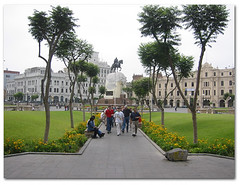
Plaza San Martín, Lima, PerúImage by heinle via Flickr
On April 21, President Obama announced his intent to nominate Rose M. Likins to be Ambassador to the Republic of Peru. The WH released the following brief bio below:

Rose Likins is a career member of the Senior Foreign Service. She currently serves as the Deputy Director of the Foreign Service Institute. She was previously Dean of the Foreign Service Institute’s School of Professional and Area Studies. She also served as the U.S. Ambassador to El Salvador. Washington assignments include Honduras Desk Officer, Special Assistant to the Deputy Secretary of State, Executive Assistant to the Under Secretary for Global Affairs, Director of the Department's Operations Center, Deputy Executive Secretary of the Department and Principal Deputy Assistant Secretary for Political-Military Affairs. Overseas posts include Consular Officer at the U.S. Consulate General in Monterrey, Mexico, Chief of the political section at the U.S. Embassy in Asuncion, Paraguay and Deputy Chief of Mission at the U.S. Embassy in Sofia, Bulgaria.

She received a BA in Spanish and International Affairs from Mary Washington College.


Related Item:
President Obama Announces More Key Administration Posts, 4/21/10


DHS/ICE Lawyer Convicted of Corruption Faces Maximumm Jail Time of 256 Years

From DOJ on April 20, 2010:

Immigration Agency Attorney Convicted of Federal Corruption Charges for Taking Thousands of Dollars in Bribes from Immigrants Seeking Status in U.S.

LOS ANGELES—A senior attorney with U.S. Immigration and Customs Enforcement (ICE) was found guilty today of three dozen corruption-related charges for taking a series of bribes from immigrants who were seeking documentation to remain in the United States.

ICE Assistant Chief Counsel Constantine Peter Kallas, 39, of Alta Loma, was convicted by a federal jury following a three-week trial. The jury found Kallas guilty of conspiracy, six counts of bribery, two counts of obstruction of justice, seven counts of fraud and misuse of entry documents, three counts of aggravated identity theft, nine counts of making false statements to the Department of Labor, four counts of making false statements to obtain federal employee compensation, and four counts of tax evasion.

“Mr. Kallas was a corrupt government official who abused his position of trust to line his own pockets,” said United States Attorney André Birotte Jr. “This case should serve as a warning to any public official who might consider trading a quick buck for illegal acts that making this trade could send them to prison.”

Kallas has been in a federal jail since August 2008, about two months after he was arrested by special agents with the Federal Bureau of Investigation at the San Manuel Indian Bingo and Casino in Highland, where he and his wife accepted a bribe from an immigrant. The June 2008 bribe was the last in a series of incidents in which Kallas and his wife, Maria, told illegal aliens that Kallas was an immigration official—either an immigration judge or some other type of high-level immigration official—and that Kallas could obtain immigration benefits for the aliens in exchange for bribes which ran as high as $20,000.

Kallas took a $7,000 bribe from his housekeeper is return for using his official position at ICE to dismiss removal proceedings against the housekeeper’s daughter. The Kallases took bribes from four other illegal aliens in return for using two companies they had set up—Botno Inc. and Mississippi Valley Consulting Inc—to file Permanent Employment Certification applications with the Department of Labor that falsely claimed the companies had offered employment to the aliens.

According to court documents, the couple’s bank records show that, beyond Constantine Kallas’ salary, approximately $950,000 had been deposited in the couple’s bank accounts since 2000. When investigators searched the Kallas residence in June 2008, they discovered a hidden floor safe that contained more than $177,000 in cash and two dozen official immigration files.

As a result of today’s convictions, Kallas faces a statutory maximum sentence of 256 years in prison when he is sentenced by United States District Judge Terry J. Hatter Jr. on August 9.

Read more here.


Friday, April 23, 2010

Quickie: Senators Call for Changes to Troubled, Costly Afghan Police Training Program

We could not cover the congressional hearing on the Afghan Police Training in Congress last week but ProPublica did.  I am republishing below Ryan Knutson's piece under Creative Commons with additional active links.  You can read the testimonies from the four officials in my prior post here:


Senators Call for Changes to Troubled, Costly Afghan Police Training Program
by Ryan Knutson, ProPublica - April 15, 2010 6:54 pm EDT

State and Defense department officials took a tongue-lashing today, trying to explain to a Senate subcommittee how the government has poured $6 billion since 2002 into building an effective Afghan police force with disastrous results.

ProPublica and Newsweek examined the problems [1] with police training in Afghanistan in a story published last month. The program, managed under a contract with DynCorp International, has faced challenges on every front, from recruitment to inadequate training periods to corruption to poor officer retention.

"Everything that could go wrong here, has gone wrong," Gordon S. Heddell, the inspector general of the Department of Defense, acknowledged to an ad hoc subcommittee [2] of the Senate Committee on Homeland Security and Governmental Affairs. Heddell's office, along with the State Department's Inspector General, completed a six-month audit in January of the program that found significant lapses.

Sen. Claire McCaskill, D-Mo., the subcommittee chair, and others on the panel were less interested in rehashing the program's well-known shortcomings and more interested in hearing about solutions. "What you laid out was a problem we knew in 2001," said Sen. Edward Kaufman, D-Del., in response to comments from Heddell. "What are the two or three things you can spend $6 billion on and not end up with essentially nothing?"

Defense and State Department officials agreed that clearer guidelines for the contractor and more oversight are needed to improve the program. Currently, the State Department has just seven contract overseers in Afghanistan, said David T. Johnson, an assistant secretary for the State Department. The agency hopes to have 22 in place by September, Johnson said.

Another key would be to make training ongoing, rather than just the six weeks that police recruits are getting now, said David S. Sedney, a deputy assistant secretary with the Defense Department. "This is not a weeks- or months-long [process] -- it's a years-long process," he said, adding that police need to be partnered with American military and more experienced Afghan troops on whom they can model their behavior.

Even if the program makes headway, some senators questioned whether it would be sustainable without a massive ongoing commitment from U.S. taxpayers. The Afghan police and army are slated to receive $11.6 billion to fund their operations for 2011, with just over half going to the police, Sedney said. McCaskill pointed out that's only $2 billion less than the entire country's Gross Domestic Product.

"It's obvious that Afghanistan is not going to be able to afford what we're building for them," she said. The U.S. has made a "billion-dollar commitment for years to come."

The government is already exploring whether a change in contractors might benefit the police-training program. DynCorp's contract has been extended for several months, but the State Department has issued a call for new bids, hoping an array of companies will step up to compete for the job, Johnson said. McCaskill was skeptical, however.

"I will be shocked -- like winning the lottery -- if we end up with anybody other than DynCorp," she said.

Write to Ryan Knutson at Ryan.Knutson@propublica.org [3].


Senate Hearing on Afghan Police Training Contracts

An Afghanistan National Police (ANP) instructo...Image via Wikipedia


Date: Thursday, April 15, 2010
Time: 02:30 PM
Location:  Dirksen Senate Office Building, room 342

The purpose of the hearing was to examine Defense Department and State Department contracts for police training in Afghanistan, including the State Department’s Civilian Police (CIVPOL) Program contract in support of the Combined Security Transition Command-Afghanistan (CSTC-A). The hearing will review the recently released joint audit of this contract by the Defense Department and State Department Inspectors General and explore concerns related to management and oversight of the contract.

The hearing also address GAO’s recent decision sustaining the contractor DynCorp’s protest of the Defense Department’s plans to transfer management of the contract to the U.S. Army Space and Missile Defense Command Counter-Narcoterrorism Technology Program Office (CNTPO).

Additional information and materials relating to this hearing are available at http://mccaskill.senate.gov/?p=soco_documents

Witnesses

Panel 1
  • The Honorable Gordon S. Heddell (view testimony)
    Inspector General
    U.S. Department of Defense

  • Evelyn R. Klemstine [view testimony]
    Assistant Inspector General for Audits
    U.S. Department of State

  • The Honorable David T. Johnson (view testimony)
    Assistant Secretary for International Narcotics and Law Enforcement Affairs
    U. S. Department of State

  • David S. Sedney (view testimony)
    Deputy Assistant Secretary of Defense for Afghanistan, Pakistan, and Central Asia
    Office of the Assistant Secretary of Defense for Asian and Pacific Security Affairs, U.S. Department of Defense