Showing posts with label Mental Health. Show all posts

Friday, September 10, 2010

Clinton issues note on mental health; seeking help a sign of maturity and professionalism

Slightly over two years after Secretary of Defense Robert Gates issued the DOD guidance on the mental health question, the infamous Question 21 in SF 86 and strongly endorsed the practice of seeking professional help for mental and physical issues, the State Department, at the highest level of the 7th Floor -- that's the Secretary of State -- has now publicly endorsed the practice of seeking professional help to address "unique stresses" including mental health issues. HRC writes that "No one at State has lost a clearance because he or she sought mental health counseling or treatment" and that "recognizing the need for help is a sign of maturity and professionalism." We have previously posted about this here and here.

via Josh Rogin of The Cable:

THE SECRETARY OF STATE
WASHINGTON

Dear Friends and Colleagues:

As the summer winds down, I want to take this opportunity to thank you for your hard work, commitment to excellence, and service to our country. At the State Department and USAID, we work long hours on complex problems with few clear-cut solutions. Many of you serve in dangerous and remote posts, often far away from friends and loved ones. Your dedication is inspiring, and you have my gratitude and that of President Obama and the American people as well.

I know that your service here comes with sacrifice, both for you and your families, and with unique stresses. We are committed to ensuring that every member of the State Department and USAID family has all the support they need. That's why we've made it a priority to provide access to social workers and mental health counselors, a mandatory high-stress outbrief program and training for anyone who seeks it and particularly for those who are returning from or working with returnees from high-stress posts.

These are important resources and I hope more of you will take advantage of them in the future.

Seeking help is a sign of responsibility and it is not a threat to your security clearance. No one at State has lost a clearance because he or she sought mental health counseling or treatment. In fact, Diplomatic Security has advised that receiving recommended treatment for mental health concerns is a favorable factor during security clearance determinations. For all of us, managing our mental health is an essential part of maintaining our well-being, and recognizing the need for help is a sign of maturity and professionalism. Talking to someone can make all the difference in the world.

To learn more about the Department's Deployment Stress Management Program and the resources available to you and your family through the State Department, I encourage you to visit MED's website at:

If you have questions about security clearances, you can always contact the Office of Personnel Security and Suitability Customer Service Center at 1-866-643-4636 or send an e-mail to 

As we head into the fall and the holidays to come, please consider making use of the excellent programs and staff that are available.

We have a lot to do, and I know you are up to the job. I am proud of the work we are doing together every day on behalf of our nation. It is an honor to be your Secretary and I look forward to all we will continue to achieve together.

Sincerely yours,

Hillary Rodham Clinton


Related items:
DOD: Mental Health Questions, Standard Form (SF) 86, Questionnaire for National Security Positions


Related posts:


Wednesday, July 28, 2010

On the Infamous Q21, PTSD (Again) and High Threat Unaccompanied Assignments

The OIG has released its inspection report dated July 2010 on  the State Department's support for high stress, high threat, unaccompanied posts.  Some interesting details excerpted below. I have also republished the full report in ScribD for easy access (read below).

The Stigma of Seeking Mental Health Care:

The Department of Defense, led by the Secretary of Defense, has undertaken a campaign to reduce or eliminate this stigma. The Department also has made an effort in the past but can do more. The Department, as have the Department of Defense and other federal government agencies, now exempts mental health consultations relating to service in a military combat environment (i.e., Iraq and Afghanistan) from being reported on employees’ security clearance forms (it still has to be reported on medical clearance forms). That is just one, though important, step.

There is still a lack of clarity as to what employees must report on the security clearance form. For example, does a discussion between an employee and a health professional on how to manage stress have to be reported even if it does not involve diagnosis and treatment of a mental disorder? Opinions differ on that point. However, if such “preclinical” discussions have to be reported, that will ensure that fewer will take place, even if the Department is more successful than in the past in reducing the stigma. This would undercut the Department’s efforts to build resiliency among its employees.

The Department needs to address the overall issue of the stigma. The next step should be a message from the Department’s leadership to all employees making some of the following points (which have been made to the OIG team by MED and DS):
  • The Department encourages its employees to seek mental health care. It is a positive act and a normal part of maintaining one’s health and preparedness.
  • Employees could be more likely to put at risk their clearances and job performance when they do not seek such care.
  • Only two employees have lost their security clearances over the past fi ve years because of mental health issues (which did not involve PTSD).
  • Of the 517 cases concerning mental health issues that DS referred to MED during 2009, not one resulted in denial of a security clearance for mental health reasons.

Two years ago, we called for such a high level message from Secretary Rice in On the Infamous Q21, PTSD and the Wholeness of People in the Foreign Service(May 2008): 

Considering that State has its own clearance process and is a separate agency from DOD, I’m waiting for revised guidance for State Department personnel from Secretary Rice herself. Uhm, no offense intended; the guidance from “M” or “DGHR” or “DS” is fine but I don’t think that really cuts the cake here.

I’d like to see the Department of State, at the highest level of the 7th Floor, affirm and strongly endorse the practice of seeking professional help to address all health related concerns, including mental health. The press guidance above only refers to service in Iraq and Afghanistan, but what about service in the rest of the FS hardship assignments? The emotional toll of constant moving and relocation coupled with dangerous and challenging assignments is not something that we can or should ignore.

We're a small fly in a thick soup, of course; that did not go anywhere.  Secretary Clinton as far as we are aware has not issued a message similar to Secretary Gates' message

This report by the way, notes that "In the past five years, 18 employees have been formally diagnosed with PTSD. Of these, 10 had served in posts other than Iraq or Afghanistan." So there are more posts at play here than just the war zones. 

Leadership and Stress:
In practically any conversation about the causes of stress and inefficiency in the Department or at overseas posts, the issue of inadequate leadership/management comes up. For some employees, this is a greater problem than danger and hardship. Good leadership can do a great deal to create high morale and effectiveness at difficult posts. Poor leadership, of course, can be a problem at any post or bureau, but it can be especially harmful at a high stress, high threat post. In the OIG survey, leadership problems were cited by 45 percent of the respondents as a source of stress for them or their colleagues. As noted above, this was less than the percentage citing danger, workload, and separation from families, but leadership problems generated more passionate comments than any other issue. That is probably because, unlike danger and separation, employees feel that something can and should be done about leadership.

This is not to say that poor management is widespread at high stress or more “normal” posts. In fact, OIG inspections have found that at a substantial majority of posts, the top leadership is doing fairly to very well. Also, inspections have found that inexperienced personnel have put an additional burden on top leadership as well as middle managers. (See section below on whether the right people are being assigned.) However, recent inspections have found too many cases of managers at the top and middle levels who cause unnecessary stress and inefficiency and thus impair the morale and smooth functioning of their post, bureau, office, or section.

Are the right people on the right bus?
The OIG survey asked whether the Department generally was assigning employees with the necessary skills, experience, and temperament to high stress, high threat posts. Over 60 percent of respondents said no. In their comments, those who served in Iraq and Afghanistan and answered in the negative made observations such as: there are too many people who are there just for the money, their next assignment, or to save a failing career. There are people who do not have the necessary experience or the mental and physical resiliency to be effective; such people make work more difficult for the others. There was a feeling that taking virtually anyone who volunteers has a negative impact on the post.

Lessons not learned, again:
Care should be taken in setting numerical staffing targets. A smaller, higher quality staff can usually do a better job. The OIG inspection of Embassy Baghdad found that many employees thought that staffing levels were too high as a result of the “civilian surge,” even taking into account the need to compensate for the absence of staff because of rest and recuperation leave (R&R) and other factors. The OIG inspection of Embassy Kabul found that the Baghdad experience was being repeated, with staff added before functions were identified and job descriptions developed.

An ALMOST “fitness for duty” policy:

OIG would support the Department’s developing a stronger “fitness for duty” policy that would be fair not just to the individual, but also to his or her colleagues, and that would maintain the effectiveness of a high stress, high threat post. Administrative and legal barriers, however, limit the Department’s options. In a recent review of the issue of physical fitness for high threat posts, the Department concluded that providing employees with the information to make an intelligent self-assessment of their capabilities was the best available means of handling this problem.

Finally, in Recycling News:
Care should also be taken in reviewing the skills and experience of employees hired under the 3161 authority for Iraq and Afghanistan, both for fi rst-time hires and re-hires. A number of people in the OIG survey expressed concern that 3161 employees who did not do very well in Iraq were being hired to go to Afghanistan, and many more thought that 3161 personnel in general needed greater knowledge of the objectives and operations of the Department and other government agencies to be effective in their jobs.

The original OIG report is posted here (OIG Report No. ISP-I-10-44 - Review of Support for High Stress, High Threat, Unaccompanied Posts - July 2010).


Thursday, September 24, 2009

Post-Deployment Screenings Recommended

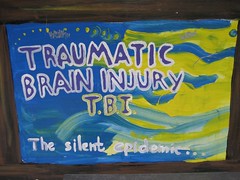
TRAUMATIC BRAIN INJURY (T.B.I.)Image by Divine Harvester via Flickr

For Deployed Civilians to War Zones

State generally requires a medical clearance as a precondition to deployment but has no formal requirement for post-deployment screenings of civilians who deploy under its purview. Our prior work has found that documenting the medical condition of deployed civilians both before and following deployment is critical to identifying conditions that may have resulted from deployment, such as traumatic brain injury. […] To address these matters, we recommended that [...] (5) State develop post-deployment medical screening requirements for civilians deployed under its purview. The agencies generally concurred with these recommendations, with the exception of USAID, which stated that it already had an ombudsman to assist its civilians. USAID officials, however, did not provide any documentation to support the establishment of the ombudsman position. In the absence of such documentation, we continue to believe our recommendation has merit.

Excerpt from HUMAN CAPITAL: Improved Tracking and Additional Actions Needed to Ensure the Timely and Accurate Delivery of Compensation and Medical Benefits to Deployed Civilians GAO-09-1019T | September 16, 2009

Wednesday, August 26, 2009

Insider Quote: Returning to the Real World

NYC - Battery Park City: Nelson A. Rockefeller...Image by wallyg via Flickr

"At my mandatory “PTSD” course taken right when I got back last month, they described the process that one will experience upon returning to the “real world.” Regardless of who you are, what you do, or where you come from, coming down off of a 13 month adrenaline rush – that is the constant high level stress (both work and environmental stress) – is not an easy feat. They were correct. Irritability, lack of energy, odd emotional responses, hyper alertness, lack of sleep, too much sleep, trouble reconnecting with old relationships, fatigue, restlessness, appetite shifts, stress bursts, irrational responses to loud noises, irrational responses period – are all “normal”. Okay. Good to know I am “normal.” I did ask “how long should it last?” – the response was “if it lasts longer than six months, we encourage you to seek professional help.”

by Erin The next chapter From FS Blog: Overseas View

Monday, August 17, 2009

Insider Quote: Dealing with Stress

First editionImage via Wikipedia

Q: So, what is the classic way that the Foreign Service deals with stress?

KOTULA: You just stiff upper lip and "that's the way it is." There's this dualism again. You know, "this is the way it is" and a number of people in the Service say, "Oh, this is exciting, this is why I joined the Foreign Service, this is where it's at, this is where the action's happening." But there is an opposite side. They don't deal with the real terror and how frightening a lot of this is. How can you say... there's a stuffed feelin(she laughs) -- I'm out there waving the flag, I'm showing the best there is of our country, and you're not "allowed" to have feelings of being scared to hell, you're not allowed to own the negative parts of it.

Q: And nobody gives you any help in interpreting them and working through them?

KOTULA: They give you help fixing you up after you(laughing) fall to pieces, but- (she trails off in laughter).

The Foreign Affairs Oral History Collection of the Association for Diplomatic Studies and Training | Spouse Series | Frontline Diplomacy, Manuscript Division, Library of Congress, Washington, D.C. Excerpted from Interview with Kotula, Ruth Enslie Art Teacher and Professional Artist (FS Spouse 1966-1989) Digital ID: http://hdl.loc.gov/loc.mss/mfdip.2004kot01

Monday, March 2, 2009

What's State Doing with Question 21?

“Question 21” on Standard Form 86, is the item in the government security-clearance form that specifically asks applicants or employees renewing their clearance whether they have ever received treatment for mental-health issues. Here is DOD on Security Clearance Question 21. What is the State Department doing with Q21? Walter Reed Strives to Remove Stigma from Mental Health Care Military Works to Eliminate Perceived Mental Health Treatment Stigma Leaders Should Step Up, Receive Mental Health Care if Needed DoD Changes Question to Encourage Troops to Ask for Help Gates Announces Change to Security Clearance Question 21

Related Posts:

Monday, February 9, 2009

“Pieces of Equipment” Out of Iraq

I wanted to post this because I know this is going to keep me awake tonight.

Salon.com is currently running "Coming Home," a weeklong investigative series on preventable deaths at Fort Carson, a U.S. Army post in Colorado, among troops who have returned from combat tours in Iraq. Salon national correspondent Mark Benjamin and Colorado-based journalist Michael de Yoanna reviewed more than two dozen incidents of suicide, suicide attempts, prescription drug overdoses and murder involving Fort Carson troops and examined 10 of those cases painstakingly.

The first story "The Death Dealers took my life!" is about Army Pvt. Adam Lieberman who tried to kill himself via prescription drug overdose at Fort Carson, Colorado.

Excerpts below:

“After swallowing the pills, he painted a suicide note on the wall of his barracks that read, "I FACED THE ENEMY AND LIVED! IT WAS THE DEATH DEALERS THAT TOOK MY LIFE!" Lieberman survived the attempt. Five days later, his mother, Heidi, arrived in Colorado and was told that her son would be charged with defacing government property for scrawling his suicide note on the barracks wall. Heidi Lieberman told her son's commanding officer that she would repaint the wall herself to "make this stupidity go away."

The next day Heidi called Adam's company commander, Capt. Phelps.

"You know," Heidi fired at Phelps, "I still have a hard time wrapping my mind around the fact that my son is being charged with defacing government property and you people are more concerned about your wall than my son," she stammered. Then she threatened, half jokingly, "I will paint that wall and make this stupidity go away."

A pause, and then Phelps snapped, "We'll contact supply and have them bring you the matching paint."

And so, the Army allowed a mother to paint over her son's suicide note. Heidi's handicapped sister helped.

[...]

"Nobody is willing to help anybody," he [Adam] said about his experience at Fort Carson after returning from Iraq. "You have to understand. We are just pieces of equipment."

The Army says it is working hard to erase the stigma of seeking mental healthcare. It isn't working at Fort Carson. Adam says he was actively discouraged from looking for help.

"If you have a problem, you are going to be a problem," he explained. "You don't ask for help -- ever. That is just the Army's way. Always will be."

A document obtained from another unit at Fort Carson supports Adam's description of a culture that discourages "weakness." Someone in the 3rd Brigade Combat Team prepared a mock official form called a "Hurt Feelings Report," and left a stack of copies near a sheet where soldiers sign out to see a doctor. (View it here.)

Here is the photo of the room with Adam’s suicide note. Here is the photo of his mother painting over his suicide note on USG property.

Obviously there are folks in this story suffering from either dumb brain syndrome or heartgone paralysis. This is a terrible and painful story to read. How could a commanding officer react in such a callous way as if these people were objects in space? And to allow a mother to paint over her son’s suicide note as if the Army does not have enough staff to do this work is not only shameful but offensive.

And this buck stops where?

If you’re mad enough to call or write - below are a couple of useful info:

To contact Major General Mark Graham, Fort Carson Commanding General, use the Hotline: (719) 526-2677 (6-2677). To send an email click here, select Contact Us and use the Commander General Hotline option. To contact the Office of the Secretary of Defense, use the following:

Dr. Robert M. Gates Secretary of Defense 1000 Defense Pentagon Washington, DC 20301-1000 Pentagon Switchboard: 703-545-6700 Public Communication: 703-428-0711

Saturday, January 24, 2009

Video of the Week: Dan Gilbert on Happiness

Dan Gilbert believes that, in our ardent, lifelong pursuit of happiness, most of us have the wrong map. In the same way that optical illusions fool our eyes -- and fool everyone’s eyes in the same way -- Gilbert argues that our brains systematically misjudge what will make us happy. And these quirks in our cognition make humans very poor predictors of our own bliss. The premise of his current research -- that our assumptions about what will make us happy are often wrong -- is supported with clinical research drawn from psychology and neuroscience. But his delivery is what sets him apart. His engaging -- and often hilarious -- style pokes fun at typical human behavior and invokes pop-culture references everyone can relate to. This winning style translates also to Gilbert’s writing, which is lucid, approachable and laugh-out-loud funny. The immensely readable Stumbling on Happiness, published in 2006, became a New York Times bestseller and has been translated into 20 languages. In fact, the title of his book could be drawn from his own life. At 19, he was a high school dropout with dreams of writing science fiction. When a creative writing class at his community college was full, he enrolled in the only available course: psychology. He found his passion there, earned a doctorate in social psychology in 1985 at Princeton, and has since won a Guggenheim Fellowship and the Phi Beta Kappa teaching prize for his work at Harvard. He has written essays and articles for The New York Times, Time and even Starbucks, while continuing his research into happiness at his Hedonic Psychology Laboratory. Video from ted.com

Friday, May 16, 2008

PTSD on the Cheap?

Christopher Lee reports today in the Washington Post (May 16, 2008; Page A02) on a VA official who urged fewer diagnoses of PTSD:

"A psychologist who helps lead the post-traumatic stress disorder program at a medical facility for veterans in Texas told staff members to refrain from diagnosing PTSD because so many veterans were seeking government disability payments for the condition." "Given that we are having more and more compensation seeking veterans, I'd like to suggest that you refrain from giving a diagnosis of PTSD straight out," Norma Perez wrote in a March 20 e-mail to mental-health specialists and social workers at the Department of Veterans Affairs' Olin E. Teague Veterans' Center in Temple, Tex. Instead, she recommended that they "consider a diagnosis of Adjustment Disorder."

VA staff members "really don't . . . have time to do the extensive testing that should be done to determine PTSD," Perez wrote.

Uhm ... I really don't get it ... if VA staffers don't have time to do the extensive testing required to determine PTSD --- then, who the heck should make time for this? To be or to do ... that is the question - applicable even to Veterans Affairs. Reports indicate that this is an isolated case concocted by this official in Texas but I wonder if this is more widespread in reality. The reason I'm wondering is I know somebody who was attacked in Gitmo, had a botched surgery which caused permanent nerve damage, and was medically discharged. This person took and passed the FS exam, joined State, served in one of our toughest posts, survived that, and was assessed by his subsequent supervisors in the next post as difficult. It's hard to see if this person had PTSD out of Gitmo, or out of the first FS assignment as he/she was never diagnosed with PTSD until after he/she was kicked back stateside by his/her superiors (I think the nicer word for this is "involuntary curtailment"). Symptoms of PTSD can include:

  • Hypervigilance and scanning
  • Elevated startle response
  • Blunted affect, psychic numbing
  • Aggressive, controlling behavior (a high degree of insistence on getting your way)
  • Interruption of memory and concentration
  • Depression
  • Generalized anxiety
  • Violent eruptions of rage
  • Substance abuse
  • Intrusive recall -- different from normal memory in that it brings with it stress and anxiety
  • Dissociative experiences, including dissociative flashbacks
  • Insomnia
  • Suicidal ideation
  • Survivor guilt

I worry that if supervisors are not schooled on how PTSD manifest among employees, we may have a lot of employees who would be deemed "difficult" eventually. And by highlighting PTSD for those who serve in the war zones only, we may be ignoring those who serve in other hardship assignments outside of Iraq and Afghanistan (70% of FS assignments are considered hardships). I fear that they would fall into the cracks or get lost in the shuffle.

Sunday, May 4, 2008

On the Infamous Q21, PTSD and the Wholeness of People in the Foreign Service

Last week, Defense Secretary Robert Gates announced that applicants for government security clearances will no longer have to declare whether they sought mental health counseling after serving in combat zones. He emphasized while talking to reporters at a new PTSD center at Fort Bliss, Texas, that the troops’ psychiatric counseling for wartime mental health problems is "not going to count against them" if they apply for national security clearances for sensitive jobs. The announcement received wide media coverage. You can read the coverage by AP, WaPo, and Air Force Link by clicking on each hyperlink here.

The new policy revises the infamous Question 21 on the SF-86 Questionnaire for National Security Positions. The revised question excludes counseling related to marital, family, or grief issues, unless related to violence by the applicant. It also excludes counseling for adjustments from service in a military combat environment. You can read the official guidance from the Office of the Secretary of Defense dated April 18, 2008 here (the link will open as PDF file). The WaPo report also indicates that this change will apply not only to military and civilian employees of the Department of Defense but also to all applicants for security clearances.

Hmmn …. I’ve looked at that guidance from OSD and it was only addressed to all military components . I’ve scoured the net for a similar guidance from OPM addressed to other Federal agencies but so far have come up empty. I’ve searched state.gov – nada (could not also find any easy reference to post traumatic stress disorder there).

In January this year, AFSA’s Foreign Service Journal did devote an entire issue on PTSD or post traumatic stress disorder in the Foreign Service. It also included a sidebar containing a joint State Department M/DG/DS Press Guidance dated May 4, 2007 about mental health and security clearance (see below):

Q: Does seeking mental health treatment following service in Iraq or Afghanistan jeopardize one’s security clearance?

Seeking mental health treatment following service in Iraq or Afghanistan does not jeopardize one’s security clearance. To suggest so is not only incorrect, but does a disservice to our employees who have served so admirably in these dangerous assignments. In fact, in October 2004, the department issued a notice to employees titled “Mental Health Counseling and Your Security Clearance,” specifically stating that concerns about their security clearance should not deter any employee from seeking professional assistance.

Q: What is our reaction to the warning issued by the “Concerned Foreign Service Officers” to Foreign Service officers regarding seeking mental health care?

The warning issued by Concerned Foreign Service Officers to Foreign Service officers regarding seeking mental health care is completely unfounded. Furthermore, the department considers this “warning,” which has no basis in fact, detrimental to the health of our employees.

The group referred to in the second question runs an open blog called, Dead Men Working and they have written about the security clearance and PTSD recently here and here. This issue was a gut-wrenching read because anyone in the FS could easily imagine oneself in such a position, have friends who've been through this and could not rule this out as a potential affliction in everyone's card. Below are selected excerpts from the FSJ issue.

Kristin K. Loken was a Foreign Service officer with theU.S. Agency for International Development from 1980 to 2001. She served in El Salvador during the civil war, Lebanon, West Bank/Gaza, Eritrea and India. You can read her entire story here (document will open in PDF file):

"In late 1981, after two-and-a-half years in this war zone, I returned to Washington. It took several weeks before I realized I wasn’t getting back to normal. I still jumped at loud noises and saw dead bodies on desks at work at the State Department. Strong emotions would come and go without any relevance to what was happening around me. I had regular nightmares about running away from uniformed men with guns trying to kill me. Sometimes I would also have what I called “daymares.” I would encounter a person at work in a meeting and see them suddenly fall victim to some horrible trauma — a car wreck, a shooting, a bomb explosion. These daymares struck quickly, then disappeared, leaving me sitting in a meeting not knowing what I had missed."

"I went to my boss and told her I thought I was going through some postwar emotional problems and asked if the State Department or USAID had some counseling services available. She said she was sympathetic but thought senior people would probably frown on my having emotional problems, and advised that disclosing my condition might negatively affect my eventual tenuring with USAID. So it would be best to keep a “stiff upper lip.” Her advice was to see a private therapist, for which she would give me as much administrative leave as I needed."

"As I tried to regain normal functioning, I noticed that my mouth wouldn’t work right; I couldn’t talk properly and could hardly communicate with people around me. There was a great deal going on inside my head, but it had no relevance to what was going on in the world around me. I could answer a direct question in a few words, but then could not say anything more for long periods of time. I didn’t feel sad; I didn’t feel happy. Often I didn’t seem to feel anything at all. "

Rachel Schneller joined the Foreign Service in 2001, serving in Skopje, Conakry and Basrah, where she was a Provincial Action Officer from 2005 to 2006. You can read her entire story here (document will open in PDF file):

"It has taken enormous amounts of energy and effort to endure and withstand PTSD treatment. To hazard a comparison to something I know nothing about, I would compare the process to learning how to walk again after a major car accident while kicking a cocaine habit. It was something I did because the only alternative I had was to go through life in a zombie-like state of misery and despair, and I didn’t like that alternative."

"In June 2006, after having worked in Basrah for several months, I took leave to return to Washington for a few weeks. A Foreign Service National employee in my office had been murdered, and I’d dreamed of hanging myself from my office light fixture. During leave, I asked the Medical Services Bureau for help and they referred me to an in-house social worker. While telling him about the whole horrible situation, including the dream about killing myself, I broke down in sobs. The social worker was nice but offered me no actual treatment. He did not refer me to a psychiatrist for an evaluation; he did not offer me medication for my depression; and he did not address my thoughts of suicide. Disappointed, but fearful of being labeled a “quitter” or worse, I chose to return to Iraq."

"After all I’d been through, I was grateful to be home alive and in one piece, reunited with family and friends. But soon I just stopped functioning normally. I was unable to sleep. I started getting lost on my way home from work, waking up in a sort of fugue state blocks away from my apartment in Georgetown. I don’t remember precisely how, but I burned myself several times so badly that I scarred — yet I didn’t feel it. I only noticed the burns the next day. Rage overwhelmed me. I nearly attacked another person in one of my FSI training classes, but walked out of the class in time and had a meltdown in the bathroom. (That poor woman had no idea how close she came to being strangled by me for making a completely innocent comment.)"

And then there was the story of a senior FSO whose name was withheld by the Journal. The anonymous writer was not suffering from PTSD but something more common than we’d think – depression. Below are selected excerpts of his account on seeking help, and getting entangled with the security and medical clearance process within the State Department. You can read the entire account here (document will open in PDF file):

"His first question was whether anything had changed since I had submitted the online form, and I mentioned my weekly counseling sessions and the antidepressants. He just nodded in a kindly fashion. Imagine my surprise when, last April, I received an e-mail from a security officer in Washington. It demanded that I ask the regional psychiatrist to answer a set of questions fully within the next 10 days, and warned me that my medical condition could “affect [my] security clearance eligibility or suitability for employment.”

The FSO eventually had his clearance renewed for five years but further writes:

“The department’s handling of mental health treatment surprised me once again during my recent medical clearance exam. I learned that I would receive a Class II medical clearance because I am on antidepressants. I had assumed that treating my depression with medication would be on par with treating my osteoporosis with medication, as other people treat their diabetes, high cholesterol or high blood pressure with prescription drugs. Instead of applauding me for tackling my problem head-on, however, State seems to prefer that I go off my meds and become the unhappy, less productive, less collegial employee I was a year ago. No wonder so many FSOs are in bad moods!"

Considering that State has its own clearance process and is a separate agency from DOD, I’m waiting for revised guidance for State Department personnel from Secretary Rice herself. Uhm, no offense intended; the guidance from “M” or “DGHR” or “DS” is fine but I don’t think that really cuts the cake here.

I’d like to see the Department of State, at the highest level of the 7th Floor, affirm and strongly endorse the practice of seeking professional help to address all health related concerns, including mental health. The press guidance above only refers to service in Iraq and Afghanistan, but what about service in the rest of the FS hardship assignments? The emotional toll of constant moving and relocation coupled with dangerous and challenging assignments is not something that we can or should ignore. Depression is a real cloud in our midst and unless we want a bunch of dysfunctional individuals running around trying to do their jobs, we must ensure that people get appropriate help without fear that their jobs could be jeopardized.

At a chance of being accused as having a “me, too” mentality here, I would like to see the Department of State, like DOD, publicly articulate that it considers seeking appropriate healthcare, including mental health care, whenever needed, as a mark of strength and maturity (and not a sign of weakness and deficiency). Clear guidance from Secretary Rice similar to the one released by Secretary Gates would help ensure that all the moving parts of the State Department are on the same page. We cannot leave to chance the possibility that Q21 would be parsed and interpreted in many different ways by the employees or the clearance issuance arm.

The organization of the 21st century will be judged by the wholeness of its people. Here’s the first step to getting us there.

- - - Available Online Resources:

Returning from the War Zone – Guide for Families of Military Members (PDF file with some information useful to returning Foreign Service Members)

A Guide to Managing Stress in Crisis Response Professions

National Center for Post Traumatic Stress Disorder

PTSD - National Institute of Mental Health

PTSD Sanctuary - Resources