House takes Senate's bad Internet censorship bill, tries making it worse
Protect The Internet
SOPA: Hollywood Finally Gets A Chance to Break the Internet
SOPA on OpenCongress
PIPA on OpenCongress
Contact Congress, join the strike, petition the State Department via http://americancensorship.org/
The Internet is going on strike on January 18th. You can help by driving contacts and readers to Congress. The blackout is from at 8AM EST and end at 8PM EST. You can read more and join the strike here: http://sopastrike.com/
ProPublica has put together an interactive SOPA Opera with a database that keeps track of where members of Congress stand. Findings
are based on two factors: whether a member is a sponsor of the proposed
bills, and each member's voting record on the current bills' precursors
and alternatives.
Tuesday, January 17, 2012
Learn more about the Internet Censorship Bills (SOPA/PIPA)
Friday, January 13, 2012
PD Commission KIA by Congress; Welcome Back, Matt Armstrong
Last December, after 63 years of existence, the Commission was KIA by Congress. And the USG saved $135,065, the Commission's operating budget for FY2011 (salaries excepted). Besides the Executive Director, the only permanent staff of the ACPD, the Commission was supported by a detailee from DOD and two interns. At the time of its closure, there was no Y-tour FSO working with the Commission. Apparently, the senator who blocked ACPD's reauthorization admitted he did so not because of merit, or value, or mission, or demand, or even actual cost. The gesture was symbolic and that ACPD happened to cross the senator's sights at the wrong time; would he have seen DOD's $547 million for public affairs?
Patricia Kushlis of WhirledView writes: "An effective Public Diplomacy Advisory Commission is the single bipartisan governmental entity that reports to both the executive and legislative branches about what the US could and should do to improve the country’s image abroad. Given the fragmentation of US public diplomacy activities since USIA’s demise, this country is more than ever in need of an independent watch-dog body tasked with putting the jig-saw pieces together enough, at least, to see, report on and critique the most critical parts - now flung across a multitude of departments and agencies."
You can read more about ACPD's demise from the Public Diplomacy Council, ComOps Journal and eVentures in Cyberland.
We're happy to welcome Matt back to the blogosphere; just wish it were under different circumstances.
Matt has a new post on the the role of the Under Secretary of State for Public Diplomacy and Public Affairs? A comparative look on the tenure and gaps of the Under Secretary for "R", "P" and "J" should be cause for concern. Excerpt below:
The last report of the U.S. Advisory Commission on Public Diplomacy looked at the turnover in the position of the Under Secretary for Public Diplomacy and Public Affairs. The Commission found that the position has been unfilled for over 30% of the time since it was established. Moreover, the average tenure of the six Under Secretaries since 1999 was about 500 days. Indeed today, the office remains unencumbered since June 30, 2011, while Tara Sonenshine awaits confirmation by the Senate. The office is never “vacant” as there is always a someone in an “acting” capacity. Today, Assistant Secretary Ann Stock runs the office in lieu of a confirmed Under Secretary.
The Commission compared the tenure of the Under Secretary for Public Diplomacy and Public Affairs with two peers: the Under Secretary for Democracy and Global Affairs (as of January 1, 2012, known as the Under Secretary for Civil Security, Democracy, and Human Rights) and the Under Secretary for Political Affairs. The differences in tenure length and gaps in tenure is stark.
The table, taken from the Commission report, is through December 16, 2011. As Sonenshine is unlikely to be confirmed before February due to the Senate’s calendar, the Under Secretary for Public Diplomacy and Public Affairs will be unfilled for an aggregate of more than 1,400 days, or nearly 1 out every 3 days over the past thirteen years.
[...]
But does this office continue to sit in a leadership position?
[...]
[H]ow much “communication” does R oversee and is its domain eroding? Back to the Commission report, it concludes with questions for further research:
1. What do the long gaps between appointments of Under Secretaries for Public Diplomacy and Public Affairs indicate about views on the role and skills necessary for the position, or the importance of public diplomacy and the role of the State Department in leading and coordinating Government activities that intend to understand, inform, and influence foreign publics?I suggest other, more blunt, questions:
2. What do the short tenures indicate about the challenges of the position?
3. Does the Under Secretary adequately support the careers of public diplomacy officers in light of leadership turnover and frequent and long periods when the position was unencumbered?
- How does the office stay in the game and not get circumvented, or bypassed, and its resources and missions not get poached without an Under Secretary at the helm?
- Has the Under Secretary’s role with other federal agencies, let alone within the Department, diminished due to uncertainties and shifting priorities resulting from the turnover and short tenures?
[...]
This might be a good time for the Congress, the State Department, and the White House to have a board of experts look into how the Government organizes and conducts activities intended to understand, inform, and influence foreign publics.
Read in full here.
Related articles
- R we there yet? A look at the Under Secretary for Public Diplomacy (and Public Affairs) (mountainrunner.us)
- United States Advisory Commission on Public Diplomacy - no more (toinformistoinfluence.com)
Saturday, December 31, 2011
Sunday, December 18, 2011
Confirmations: Joyce Barr (State/A), Michael McFaul (Moscow), Other Nominations Remain in "Status Quo"
![]() |
| WH photo |
#421 Joyce A. Barr – to be Assistant Secretary of State (Administration)
#503 Michael Anthony McFaul – to be Ambassador of the US of America to the Russian Federation.
Earlier the same afternoon, Senator Reid asked for unanimous consent that the Senate take up and confirm the following nominations on the Executive Calendar but Senator McConnell objected to the request.
#421 Joyce A. Barr – to be Assistant Secretary of State (Administration)
#422 Michael A. Hammer – to be an Assistant Secretary of State (Public Affairs)
#501 Mari Carmen Aponte – to be Ambassador of the US of America to the Republic of El Salvador.
#502 Adam E. Namm – to be Ambassador of the US of America to the Republic of Ecuador.
#503 Michael Anthony McFaul – to be Ambassador of the US of America to the Russian Federation.
#504 Roberta S. Jacobson – to be an Assistant Secretary of State (Western Hemisphere Affairs),
#505 Elizabeth M. Cousens – to be Representative of the United States of America on the Economic and Social Council of the United Nations, with the rank of Ambassador.
#506 Elizabeth M. Cousens – to be an Alternate Representative of the United States of America to the Sessions of the General Assembly of the United Nations, during her tenure of service as Representative of the United States of America on the Economic and Social Council of the United Nations.
The Majority calendar indicates that "All nominations received by the Senate during the 112th Congress, first session, will remain in status quo, notwithstanding the provisions of rule XXXI, paragraph 6, of the Standing Rules of the Senate."
See Rule XXXI #6: Nominations neither confirmed nor rejected during the session at which they are made shall not be acted upon at any succeeding session without being again made to the Senate by the President; and if the Senate shall adjourn or take a recess for more than thirty days, all nominations pending and not finally acted upon at the time of taking such adjournment or recess shall be returned by the Secretary to the President, and shall not again be considered unless they shall again be made to the Senate by the President.
So, the nominees need not have to be resubmitted again, but since the GOP has blocked adjournment, there will be no official 'recess' and the Senate will have scheduled pro-forma sessions during the Christmas break. Which means, President Obama will not/not be able to make any recess appointments.
On the controversial recess appointees, it looks like Ambassador Aponte's nomination (El Salvador) as well as Ambassador Bryza's (Azerbaijan) with the late pleas are not totally dead. (Update 12/20: The Orlando Sentinel reports that Senator Reid's office said Monday there still might be a chance to salvage Aponte's nomination, through complex Senate procedures." I don't know how Ambassador Bryza's nomination could be saved when he did not even get his SFRC hearing, much less the committee's endorsement)
Here is a useful explanation from the CRS:
Nominations that are not confirmed or rejected are returned to the President at the end of a session or when the Senate adjourns or recesses for more than 30 days (Senate Rule XXXI, paragraph 6). If the President still wants a nominee considered, he must submit a new nomination to the Senate. The Senate can, however, waive this rule by unanimous consent. For example, on November 19, 1999, at the close of the first session of the l06* Congress, Majority Leader Trent Lott asked and received unanimous consent “that all nominations received by the Senate during the 10thCongress, first session, remain in status quo.” Similar agreements were reached in earlier Congresses as well. The majority leader or his designee also may exempt specific nominees by name from the agreement, allowing them to be returned during the recess or adjournment. Just before the recess between the first and second sessions of the 107th Congress, for example, the Senate by unanimous consent agreed to hold all nominations in the status quo except for one, which was returned to the President. Prior to the August recess in the 107thCongress, however, the Senate did not reach such an agreement, and 162 pending nominations were returned. President George W. Bush re-nominated many of the nominees after the recess.
Related articles
- Senate confirms McFaul as ambassador to Moscow (sfgate.com)
- Kirk's hold on McFaul nomination misguided (mysanantonio.com)
- US lawmaker blocking Obama's pick for Russia envoy (sfgate.com)
- GOP blocks recess appointments (politico.com)
Friday, December 16, 2011
Confirm Matt Bryza: 36 Conservative Foreign Policy Experts Write to Ranking Senators
U.S. Ambassador to Baku, Matt Bryza is the last of President Obama's recess appointments from 2010 whose nomination is snagged in the Senate
(Ambassadors Ricciardone and Eisen were confirmed while Ambassador
Aponte's nomination was derailed this past week). Ambassador Bryza's
nomination was held up last year by twin-pops, Senator Barbara Boxer
(D-CA) and Senator Robert Menendez (D-NJ). The senators represent the concerns of their Armenian constituencies, which are
against the administration's policy opposing a Congressional resolution
condemning the 1915 Armenian genocide.
WaPo awarded the duo, the Most Craven Election-Year Pandering at the Expense of National Interest Award.
Ambassador
Bryza is posted to Baku, Azerbaijan not Yerevan, Armenia. But it's
complicated since the two countries have fought in more than one war including the Nagorno-Karabakh War from 1988-1994.
![]() |
| Ambassador Bryza with wife, Zeyno Baran during the 4th of July reception at US Embassy Baku Photo from US Embassy Baku/FB |
Anyway, Senator Menendez even questioned Ambassador Bryza's "very close ties to Turkey" because his wife is Turkish-born. That the good senator had dragged the ethnic origin of Ambassador Bryza's wife into this confirmation fight was called shameful by the Washington Post.
In a rebuttal to WaPo, Senator Menendez writes:
"For the record, I stand by my position that Mr. Bryza is the wrong person for the job and have made public my hold in the U.S. Senate on his nomination. That position has absolutely nothing to do with the ethnic origin of his wife. It is based on information that I believe raises concerns about Mr. Bryza's ability to remain impartial toward Azerbaijan and Turkey, including his opposition to the recognition of the Armenian genocide by Turkey and his close ties to individuals in both governments."Nuthintodowithit .... it's just all politics. Surprisingly, not a lot of noise on the nomination of career diplomat, John Heffern as U.S. Ambassador to Armenia who was confirmed in September. Ambassador Heffern also stopped short of using the “G” word during his confirmation hearing arguing that “the characterization of those events is a policy decision that is made by the president of the United States." Same-o, same-o, except that he's not married to a Turkish-American scholar.
In a letter dated December 15, 2011, 36 conservative foreign policy experts have now written to ranking senators to plead for the confirmation of Ambassador Bryza. His recess appointment expires within a couple of weeks.
Excerpted from letter via The Cable:
Matt has conducted himself as an exemplary Ambassador to Azerbaijan, a country of growing importance to U.S. interests. He has the right combination of everything – contacts, trust, strategic vision, operational ability, leadership – everything.
Matt’s confirmation is being held up because a small minority of activists accuse him of being a “genocide-denier” – someone who denies that the Ottoman Empire committed genocide against Armenians in 1915.
United States policy under successive Administrations has been neither to affirm nor deny that a genocide occurred. Rather, it is to avoid having the United States place a label on the events that took place at the close of the Ottoman Empire, and in so doing, to help provide the best chance possible for the current states and people of Armenia and Turkey to explore their history together, and to build new relations and trade, in the interests of all people in the region.
To be sure, U.S. policy is to make clear that what happened to Armenians in the closing days of the Ottoman Empire was nothing short of mass murder and forced expulsion. Yet because U.S. policy is not to label these acts, Matt – as a career professional – has done what any professional American diplomat would do: adhere to the policy of successive U.S. Administrations and avoid labeling those acts on his own.
This in no way means Matt is insensitive to their occurrence, their nature, and their importance. And it in no way disqualifies him to serve with distinction as U.S. Ambassador to Azerbaijan. Indeed, such professional discipline in the face of extremely difficult and emotional issues only demonstrates his suitability to serve as Ambassador.
The signatories includes Elliott Abrams, former Deputy National Security Advisor for Global Democracy Strategy; R. Nicholas Burns, former Under Secretary of State for Political Affairs; Robert Kagan, Senior Fellow, Brookings Institution; Thomas R. Pickering, former Under Secretary of State for Political Affairs and former Ambassador to Jordan, Nigeria, El Salvador, Israel, the UN, India and Russia; Randy Scheunemann,
former National Security Advisor to Senate Majority Leader and others.
Read the full letter here.
Tuesday, December 13, 2011
Ambassador Aponte's Nomination "DeMinted" Over Old Boyfriend, LGBT Op-Ed, and [Fill in the Blank]
The Senate rejected on a 49-37 vote late Monday the cloture on the nomination of Mari Carmen Aponte, of the District of Columbia, to be Ambassador to the Republic of El Salvador. Ambassador Aponte is the first Puerto Rican appointed as U.S. ambassador.
![]() |
| Ambassador Aponte Photo from US Embassy San Salvador/FB |
Nevada Sen. Harry Reid issued the following statement after Republicans blocked her confirmation:
“Senate Republicans once again put politics above policy by blocking the confirmation of a dedicated public servant. In the fifteen months Mari Carmen Aponte has served as our ambassador to El Salvador, she finalized an important international, anti-crime agreement and forged a strong partnership between our nations. The Puerto Rican community and all Americans are right to be proud of Ms. Aponte’s accomplishments as a diplomat representing our nation, as I am.
“I am disappointed Republicans continued a long-running trend of obstructing qualified nominees just to score political points. Unfortunately, defeating President Obama is more important to Senate Republicans than confirming qualified nominees to represent our country in Latin America.”
Ambassador Aponte's chief opponent in the Senate is no other than Jim Demint, the junior senator from South Carolina and chief defender of creatures big and small except gay people. According to CNN, Senator DeMint, writing last month in Human Events, assailed Ambassador Aponte for the op-ed and revived the old speculation about her personal life.
"Our relationship with the Salvadoran people has been one of trust and friendship for decades," DeMint said. "We should not risk that by appointing an ambassador who shows such a blatant disregard for their culture and refuses to clear unsettled doubts about her previous relationships. It's time to bring Ms. Aponte home."NYT's Gail Collins writes a warning about The Ghosts of Boyfriends Past which should be required reading for all women with ambassadorial aspirations.
New unnerving development in Congress: Some senators are claiming that a woman nominated to be ambassador to El Salvador can’t have the job because they don’t like a boyfriend she lived with almost 20 years ago.
[...]
Whenever these things happen, the Democrats race off to try to placate the aggrieved Republican. They gave DeMint access to Aponte’s F.B.I. file, even though instances of DeMint’s being placated by anything are about as frequent as confirmed sightings of space aliens.
DeMint then complained that the file was out of date. But, by then, he seemed to be losing interest in the boyfriend issue and had moved on to fuming that while she was in El Salvador, Aponte had written an op-ed essay in a Salvadoran newspaper “lecturing their people on the need to accept and support the gay lifestyle.”
So basically, Ambassador Aponte's nomination is derailed by the ghost of an old boyfriend, and for writing an op-ed on a policy championed by the administration she serves. But even if she did not write that op-ed, who's to say that her nomination would not be "deminted" ... after all there are other blahs to complain about .... her shoes or something...
I suppose there is still hope while Congress is in session. But time is against her. With only a few days to go before Congress breaks for the holidays, it seems like this nomination may now be seriously dead.
Update:
It looks like this nomination is not quite dead yet but not sure how long this will stay in life support. Ambassador Aponte's nomination is currently listed for reconsideration in the senate's executive calendar dated December 17. A few days ago, the United States Hispanic Chamber of Commerce (USHCC) announced its disappointment in the Senate's recent failure to confirm her as U.S. Ambassador to El Salvador. According to its press release, "the USHCC, America's premier Hispanic business organization and the primary advocate for the interests of nearly three million Hispanic-owned businesses in the United States that combined generate in excess of $420 billion annually, has been impressed with Aponte's achievements regarding economic development in El Salvador."
The Hispanic Chamber of Commerce is not the only one disappointed. Apparently, the Puerto Ricans in Florida are similarly disappointed. Sen. Marco Rubio (R-Fla.) must have heard their disappointment. WaPo's Al Kamen writes that "if it turns out that Rubio gets sufficient votes to break the filibuster, a Senate vote would be rescheduled on Aponte’s nomination."
Related articles
- Senate blocks reappointment of ambassador to El Salvador (cnn.com)
- Senate blocks Obama ambassador for El Salvador (sfgate.com)
- Senate blocks reappointment of ambassador to El Salvador (politicalticker.blogs.cnn.com)
- The Ghosts of Boyfriends Past (nytimes.com)
- Rep. Nydia Velázquez: Confirm Ambassador Aponte Now (huffingtonpost.com)
Friday, December 9, 2011
Senate to vote on cloture motions on the Eisen and Aponte nominations, December 12
Image via Wikipedia
Image via WikipediaThe Senate Calendar for Monday, December 12 includes the following entry:
Norman L. Eisen (Cal. No. 360)
Mari Carmen Aponte (Cal. No. 501)
Ordered, That at 4:30 p.m. on Monday, December 12, 2011, the Senate proceed to executive session to consider the following nominations concurrently: Norman L. Eisen, of the District of Columbia, to be Ambassador Extraordinary and Plenipotentiary of the United States of America to the Czech Republic and Mari Carmen Aponte, of the District of Columbia, to be Ambassador Extraordinary and Plenipotentiary of the United States of America to the Republic of El Salvador; that there be one hour for debate equally divided in the usual form; that upon the use or yielding back of time the Senate proceed without intervening action or debate to vote on cloture on the Eisen nomination; that if cloture is invoked, the Senate immediately vote on confirmation of the nomination and following the disposition of the Eisen nomination, the Senate proceed to vote on cloture on the nomination of Mari Carmen Aponte; that the President be immediately notified of the Senate's actions and the Senate then resume legislative session.
Ordered, That relative to the cloture motions filed on the Eisen and Aponte nominations, the mandatory quorum under Rule XXII be waived.
According to senate.gov, cloture is the only procedure by which the Senate can vote to place a time limit on consideration of a bill or other matter, and thereby overcome a filibuster. Under the cloture rule (Rule XXII), the Senate may limit consideration of a pending matter to 30 additional hours, but only by vote of three-fifths of the full Senate, normally 60 votes.
Additional items below from the Senate Floor Schedule for Monday, December 12:
Upon disposition of the Eisen nomination, the Senate will vote on the motion to invoke cloture on the Aponte nomination. Further, if cloture is not invoked on the Eisen nomination, the Senate will vote on the motion to invoke cloture on the Aponte nomination.
Therefore, at approximately 5:30pm on Monday, Senators should expect up to 3 and at least 2 roll call votes in relation the following:
- Motion to invoke cloture on the Eisen nomination
- If cloture is invoked, confirmation of the Eisen nomination
- Motion to invoke cloture on the Aponte nomination
Additionally, Senator Reid announced that the Senate expects to consider the following additional items next week: additional nominations, remaining appropriations bills, balanced budget amendments, and payroll tax, unemployment insurance, Medicare reimbursement, tax extenders, all of which are set to expire at the end of the year.
Related item:
CRS: Invoking Cloture in the Senate
Related articles
- Opinion: Don't play politics on nominee (cnn.com)
- Fate of Obama's ambassador to El Salvador, Mari Carmen Aponte, in doubt after pro gay-pride op-ed (miamiherald.typepad.com)
Thursday, December 8, 2011
Congress gives board sitter nominations "expedited procedures" but not ambassadorial nominations? C'mon ...
The Senate Foreign Relations Committee had cleared the nominations of multiple nominees for the State Department. If Congress gets its head screwed right, these nominees would have their confirmation by the full Senate already. But you know how it is. With the clock running out, some nominees on recess appointments may have to pack their bags and return home, and some nominations will have to be resubmitted next year. While some may actually get confirmed before our lawmakers go home for the holidays, I'd rather not hold my breath. The Senate has stuff on its schedule until December 15 but that's only days away.
Anyway, on nominations -- multiple board sitters (for the National Council on the Arts, United States Advisory Commission on Public Diplomacy, the Board of Trustees of the James Madison Memorial Fellowship Foundation, and others) are listed in the December 7 Executive Calendar as "PRIVILEGED NOMINATIONS" that is, pursuant to S. Res. 116, 112th Congress, nominations labeled as such are entitled to expedited procedures.
It is as clear as day now -- board sitters are definitely way, way more important than ambassadors.
Under the "may have to pack their bags and return home" category:
Norman L. Eisen, of the District of Columbia, to be Ambassador Extraordinary and Plenipotentiary of the United States of America to the Czech Republic, to which position he was appointed during the recess of the Senate from December 22, 2010, to January 5, 2011.
This nomination was cleared for the second time by the SFRC on Sep 13, 2011. On September 19, 2011, Senator Grassley had filed a NOITO, which sounds naughty and all :-). When a NOITO or notice of intent to object is given to the appropriate leader, or their designee, and such notice is submitted for inclusion in the Congressional Record and the Senate Executive Calendar, or following the object ion to a unanimous consent to proceeding to, and, or disposition of, matters relating to nominations and treaties on their behalf, it shall be placed in the section of the Senate Executive Calendar entitled “Notice of Intent to Object”. (S. Res. 28, 112th Congress).
At least Senator Grassley is on the record about his objection to this nomination -- something to do with the June 2009 removal of Gerald Walpin as Inspector General for the Corporation for National and Community Service (CNCS). See more from The Cable here.
* * *
Mari Carmen Aponte, of the District of Columbia, to be Ambassador Extraordinary and Plenipotentiary of the United States of America to the Republic of El Salvador, to which position she was appointed during the recess of the Senate from December 22, 2010, to January 5, 2011.
During Ambassador Aponte's 2010 confirmation hearing South Carolina Republican Senator Jim DeMint led the charge against Aponte raising several "issues" including a relationship she had with a Cuban American more than 15 years ago. I don't recall GOP congressional folks ever giving male nominees the same third degree burn treatment over old romances.
Her nomination together with that of Ambassadors Eisen (Czech Republic), Ricciardone (Turkey), Bryza (Azerbaijan) and Ford (Syria) were held up. Ambassador Ford was eventually confirmed and the other four were given recess appointments by President Obama. Ambassador Ricciardone had since been confirmed.
A side note -- Ambassador Bryza's nomination has not been cleared by the SFRC and is still in committee, but is already subject to two Senate holds, and a tug of war between Armenian-Americans and Azerbaijani-Americans.
Back to US Mission El Salvador, in June this year, Ambassador Aponte wrote an op-ed in El Salvador's La Prensa Gráfica titled "For an end to prejudice, wherever it exists".
Apparently, echoing Secretary Clinton's "gay rights are human rights" got Ambassador Aponte right smack into the crosshairs of Senator Demint (again); he who is a great defender of human rights for straight people only:
Under the "don't pack your bags yet" category is the nominee to be Ambassador to the Russian Federation.
Michael Anthony McFaul, of California, to be Ambassador Extraordinary and Plenipotentiary of the United States of America to the Russian Federation (Nov 29, 2011 Reported by Mr. Kerry, Committee on Foreign Relations, without printed report).
Josh Rogin of the Cable confirmed last week that Sen. Mark Kirk (R-IL) placed a hold on the nomination Mike McFaul. The reason for the hold? Senator Kirk apparently "wants written assurances that the United States will not provide Russia with any currently classified information on the missile defense system."
On November 29, the following nominations made it out of the SFRC:
Roberta S. Jacobson, of Maryland, a Career Member of the Senior Executive Service, to be an Assistant Secretary of State (Western Hemisphere Affairs), vice Arturo A. Valenzuela, resigned.
Adam E. Namm, of New York, a Career Member of the Senior Foreign Service, Class of Minister-Counselor, to be Ambassador Extraordinary and Plenipotentiary of the United States of America to the Republic of Ecuador.
In late November, Sen. Marco Rubio, R-Fla., said he will oppose the nomination of Roberta Jacobson to be the assistant U.S. Secretary of State for Western Hemisphere Affairs. Rubio also said that he reserve his right to block or vote against any other future Western Hemisphere nominees "until the Administration takes meaningful action to change its policies," which the senator described as one "defined by appeasement, weakness and the alienation of our allies."
Senator Rubio also said he would oppose the confirmation of Mari Carmen Aponte as ambassador to El Salvador and Adam Namm as ambassador to Ecuador. The WHA problem, see?
That leaves us three other nominees who made it through the SFRC hearings and awaiting confirmation by the full Senate without any apparent snags that we know of at this time:
Joyce A. Barr, of Washington, a Career Member of the Senior Foreign Service, Class of Minister-Counselor, to be Assistant Secretary of State (Administration), vice Rajkumar Chellaraj, resigned. (Oct 12, 2011 Reported by Mr. Kerry, Committee on Foreign Relations, without printed report).
Michael A. Hammer, of the District of Columbia, a Career Member of the Senior Foreign Service, Class of Counselor, to be an Assistant Secretary of State (Public Affairs), vice Philip J. Crowley, resigned. (Oct 12, 2011 Reported by Mr. Kerry, Committee on Foreign Relations, without printed report).
Elizabeth M. Cousens, of Washington, to be Representative of the United States of America on the Economic and Social Council of the United Nations, with the rank of Ambassador. (Nov 29, 2011 Reported by Mr. Kerry, Committee on Foreign Relations, without printed report.)
Elizabeth M. Cousens, of Washington, to be an Alternate Representative of the United States of America to the Sessions of the General Assembly of the United Nations, during her tenure of service as Representative of the United States of America on the Economic and Social Council of the United Nations (Nov 29, 2011 Reported by Mr. Kerry, Committee on Foreign Relations, without printed report.)
There are over a dozen nominees for the State Department who are currently pending in committee. As of this writing, no nomination hearings are scheduled at the SFRC for next week.
Related articles
- Rep. Nydia Velázquez: Confirm Ambassador Aponte Now (huffingtonpost.com)
- Senate GOP Uses Gay Pride Support as Excuse to Block Confirmation of Ambassador to El Salvador (towleroad.com)
- Fate of Obama's ambassador to El Salvador in doubt (sfgate.com)
- SC Senator Jim DeMint Doesn't Want Pro-LGBT U.S. Ambassadors Anywhere In The World (queerty.com)
Tuesday, November 8, 2011
Before #Occupy Wall Street, There's #Occupy Congress, and It's Still On
Crooked lobbyist Jack Abramoff explains in 60 Minutes how he "owned" Congress for years, and how such corruption continues today despite ethics reform. Must be said that even before #Occupy Wall Street, we actually had #Occupy Congress. Except unlike #OWS where everybody's welcome, Occupy Congress was a nice get together for the deep pockets and their lobbyists, for the buyers and the bought, for the owners and the ownee-- who could not admit they were owned and paid for (just listen to Mr. Nye).
At the end of the interview, Abramoff says: "If you make the choice to serve the public, public service, then serve the public, not yourself. When you're done, go home. Washington's a dangerous place. Don't hang around."
You think our elected public servants in Congress would listen to that advice given their 9% approval rating?
You want to keep tabs of our reps and their staffers, check out LegiStorm. Launched five years ago, the site provides a variety of important information about the US Congress including a database of congressional staff salaries as well as a comprehensive database of all privately financed trips taken by members of Congress and congressional staffers.
Now, if only they can start a database of dangling job offers, we'll know who's been shopping and who's been bought before they go through the revolving door.
Related articles
- Jack Abramoff: The lobbyist's playbook - CBS News (cbsnews.com)
- Jack Abramoff: Inside Capitol corruption (cbsnews.com)
- Abramoff: Lobbying reforms haven't fixed 'flawed' system (cnn.com)
- Occupy the top 1% ... get elected to Congress (dailykos.com)
Friday, October 21, 2011
Senators Propose U.S. Visas for Alien Home Buyers with $500K in Cash Investment, Dictators and Drug Lords Lining Up Over There
WSJ reports that Charles Schumer (D., N.Y.) and Mike Lee (R., Utah) are preparing to introduce a bipartisan bill that would give residence visas to foreigners who spend at least $500,000 to buy houses in the U.S.
According to WSJ, the proposed measure would offer visas to any foreigner making a cash investment of at least $500,000 on residential real-estate—a single-family house, condo or townhouse. Applicants can spend the entire amount on one house or spend as little as $250,000 on a residence and invest the rest in other residential real estate, which can be rented out.
But applicants may want to read the small print if this bill actually pass in Congress. More from WSJ:
Foreigners immigrating to the U.S. with the new visa wouldn't be able to work here unless they obtained a regular work visa through the normal process. They'd be allowed to bring a spouse and any children under the age of 18 but they wouldn't be able to stay in the country legally on the new visa once they sold their properties.
The provision would create visas that are separate from current programs so as to not displace anyone waiting for other visas. There would be no cap on the home-buyer visa program.
So, basically, the deep pockets foreigners with $500K can buy houses in the United States, and will be granted resident visas, but they're not allowed to work. Of course, with 500K, it's not like they're the kind you see who shows up to pick apples in Washington State or oranges in Florida.
We are obviously looking for independently wealthy foreigners who do not need to work while they enjoy their new houses in a real American neighborhood. I just renovated my 1910 house, maybe it's time to put this in the market? Or, I could sell my house to a foreigner and propose to house-sit my house except for the 180 days when the owners are supposed to live in it for U.S. tax purposes. Sounds like a deal?
Folks, have you considered the unintended consequences of this bill? It used to be that people who want to come here and can't get visas pay smugglers to sneak them in. I hear that the price go from $2,000 to name that price. Now, under this proposed bill, people with $500K can come here with a resident visa, and we'll even roll out the red carpet.
Wanna guess who has that much cash floating around? Well, for starters, dictators, drug lords, drug traffickers and their girlfriends/boyfriends always have that much cash around, in case.
But, but ... that's not going to happen because they will be screened scrupulously, and they won't be able to take American jobs because working here without a separate permit would be illegal under this bill. Besides DHS/ICE will go after them. You know, like they've gone after other illegal aliens and overstays in this country. The same agency who has no idea when foreign visitors exit the country. Or not.
Oh, and who else has that kind of cash? The banks. Of course, the banks. Imagine this in Fox News: "I meant no harm, I just want to have my kids live in our home in America." If there is a rush in bank robberies, you know who to blame.
Below is an excerpt from the press release of
The Visa Improvements to Stimulate International Tourism to the United States of America Act (VISIT-USA Act) would remove bureaucratic red tape that stifles travel and investment in the U.S. For instance, the bill would reduce barriers for Canadian and Chinese visitors whose consumer spending provides a lift to the U.S. economy. The bill would also expedite priority visa applicants, introduce videoconferencing as a means to screening foreign nationals, and make major changes to visa procedures for U.S. allies in the fight against al Qaeda.
To confront the housing crisis, the legislation would provide, for the first time, a three-year residential visa for foreign nationals who invest at least $500,000 in residential real estate in the United States. At least $250,000 must be spent on a primary residence where the visa holder will reside for at least 180 days out of the year while paying taxes to the U.S. Applicants would still be subject to standard criminal and national security background checks and, once approved, would not be able to receive government benefits such as Medicare, Medicaid, and Social Security. The program would not serve as a path to citizenship for foreign nationals. Real estate analysts have said this proposal could lift demand for U.S. homes and help ease the housing crisis. Famed investor Warren Buffett has also supported the concept of enticing foreign homebuyers previously.
[...]
The Schumer-Lee bill has been endorsed by the U.S. Chamber of Commerce, the U.S. Travel Association, the American Hotel & Lodging Association and the U.S. Olympic Committee.
A breakdown of the main provisions in the VISIT-USA Act, beyond the homebuyer visa provision, appears below:
- Encourage Chinese Nationals to Travel to the U.S: Currently, Chinese nationals must apply for a new U.S. visa every year while travelers from other countries can receive up to 10-year multiple entry visas. The bill would allow Chinese tourists access to 5-year multiple-entry visitor visas, in order to eliminate this significant disincentive to travel to the United States. To ensure maximum security, stop terrorism, and address fraud concerns, Chinese tourists with 5-year visas will also be required to use the Electronic System for Travel Authorization (ESTA). A recent report showed that the average Chinese visitor to the U.S. spends $6,000.
- Expedite Priority Visitors: Currently, many people of means do not travel to the United States because of the waiting times for visas. The VISIT-USA Act will allow the State Department to charge an extra fee to expedite the processing of a U.S. passport just like the U.S. Citizenship and Immigration Service charges an extra fee to expedite the processing of a nonimmigrant visa. (HUH? *** see my note below)
- Introduce Technology Into the U.S. Visa System: Applicants for a U.S. visa are often forced to make significant investments of time and money. The VISIT-USA Act authorizes the Secretary of State to conduct a videoconference pilot program as a method for conducting visa interviews of foreign national applicants. This would ensure that U.S. visitors spend their money inside the U.S. on our goods and not on going through red tape.
- Encourage Canadian Tourism to the United States: Under current law, without a visa, Canadian citizens are not permitted to remain in the United States for longer than 180 days. Many Canadians would remain in the United States for a longer period of time during periods where the weather is still cold if they had a legal ability to do so. In addition, Canadians who currently return to Canada after 180 days are unable to take day-trips across the border to northern-border-states in America. The VISIT-USA Act creates a new “Canadian retiree visa” (non-immigrant visa) that allows Canadians who are: (1) over age 50 (with derivative benefits to a spouse and minor children); (2) who can show that they own a residence in the United States or have purchased rental or hotel accommodations in the United States for the duration of their stay; and (3) are not otherwise inadmissible – to have a visa that lasts 240 days, and is renewable every 3 years.
- Encourage U.S. Travel During Low Peak Season: One of the greatest contributing factors to high visa demand is the summer travel season. Given that visa interview wait times typically lengthen during the summer months, this bill permits the State Department to lower visa application fees during off-peak seasons to give travelers the incentive to apply for visas when demand is lower.
- Expedite Visa for Countries Aiding the U.S. in Fight Against Al Qaeda: The Visa Waiver program gives citizens of selected countries the ability to travel to the US under the ESTA program, rather than go through the more lengthy and complicated US Tourist Visa application process, but it’s not available to all U.S. allies. The VISIT-USA Act amends the Immigration and Nationality Act regarding the visa waiver program to: (1) authorize the Secretary of Homeland Security (DHS), in consultation with the Secretary of State, to designate program countries; (2) adjust the criteria for visa refusal rates to permit entry into the program if a country has a low visa overstay rate; (3) set a maximum 3% visa overstay rate for program countries; and (4) revise probationary status and program termination provisions
- Expediting Entry for Priority Visitors: The global entry program is a U.S. Customs and Border Protection (CBP) program that allows expedited clearance for pre-approved, low-risk travelers upon arrival in the United States. At the moment, U.S. Customs and Border Protection lacks the ability to add specific foreign nationals to the global-entry prescreening system if they are not nationals of one of the “participating countries” that the United States has a reciprocal agreement with. This creates problems for certain high-priority visitors with decision-making capacity to bring important international events—such as the Olympics, the World Cup, conventions, etc.—to the United States. This section would permit Customs and Border Protection to add important foreign dignitaries to the global entry program on a “case-by-case” basis if they are employed by an organization that maintains a strong working relationship with the United States and do not pose security risks.
The VISIT-USA Act represents the most significant reform of the U.S. immigration system in a generation, all the while adding a significant boost to our economy through increased foreign investment and tourism. Although a budget analysis of the proposal is not yet available, the senators said it was highly likely the package would significantly reduce the deficit through the increased tax revenues collected from new visa holders living in the U.S.
I have yet to read the text of the bill but I already feel for our consular officers working at over 250 consular posts. Videoconferencing, also coming soon to the a virtual interview booth near you.
Might this be a good time to suggest that the State Department invite Senators Schumer and Lee to go through ConGen training and deploy both under temporary consular commissions for at least 180 days at a visa issuing post? Preferably to Guangzhou, Manila, Lagos and Mexico City conducting visa interviews?
It's a fun gig, you guys! This would help you both understand the process, as well as teach you that the U.S. Citizenship and Immigration Service process nonimmigrant visa petitions; but nonimmigrant visas are issued by the Department of State. I know it's confusing. You will also learn that the State Department already charges $60 for expedited processing of U.S. passports (*** so no need to add that in the new bill unless you're upping the tab). They'll teach you how to read faces and how to administer a smell test to determine who is telling a fib; a great trick by the way to bring back to Congress. During training you'll pretend like you're in a different country, and then you will actually be shipped to a different country where all your new acquaintances become your best friends as you see them in front of your visa interview window. You won't regret it ever or forget the experience for that matter! And it will help make you become better legislators especially on this interesting and exciting field of immigration.
Try it, try it ... you will like it, you see.
Related articles
- Senators Draft Bill to Give Visas to Foreigners Buying Pricey Homes - Fox News (news.google.com)
- A Bid To Bring Foreign Buyers To The Housing Market (npr.org)
- Law & Order: New Immigration Bill: Buy a House, Foreigners, Earn a Visa (curbed.com)
- Bill would give foreigners visas for buying homes (marketwatch.com)
Monday, October 17, 2011
Thanks to a Hardworking Congress, Some Feds in the Garden Countries of I'Af/Pak to Lose Some Benefits
Stephen Losey of Federal Times reported last week that federal employees deployed to the I'Af/Pak region who are not in the Foreign Service have now lost numerous travel, medical and leave benefits because those benefits were not renewed by Congress after they expired Oct. 1. Excerpts:
The following benefits, which are available to Foreign Service officers, will no longer be available to non-Foreign Service personnel posted in Iraq, Afghanistan or Pakistan, according to the Office of Personnel Management:
- Reimbursement of travel costs when going home on leave.
- Reimbursement of travel costs when obtaining necessary medical care when such care is not available locally.
- Reimbursement of travel costs when evacuating family members who are in imminent danger.
- Reimbursement of travel costs when transporting furniture and other personal effects when moving to another duty station.
- Mandatory leave for employees who have returned home after a three-year deployment. Agencies also will no longer have the option to offer leave to employees who had served in a war zone for 18 months.
- Medical examinations, mental health care, inoculations, vaccinations and other preventative care.
- A death gratuity equal to one year's salary when an employee dies of injuries sustained while supporting military operations.
I have not read the OPM notice but I am presuming that these changes applies to non-Foreign Service and non-Defense employees serving in those three priority countries.
The 2010 OIG review of US Embassy Pakistan indicates that there are some three dozens non-State and non-DOD personnel in that country (DEA: 16, FBI: 7, DHS: 4, BBG:1, DOE: 1, NAS: 8, Treasury: 1).
On the U.S. Embassy Iraq staffing -- well, trying to pin down the staffing number over there, is of course, rocket science and I simply do not have the brains for it. Also, with the military withdrawal and the embassy taking charge, a whole lot of big numbers are bring thrown around - 5,000 - 17,000. Security people is a big component but not sure how many non-State/USAID and non-DOD personnel will continue to deploy in Iraq and our consulates there when all is said and done in 2011.
Due to the recent "flavor of the month" in Afghanistan, the civilian uplift staffing picture there is a bit more clearer. Seven civilian agencies (State/USAID excepted) account for about 26% of the total civilian uplift. So all those folks, plus some three dozens in Pakistan and an undetermined number in Iraq will be affected by Congress' non-renewal of warzone benefits.
In short, if they need mental health care after service in the warzones, they're basically out of luck?
This will have an impact to the employees already deployed there, but may have a larger impact on recruitment of employees for the 2012 assignment and onward.
![]() |
| From SIGAR/State OIG |
Below is an excerpt from the SIGAR/State OIG review of the civilian uplift in that country:
[...] State increased its civilian personnel deployed to Afghanistan from 192 in January 2009, to 501 in March 2011—an increase of 309 personnel.
State has an additional 81 authorized full-time equivalent positions for the civilian uplift as of May 31, 2011, but the positions are currently unfilled. According to State officials from the Bureau of South and Central Asian Affairs (SCA), they will continue to place additional civilian personnel in these positions through fiscal years 2011 and 2012.
USAID had the second largest presence of any agency prior to the start of the uplift. USAID personnel increased from 85 in January 2009 to 307 as of March 2011, an increase of 222 personnel. USAID has an additional 80 authorized positions for Afghanistan that are currently unfilled. According to USAID officials, they will continue to place additional U.S. civilians in these positions in fiscal years 2011 and 2012.
As of June 2011, the other seven civilian agencies with a presence in Afghanistan accounted for an increase of 189 personnel, or approximately 26 percent of the total civilian uplift. These agencies provide personnel at the request and direction of the Chief of Mission in Afghanistan and State officials in Washington in order to meet the mission’s strategic goals. The Chief of Mission determines the number of authorized civilian uplift positions in consultation with each department.
DOJ accounted for an increase of 78 personnel, or 11 percent, of the total civilian uplift. The majority of these uplift personnel are employees of the Drug Enforcement Administration who work on mentoring and training Afghan law enforcement entities in an effort to promote the rule of law. In addition, they provide leadership and guidance in the conduct of bilateral counternarcotics investigations and operations. USDA has deployed 59 civilian uplift personnel as of June 2011, representing eight percent of the total civilian uplift. These employees primarily mentor Afghan government officials at the Ministry of Agriculture, Irrigation, and Livestock.
The remaining five agencies account for approximately seven percent of the total civilian uplift. DHS personnel advise, mentor, and train Afghan border, customs, and related entities to enforce Afghan customs and immigration law. Treasury places technical experts at Afghan government ministries where they provide assistance in four areas: strengthening budget and financial accountability, combating economic crimes and corruption, building internal audit capacity and increasing non-tax revenues, and achieving debt relief and improving debt management. Transportation personnel advise officials at the Afghan Ministry of Transport and Civil Aviation on issues such as civil aviation law and surface transportation planning. HHS personnel work on health programs, such as programs to strengthen maternal and child health services in Afghanistan. Finally, Commerce personnel assist with efforts to promote Afghanistan’s economic development and trade.
Related item:
SIGAR Audit-11-17 & State OIG AUD/SI-11-45 Civilian Uplift | September 8, 2011
Tuesday, October 4, 2011
Senate Confirms Robert Ford as US Ambassador to Syria
On October 3, the U.S. Senate finally confirmed Ambassador Ford as U.S. Ambassador to Syria. It took Syrian eggs and tomatoes and iron bars to budge the Senate and get that confirmation finally going.
PN112 * DEPARTMENT OF STATE
Robert Stephen Ford, of Vermont, a Career Member of the Senior Foreign Service, Class of Minister-Counselor, to be Ambassador Extraordinary and Plenipotentiary of the United States of America to the Syrian Arab Republic, to which position he was appointed during the recess of the Senate from December 22, 2010, to January 5, 2011.
No such luck for the other nominees who were also appointed during the recess of the Senate last year.
Related articles
- Editorial: Robert Ford, America's Man in Syria (nytimes.com)
- Danger in Syria - Ford is unhurt after attack (politico.com)
- US Ambassador Pelted With Tomatoes In Syria (news.sky.com)
- US reads 'riot act' to Syria over attack on envoy (sfgate.com)
- The Lede Blog: U.S. Ambassador to Syria Describes Attack on Convoy (thelede.blogs.nytimes.com)
Slash Non-Fiction: There Goes Diplomacy 3.0 But They Sure Ramps It Up in Iraq
Via WaPo's Walter Pincus on the State Dept. reeling from budget cuts
The Senate committee on Sept. 21 approved $44.6 billion for the core State, Foreign Operations budget for next year, which was $6 billion below the original request and $3.5 billion below the current level. The House subcommittee approved $39.5 billion, slashing the administration’s request by $11.2 billion, or 22 percent.Read in full here.
In describing the cut, the Republican draft report on the bill said it preserves national security priorities while making “necessary reductions in spending.”
Among the largest House subcommittee reductions was a nearly 20 percent cut in the funds that pay for Foreign Service officers and the civilians who support them. In justifying this action, the subcommittee report said it eliminated funds sought for 184 new staff because since 2008, some 1,622 Foreign Service officers and 1,001 civilians had been hired above attrition.
[...]
The House panel took an even bigger cut from the personnel budget for the Agency for International Development (AID), which saw its fiscal 2012 request dropped from $1.5 billion to $900 million. The report notes that 820 new Foreign Service officers have been added to AID since 2008.
Diplomacy 3.0 is the State Department's ambitious multi-year hiring program that recognizes diplomacy as one of the three essential pillars of U.S. foreign policy: diplomacy, development, and defense. But since most in Congress only recognizes the third pillar of U.S. foreign policy, I was just waiting for the other two shoes to fall.
And now there they are.
Tell me again -- how are we going to have a US Consulate Basra with 1200 employees or a US Consulate Erbil with 1400 staffers the way this is going? (which would make these two diplomatic posts larger than most embassies anywhere in the world). With less money available, State maybe forced to shuffle the deck, which probably means post-closures in other parts of the world not called Afghanistan, Iraq, and Pakistan. Expect a new mothership cable to ALL POSTS urging posts and mission personnel to do more with less given this newest budget constraints. Unless you're in Afghanistan, Iraq and Pakistan, of course. But fear not, the way this is going, there will come a time when you'll me able to do everything with nothing. Except on a diplomatic reception.
The Pulitzer Center on Crisis reporting recently had this update on the State Department's ramped up presence in Iraq:
The ongoing expansion of the diplomatic facilities—including two smaller outposts in Mosul and Kirkuk—is deeply controversial in Washington, where many lawmakers have questioned whether it makes sense for the U.S. to devote such an enormous percentage of the State Department's total budget to one country.
A Jan. 31 report from the Senate Committee on Foreign Relations, for instance, estimated that the State Department will spend $25-$30 billion in Iraq over the next five years. The panel said that U.S. diplomatic operations in Iraq in fiscal year 2012 will spike to at least $3 billion, roughly a quarter of the State Department's global operations budget. Other State initiatives here - like the large and growing Office of Security Cooperation—will push the fiscal 2012 numbers even higher.The Senator had a point, no sense throwing good money after bad. Most especially if we don't have a lot of money, good or bad. Anyways, perhaps Congress should write that in the appropriation bill -- the money for the State Department that must not/not be spent on Iraq. Of course, that's like the prohibition clause of no permanent bases in Iraq, Afghanistan and elsewhere that we regularly see in those bills.
It's far from clear that Congress is willing to spend that kind of money on Iraq, given the war's deep unpopularity at home. Lawmakers slashed State's fiscal year 2011 budget request by almost 20 percent, to $2.1 billion from the $2.6 billion originally requested. Democratic Sen. Patrick Leahy of Vermont told The Huffington Post earlier this month that he doesn't "know why [Iraq] has to be one of our highest priorities."
"I think we've reached the point in Iraq where whatever we're spending money on, we're throwing good money after bad," he told the Web site.
Related articles
- "Diplomats do Development" - we might have meant well, but we obviously were not very serious (africommons.wordpress.com)
- Obama's "smart power" plan risks death of 1,000 cuts (huffingtonpost.com)
- Op-Ed Contributor: Long Before 'Don't Ask, Don't Tell,' I Suffered and Won (nytimes.com)
Monday, September 12, 2011
Foreign Service Line of Duty Death Gratuity Act of 2011
On August 2, 2011, Barbara Mikulski (D-MD) and Roy Blunt (R-MO) introduced S.1493 also known as the Foreign Service Line of Duty Death Gratuity Act of 2011 "To provide compensation to relatives of Foreign Service members killed in the line of duty and the relatives of United States citizens who were killed as a result of the bombing of the United States Embassy in Kenya on August 7, 1998, and for other purposes." Section 2 of the bill increases the death gratuity to $100,000. Section 3 of the bill increases the group life insurance benefits to those killed in line of duty to "$400,000 if such amount is greater than the amount for which such employee is otherwise insured." The bill has been read twice and referred to the Committee on Foreign Relations. You may read the text of the bill here.
On September 9, 2011, Congressman Allen West (R-FL) introduced the Foreign Service Line of Duty Death Gratuity Act of 2011, along with Congressman Bennie Thompson (D-MS) and more than 20 other original cosponsors. The bipartisan legislation authorizes the Department of State to provide compensation for the families of fallen Foreign Service employees that is comparable to what is provided to the families of fallen military personnel.
Here is part of what Congressman West said during his introduction of the bill:
Under current law, the surviving family members of an American Foreign Service employee are entitled to one year's salary and the proceeds of their federal life insurance benefit. In contrast, the family of a fallen member of the military is entitled to an enhanced life insurance and death gratuity that was authorized by the United States Congress in 2005. This is a disparity that can no longer be overlooked.Congressman West full remarks is here: [Page: E1574] GPO's PDF and [Page: E1575] GPO's PDF. H.R. 2881 has been referred to House Oversight and Government Reform. Read the full text here.
The Foreign Service Line of Duty Death Gratuity Act would ensure that the families of Foreign Service employees receive, at a minimum, a death gratuity equal of $100,000, matching the benefit provided to military personnel. An enhanced life insurance benefit of at least $400,000 for Foreign Service employees serving at a recognized danger pay post also matches the benefit available to military personnel participating in combat operations or stationed in combat zones. Foreign Service employees with a higher yearly salary or life insurance payout will maintain their benefits as they exist under current law.
This legislation also recognizes our moral obligation to the families of the twelve Americans killed in the August 1998 Al Qaeda bombing of the U.S. Embassy in Nairobi, Kenya. Many of the surviving family members of that incident have endured significant and continuing financial and personal hardships that serve as a poignant example of the burdens faced by such survivors. These families have been unable to seek damages through the courts as other families in similar situations have because such actions are limited to state-sponsored acts of terror.
Similar legislation has passed the House of Representatives in previous Congressional sessions, but failed to clear the hurdle of the United States Senate. Then-Congressman ROY BLUNT (R-MO) continually led this effort over the years, and I am honored to carry the torch during the 112th Congress.
Thirteen years after the East Africa embassy bombings, compensation for the victims is still an aspiration. Of course, similar bills have been introduced in the past and did not go anywhere. This is way, way overdue for the families of those victims. As for the rest of the Foreign Service, the danger posts and unaccompanied posts seem to get longer every day. Our folks have been working in the war zones for many years now, and recently have been inserted into places like Libya where there is an ongoing civil war, or in Syria where the government is killing its people without qualms. It looks like this is the new normal, particularly in the new Middle East.
Given the budget constraints these days, it is easy to imagine that these bills like the previous ones will die a natural death in Congress . But I think we owe it to those who died in the Africa bombings to keep trying until our country meets its moral obligation to the families of the victims. Please write to your congressional representatives to show you care.
Friday, August 12, 2011
Congress Wants a U.S. Embassy in Every Caribbean Country? Um, Because Why The Heck Not?
Image via Wikipedia
In late July, the House Appropriations Committee released fiscal year 2012 State and Foreign Operations Appropriations bill which includes a total of $39.6 billion in regular discretionary funding; $8.6 billion or 18% below last year’s level.
Congress is on a belt tightening mode and instead of shaving off a bit from Defense's overly generous budget, it decided to shave off some more from State's niggardly budget. What more can I say? All is not fair in peace or war.
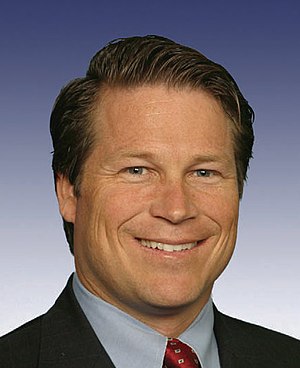
I entirely missed out on this exciting new development until I saw a news item from the Office of the Prime Minister of St.Kitts & Nevis which says that a key United States Congressional panel wants Washington to set up diplomatic missions in St. Kitts and Nevis and every Eastern Caribbean island-nation, instead of having everything done by the American Embassy in Barbados. The Prime Minister's news item notes that "Although the diplomatic outposts wouldn’t be full-fledged and fully staffed as in Bridgetown, the committee believes the presence of an American Foreign Service Officer and a permanent mission in Antigua and Barbuda, Dominica, St. Lucia, St. Kitts and Nevis and St. Vincent and the Grenadines would end the hardship imposed on American business executives and US citizens in those islands as well as those countries’ nationals now forced to travel to Barbados for visas and other services."
Well, if you put it that way. That's the Caribbean, baby - what's not to like? Would make a great CODEL destination, and only a short hop from Miami, and what more, the votes, baby, the votes. Whoever says bipartisanship is dead in Congress is dead wrong.
Representative Engel apparently also represents thousands of Caribbean immigrants including Kittitians and Nevisians who live in the Bronx and Westchester County.
Um... if you build them embassies, will they vote? Oopsie! Did I ask that out too loudly?
In any case -- on July 22, Representative Eliot L. Engel (D-NY-17) proudly announced the passage of an amendment pressing the State Department for more embassies in the Caribbean. Five more US embassies to be exact. You can read his full press statement below reprinted in full on why "We Need Embassies in Every Caribbean Country"
Washington, DC -- Yesterday, the House Foreign Affairs Committee passed an amendment authored by Rep. Eliot L. Engel (D-NY-17) pressing the State Department to open U.S. embassies in the five Caribbean countries which currently do not have one.Given that Washington is embroiled in deficit reduction and the no tax increase heehaw the last several months, you'd think that opening new embassies would be the last thing in any representative's mind. But no, the good representative from the Bronx, and others who voted for this amendment had it covered. Representative Engel in his statement:
"It's hard to imagine, but there are five countries in the Caribbean, only a few hundred miles from the United States, where we have no physical diplomatic presence. We need embassies in every Caribbean country, and I look forward to working with the State Department over the next few years to make this happen," said Rep. Engel, Ranking Member of the House Subcommittee on the Western Hemisphere.
The five countries where the United States has no embassies are Antigua and Barbuda, Dominica, St. Kitts and Nevis, St. Lucia, and St. Vincent and the Grenadines. The U.S. Embassy in Barbados covers the five countries. Meanwhile, Venezuela, Cuba, and Brazil all have embassies in the five island nations.
Rep. Engel's amendment, which he offered with Subcommittee Chairman Rep. Connie Mack (R-FL), called on the State Department to model new embassies on the U.S. embassy in Grenada, which is staffed by one foreign service officer. The amendment passed by a voice vote.
Rep. Engel's statement in the Committee on Foreign Affairs is reprinted below:
Madame Chair, I'd like to do a quick visualization. Imagine, if you will, countries:
Where tens of thousands of American citizens travel for pleasure or
business;
Where thousands of American citizens go to school;
Where Venezuela, Cuba, Brazil, and other countries have embassies;
Where there is a constant concern about drug trafficking to the
United States;
BUT, where the United States has no Embassies
I realize that's hard to imagine, but it's true.
There are five countries in the Caribbean, only a few hundred miles from the United States where we have no physical diplomatic presence.
Those countries are: Antigua and Barbuda, Dominica, St. Kitts and Nevis, St. Lucia, and St. Vincent and the Grenadines.
I realize these countries are small and certainly pose no strategic threats to our homeland.
But, at the same time, they are friendly, welcoming nations where Americans often go.
They have votes in the United Nations and other international organizations, and are of profound interest to the millions of our Caribbean-heritage citizens.
Even more, due to the lack of any US diplomatic presence in the five Caribbean countries:
- In order to meet with local officials, private business, or civil society, diplomats must fly in from Barbados (or Washington) on often expensive, infrequent flights, and stay overnight in often expensive island hotels;
- U.S. citizens living in these countries do not have fully-accredited consular staff to assist in the event of an emergency;
- Key events and meetings often pass with no American presence;
- Close working relationships with key leaders never develop because our diplomats are not there to establish them;
- Our diplomacy is limited to phones, emails, and faxes, when the best interaction is often carried out in person;
But there is a solution.
- AND, Venezuela and Cuba maintain embassies in all these countries, putting us "behind the diplomatic eight-ball" because we're simply not there.
The United States maintains an embassy in Grenada staffed by one Foreign Service Officer and a few locally hired personnel.
This embassy's operating costs are very low -- in the hundreds of thousands of dollars according to the Congressional Research Service.
Keeping costs down, our Grenada embassy is staffed by a "Principal Officer / Charge' d' Affairs," but not an Ambassador. The Ambassador remains in Barbados.
I know what you're thinking: (1) This amendment will establish new positions and be costly, and (2) We are short diplomats right now, and while this is a good idea, it's time has not yet come.
I'm pleased to say that the amendment addresses both of these concerns.
The Amendment specifically says only amounts available for setting up an embassies may be used for this purpose. No additional monies may be used, so there will be no net additional cost to the taxpayers. Further, it only reassigns current foreign service billets to this job, rather than creating a new position.
We have HUGE embassies in Iraq and Afghanistan with more than 500 foreign service officers in Afghanistan and more than 300 in Iraq. They will be there for years to come -- and rightfully so. My amendment does absolutely nothing to affect our requirements in Iraq and Afghanistan. BUT our huge diplomatic presence will not be there forever. The amendment says, when 20% of the diplomats in those countries come home, FIVE -- ONLY FIVE -- are to be reassigned to the Caribbean countries.
So, I urge the Committee to support this amendment and move ahead with setting up embassies in the Caribbean countries where we have none so that we can take care of our citizens' needs and the Chavezes of the world won't be the only ones present.
Tee-hee! You think these guys would make it as stand-up comedians in New York? Not only do they want five new embassies in the eastern Carribean, they also make no new monies available for standing up these five new embassies. How do they calculate that in their heads? Really, I'd like to know. Sigh.... No wonder we are in such deep shit.
I hope the State Department's OBO sends them a sketch of an embassy design for Antigua and Barbuda, Dominica, St. Lucia, St. Kitts and Nevis and St. Vincent and the Grenadines. From a scratch pad. A design on chalk on black board would do fine, too.
Let's take a look at these island countries where Congress wants to put up an embassy each:
Antigua and Barbuda, the "Land of 365 Beaches" has an estimated population of 86,754 and a GDP (PPP) of $1.425 billion (2010 estimate). An estimated 4,500 American citizens make their home in the island nation, making their numbers one of the largest American populations in the English-speaking Eastern Caribbean.
I should note that its GDP is about how much we are spending standing up the Afghanistan National Police.
Dominica, known as the "Nature Isle of the Caribbean" for its unspoiled natural beauty has a population of 72,660 and a GDP (PPP) of $758 million.
St. Lucia, visited by majority of tourists as part of a cruise has a population of some 173,765 and a GDP (PPP) totaling $1.746 billion.
The Federation of Saint Kitts and Nevis is the smallest sovereign state in the Americas, in both area and population; it has about 42,696 inhabitants in July 2000, and a GDP (PPP) of $726 million. Its residents immigrate overseas with the US and UK as primary and secondary destinations respectively.
Saint Vincent and the Grenadines, composed of partially submerged volcanic mountains has a population of some 104,574. Mainland St Vincent is reportedly one of the few places on Earth that can boast about having black-sand beaches and white-sand in the same country. Its GDP (PPP, 2009 est.): $1.55 billion.
Representative Engel was concerned that U.S. citizens living in these island countries do not have fully-accredited consular staff to assist in the event of an emergency.
I have a great response to that.
Indonesia. Not only does it have more islands than the Caribbean, emergencies in that country are not theoritical events.
Providing consular services in Indonesia is a challenge. Vast distances make providing services to American citizens difficult and time-consuming. Crisis management is more than a theoretical possibility. The mission has tackled natural disasters, such as volcanic eruptions and tsunamis, and terrorism.
Indonesia is comprised of 13,466 islands and thirty three provinces. With 240 million people, it is the world’s third largest democracy. About 15,000 Americans live in Indonesia, mostly in Jakarta on 3-4 year business assignments, but there are 1,000-2,000 Americans retired on Bali, either as permanent or part-time residents.
Its GDP in the last few years? (2009): $539 billion; (2010): $707 billion; (2011 est.): $823 billion. Its exports in 2010 was $158 billion with the U.S. as one of its six major trading partners.
And what's our diplomatic presence like in that country? We have an embassy in Jakarta, a Consulate General in Surabaya, a Consulate in Medan and a Consular Agency in Bali. So that's like 3300 islands for every diplomatic post in the country.
For good measure, let's take a look at another Asian country with about the same number of islands as the Caribbean.
The Philippines, an island country in the East Asian Pacific region with some 7,100 islands.
An estimated 600,000 Americans visit the Philippines each year, while an estimated 300,000 reside in-country. Providing government services to U.S. and other citizens, therefore, constitutes an important aspect of the bilateral relationship. The State Department's background note states that the United States competes closely as one of the Philippines’ top two trading partners. Two-way U.S. merchandise trade with the Philippines--which declined from $17 billion in 2008 to $12.6 billion in 2009 following declines in global trade flows--increased to $15.4 billion in 2010 (U.S. Department of Commerce data).
How many diplomatic posts do we have there? An embassy in Manila and a Virtual Presence Post (VPP) for Mindanao. That's it.
Congressman Engel's concern in the East Caribbean that "key events and meetings often pass with no American presence" and that "close working relationships with key leaders never develop because our diplomats are not there to establish them" are certainly true for both Indonesia and the Philippines. But I doubt if there is a substantial number of Filipino-Americans or Indonesian-Americans of voting age in the Bronx.
And when 20% of our diplomats return from Iraq and Afghanistan, "FIVE -- ONLY FIVE -- are to be reassigned to the Caribbean countries," according to Representative Engel's dim light idea. What's with the 20%?
Citing the US Embassy in Grenada (which does not even have its own website) apparently staffed by only one Foreign Service Officer and a few locally hired personnel, Congressman Engel says that "this embassy's operating costs are very low-- in the hundreds of thousands of dollars." He did not cite actual numbers, of course.
It's technically a sale, cheap but ... but ....
Must State invest what limited resources it has over there just because Venezuela and Cuba are there? At least he did not say, we must be there because Apple expanded its App Store in the Caribbean. Consular Officials based in Barbados routinely visit the six other island countries under its authority. When the embassy gets a political ambassador with a private plane, the visits are more often, of course; without that largesse, the visits are a bit more sparse.
If Congress wants more Amcit visits, perhaps it should give State more money? Or, here's an idea. It might convince DOD to hot ship transfer one of its ships to the State Department. We gave a ship to Pakistan for god-sakes, why not give one to the State Department to enable it to do its traveling business in the Eastern Caribbean. What a great adventure that would be! Hey! No office rental, but FSOs who bid on the job must know how to drive the ship or command somebody to drive/pilot it. No residential rental either; and yes, the FSO may bring his/her family and pets onboard.
What? Oh, sorry ... got carried away .... but a ship, a ship in the Caribbean ... it really is a great, GREAT idea. Congress can even use it for CODEL visits. I'm sure the FSO, family and pet would not mind sharing the ship for brief visits.
But seriously --
Even if -- for the sake of argument that the embassy's operation cost is say "low" (OBO and the Regional Security Office would presumably disagree), why would you send our FSOs to the Eastern Caribbean? Not saying its a bad destination; all those gorgeous beaches! But why would we not send them instead to the BRIC countries (Brazil, Russia, India, China) whose combined economies could eclipse the combined economies of the current richest countries of the world in 2050?
We currently have four diplomatic posts in Brazil (Brasilia, Rio de Janeiro, Recife; São Paulo) four in Russia (Moscow, St. Petersburg, Vladivostok, Yekaterinburg), five in India (New Delhi, Hyderabad, Kolkata, Chennai, Mumbai) and VPP Bangalore and six in China (Beijing, Chengdu, Guangzhou, Shanghai, Shenyang, Wuhan) and seven Virtual Presence Posts.
Think about these BRIC countries which, if combined, currently account for more than a quarter of the world's land area and more than 40% of the world's population. Then think about opening five embassies in the Eastern Caribbean.
You need some Dramamine?
Related articles
- St Kitts and Nevis tops two travel lists for 2011 | British Airways - Travel Industry News (travelnews.britishairways.com)
- Caribbean officials charged under Fifa bribery investigation (guardian.co.uk)
- Soccer body opens ethics probes into 16 officials (reuters.com)


