Showing posts with label Legacy. Show all posts

Friday, October 28, 2011

Paul Bremer Who? Writes About Libya, and What Success Looks Like .... As in Iraq

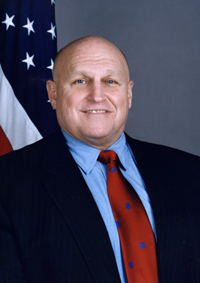
Bremer signs over limited sovereignty to Iraq'...Image via Wikipedia
L. Paul Bremer and members of the Iraqi Govern...Image via Wikipedia
Via WaPo:

The parallels are striking. For decades, both dictators had been labeled terrorists by U.S. administrations, Republican as well as Democratic. For decades, each man had brutally oppressed his own citizens, often using cynical methods to exacerbate tribal and sectarian divisions. Gaddafi was found in a sewer pipe; Hussein was captured in a spider hole. Sic semper tyrannis.

The capture or death of a dictator can help close a curtain on a long period of tyranny. But consolidating such a huge political change has not been easy in Iraq, and it won’t be easy in Libya, either. Iraq's experience suggests that success will hinge on addressing three urgent issues during this transition....
[...]
But the dictator’s capture did not solve Iraq’s security problems. The positive impact of his incarceration was soon canceled out by a large Sunni uprising in Anbar province and a simultaneous Shiite attack on three provincial capitals in southern Iraq. At the time, the United States lacked both the appropriate strategy and adequate forces to respond effectively to these challenges, a situation that was eventually corrected by President George W. Bush’s courageous troop surge in 2007.

But, but ... Iraq had an Army, right?  Nah! I think somebody dismantled that one. Except he said he did not, really.

Read in full here.  You have permission to excuse yourself if you need to use the vomitorium.

If you don't remember Paul Bremer, that makes two of us. Such a bummer when you suffer from a short memory fuse on our debacle in Iraq.  Anyway, I had to Google this one. It turns out that Paul Bremer in full is Ambassador L. Paul Bremer III. He was appointed by George W. Bush as presidential envoy to Iraq from May 2003 to June 2004 and is the author of some book about spending a hopey year in Iraq.  He was a career diplomat, one of ours .... sigh ....

Readers of WaPo who remember this guy just fine were understandably a tad confused.  One predicted what's up at WaPo -- "Coming next week, advice on living a dignified life from Charlie Sheen."  Another asked, "Paul Bremer? Really? He's like the George Costanza of policy advisors."

Oh, dear!


Thursday, October 27, 2011

Condi Congratulates Her Excellent Self in Her New Book, And Why Not?

Condoleezza Rice London, England March 1, 2005...                            Image via WikipediaVia WaPo - ‘No Higher Honor: A Memoir of My Years in Washington’ by Condoleezza Rice by Glenn Kessler:

"Rice is much more open detailing the administration’s struggle to deal with Iraq’s descent into violence during Bush’s second term. She congratulates herself on forcing more State Department officials into the field, but she might want to read “We Meant Well”— a hilarious and often depressing account by a foreign service officer of what really happened on the ground."

Read in full here.

Oh, she congratulates herself - now, that's a must read section.  Wonder if that infamous town hall made the cut in her book, complete with invited reporters at a ready to record those "whinny" diplomats who dared asked questions about what do you do after you get to Iraq.

Kessler writes that the former Secretary of State "congratulates" herself on "forcing more State Department officials into the field." Whiskey-Tango-Foxtrot! Why is she congratulating her own excellent self?  I bet she did not know that most Foreign Service folks were already serving in the field before she came to Foggy Bottom? Or that the civil servants were hired to man the fort on C. Street not the blackholes of  ....

Pardon me?  Oh, you mean, she "forced" them into the war zones in 2007? Must be it. Except wait a minute .... neither her then Director General of the Foreign Service or Deputy went over there to serve.  I heard they worked REALLY hard at HR to get people to go; remember the prime candidate exercise? So basically, some suckers went to the war zones and others got their ambassadorships to some pretty sweet island countries in the Pacific or elsewhere without ever having some Baghdad dust on their shoes. You say it's unfair?  But who says bureaucratic life should be fair?

I'll have to wait until my public library gets a copy of this book. Sorry, I can't, I just can't bear to part with my donated dollars for Dr. Ferragamo's legacy shoring book.


Tuesday, May 3, 2011

Condi vs. Rummy: Just be glad you don't have to spend Thanksgiving with these two

During the former SecDef's history setting lap dance (primed with the release of his memoir last February), Donald Rumsfeld gave an interview with verbal darts aimed at his fellow Bush administration officials, including former Secretary of State Condoleezza Rice.

In this piece, Rumsfeld was critical of Condoleezza Rice, for her lack of experience in government.

"She'd never served in a senior administration position," he said. "She'd been an academic. And, you know, a lot of academics like to have meetings. And they like to bridge differences and get people all to be happy."
Fast forward to April 26, in the Sunday Mag of NYT (h/t to Laura Rozen of The Envoy)
   
Rumsfeld also implied that you were unfit for office. He wrote that you had “modest experience in the federal government and management.”
First of all, I didn’t have modest experience in management. Managing Stanford University is not so easy. But I don’t know what Don was trying to say, and it really doesn’t matter. Don can be a grumpy guy. We all know that.

There are a lot of people with strongly negative opinions of George Bush. Have you ever tried to dissuade anybody from hating him?

Well, no. But I think people caricatured the president, and the only thing that I couldn’t understand is why this man with such a curious mind, who in briefings always asked the question you wish you thought of, why that quality didn’t come across. And I fully admit that it didn’t come across. I think part of it is he has such a self-deprecating way about him that people tend to underestimate him. But he read five books for every one I read. He read something like 12 biographies of Lincoln in office.

I’ve read that people consider you almost incapable of admitting a mistake. What do you consider to be the biggest of your career?
You know, I’ve done pretty well. I don’t spend a lot of time dwelling on the past that way.
In 2005 you went to see “Spamalot,” and the audience booed you. Does that happen a lot?
It happens on occasion and, you know what, I don’t care. I don’t care, because I did what I thought I could do in service of the country. I did some things well and some things not so well. The overwhelming majority of people come up to me and say, “Thank you for your service.” If you’re a public figure, there are always going to be a few people who don’t like what you did. I’m just really glad I don’t have to listen to them.

I read that interview and discovered the secret of a good life.  My first thought -- well, so that's how she sleeps well at night. No second guessing, and she does not have to listen to "them" or anyone she does not want to. Sweet. 

On second thought - thank god we're not related and I don't have to spend Thanksgiving with these two!


Thursday, October 21, 2010

George P. Schultz writes Ideas and Action: 10 Commandments of Negotiations

An armed forces full honor departure ceremony ...Image via Wikipedia
We missed that PBS controversy over the airing of the Turmoil and Triumph series based on George Schultz's 1993 book this past summer.  Michael Getler, the PBS ombudsman, wrote in a column on PBS.org that the series suffered from “at least the appearance of a conflict of interest” due to the financial contributions. From NYT Media Decoder:

"Even before the first installment of the series, “Turmoil and Triumph,” had its debut last Monday, it was knocked by television critics for being too long and for treating its subject with reverence. Mr. Getler said he thought the “deification of Shultz” was both unnecessary and distracting."
Check out the website of Turmoil and Triumph: the George Schultz Years here.

Now, George P. Shultz, the 60th U.S. Secretary of State who served from 1982 to 1989 ( 6 years & 188 days, the longest tenure since Dean Rusk in the 1960s) has written a new book Ideas and Action: Featuring the 10 Commandments of Negotiations.


We have not read the book but his publicist sent us the book announcement excerpted in part below:
IDEAS & ACTION, Featuring the 10 Commandments of Negotiations, a new book by former Secretary of State George P. Shultz published by Free to Choose Press, is a fascinating, first-person account of lessons learned by one of America's most unique and admired public servants.  In his long career in academia, business, and diplomacy, Shultz has spearheaded negotiations on labor disputes, arms control, and the release of political prisoners. Esteemed by Republicans and Democrats alike, Shultz served in the administrations of Presidents Eisenhower, Nixon, and Reagan.  He was a Marine in the South Pacific during World War II, earned a Ph.D. in industrial economics from MIT, and was Dean of the University of Chicago's Graduate School of Business.  As he says in the introduction to IDEAS & ACTION, "We have grown accustomed to drawing a bright divide between the world of ideas, a world dominated by ivory towers, and the world of action, a world dominated by oval offices, market floors, and fields of battle.  My life and career, however, have known no such bright dividing line."
Image from Amazon.com
The book includes sections on:
  • Keys to good management -- Shultz shares insights gleaned from his vast experience as a labor negotiator, university president, and business leader, including the importance of letting employees know that their opinions matter and giving them a stake in outcomes, taking responsibility for decisions, and having a long-term strategy.
  • Civil rights -- Shultz recalls his time as a labor negotiator in Texas in the early 1960s and as the chairman of a committee tasked by President Nixon with ending school segregation. 
  • Human rights -- Shultz recounts the delicate negotiations with Soviet leaders to obtain the release of dissident Soviet Jews, one of his proudest achievements as Secretary of State.
  • Success in Negotiations: Ten Commandments -- Shultz imparts wisdom that has practical applications for all readers as he outlines ten principles for negotiations in work, business, and diplomacy.  He illustrates each commandment with examples taken from his long career, from the Geneva and Reykjavik summits to the release of imprisoned American reporter Nicholas Daniloff, from the air-traffic controllers' walkout in 1981 to the war in Grenada, and more.
  • A World Free of Nuclear Weapons -- Shultz continues to be a leading figure on the international stage.  Along with Henry Kissinger, former senator Sam Nunn, and former Secretary of Defense William Perry, Shultz is a tireless advocate of nuclear disarmament.
Mr. Shultz's publications include Putting Our House in Order: A Citizen's Guide to Social Security and Health Care Reform, with John B. Shoven (2008), Turmoil and Triumph: My Years as Secretary of State (1993), Economic Policy Beyond the Headlines (1977), and many more.

The 3-hour DVD of T&T and the new book are available to purchase here.

Saturday, October 16, 2010

Video of the Week: Condi not going to chirp at the people inside

The former Secretary of State, Condi Rice is still doing the rounds plugging in her new family memoir and end up of all places -- with Jon Stewart in The Daily Show!   It's quite fun to watch... but of course, you'll have to wait for that other future book in this series that will "talk" about her other gigs as controversial national security adviser and later as USG's top diplomat. 

But -- you'll be pleased to know that she is not/not going to "chirp at the people inside." Watch:


The Daily Show With Jon StewartMon - Thurs 11p / 10c
Condoleezza Rice Pt. 2
www.thedailyshow.com
Daily Show Full EpisodesPolitical HumorRally to Restore Sanity


Sunday, August 29, 2010

Now they're telling us -- Bush's 'legacy of waste' in Iraq, the baghdafication of Kabul and lessons not learned from Iraq


Via the LA Times:

The $53-billion reconstruction effort is not without its successes. But poor planning, violence and a failure to consult Iraqis derailed many projects, which may offer lessons in Afghanistan.

The shell of a prison that will never be used rises from the desert on the edge of this dusty town north of Baghdad, a hulking monument to the wasted promise of America's massive, $53-billion reconstruction effort in Iraq. Construction began in May 2004 at a time when U.S. money was pouring into the country. It quickly ran into huge cost overruns. Violence erupted in the area, and a manager was shot dead in his office. The Iraqi government said it didn't want or need the prison. In 2007 the project was abandoned, but only after $40 million of U.S. taxpayer money had been spent.
[...]
A recent audit cites the example of an unfinished slaughterhouse in Basra — price tag $5.6 million — that was undertaken without securing a supply of water to wash away the blood.
[...]
The $32.5-million cost of a sewage treatment facility for the war-ravaged city of Fallouja, begun in 2005 by the U.S. military, has mushroomed to $104 million, and will now reach only 4,300 homes instead of the 24,500 originally envisioned, if it ever reaches any homes at all. Although the treatment plant is almost complete, the contract did not include a pipeline to connect the plant to the town.
[...]
The 94-bed Children's Hospital in Basra, launched with much fanfare by then-First Lady Laura Bush in 2004, was originally pegged for completion in 2005 at a cost of $37 million. It remains unfinished, and the cost has spiraled to $171 million, $110 million of which was provided by U.S. taxpayers.
Read more here:

I supposed that's what happen when you break something and is in a hurry to reconstruct what you broke -- you end up with what SIGIR says -- "cost-plus contracts, high contractor overhead expenses, excessive contractor award fees, and unacceptable program and project delays all contributed to a significant waste of taxpayers' dollars." 

SIGIR also says "This question underscores an overarching hard lesson from Iraq: Beware of pursuing
large-scale reconstruction programs while significant conflict continues."

Please repeat: "Beware of pursuing large-scale reconstruction programs while significant conflict continues."

'Xcuse me -- are we not doing exactly the same thing in Afghanistan -- the baghdafication of the US Embassy in Kabul, including surges in military, civilian, reconstruction projects and money poured down the drain like there's no limit to the taxpayer's credit card?

Waaa!
 

Monday, January 18, 2010

2010 MLK Day Technology Challenge


Reprinted in part from Serve.gov | We are calling on educators and web professionals to join our new effort – the 2010 MLK Day Technology Challenge. The purpose is simple: to connect schools and non-profits that have technology needs, including skills training and mentorship, with web professionals, developers, graphic designers and new media professionals who are willing to volunteer their skills for the common good.

Dr. Martin Luther King Jr. once said, "Life's most persistent and urgent question is: what are you doing for others?” We ask that you answer his call in 2010 by participating in the MLK Technology Challenge.


Typical projects include:
  • Refurbish computers for schools
  • Teach students how to use popular software or online services
  • Build a database for a nonprofit
  • Help out in your school’s computer lab
  • Become an online mentor for students across the country

Read more at Serve.gov, an online resource not only for finding volunteer opportunities in the community, but also creating your own.


Thursday, December 17, 2009

Prism: Richard Armitage Interview

Richard L. Armitage portrait from U.S.Image via Wikipedia

Richard L. Armitage was the U.S. Deputy Secretary of State from 2001 to 2005. He tendered his resignation on November 16, 2004, the day after Secretary Powell announced his resignation as Secretary of State. He left post on February 22, 2005.

In the first issue of Prism, published by the National Defense University Press for the Center for Complex Operations (COO), Mr. Armitage gave an interview on Iraq, the 3Ds, military and civilian cultures and a whole lot more. Some highlights from the interview:

“They were victims of their own prejudices…”

I was surprised initially with the speed at which we were going into Iraq, and I never understood it. I was not opposed to attacking Iraq—I was opposed to the timing. I just couldn’t see it. I was surprised at the low number of forces—which Secretary [Colin] Powell was able to get doubled—but still far too few. […] And we got rushed into this timing by the military, who kept talking about the heat—that if it got to April and May, it would get too hot and we couldn’t operate. And I remember thinking and arguing—and it wasn’t just me, but Marc Grossman and others— saying, “Wait a minute, we own the night. We don’t have to fight in the daytime. We’re all-seeing at night—let’s do it! Don’t let the heat be the thing that gets us into war!” So it wasn’t that we were marginalized. We were allowed our voice, but no one wanted to hear it. They were victims of their own prejudices and their own ideology.

“All government property in sight.”

The culture of the military is to make chicken salad out of chicken poop. The culture of the military is, “Yessir, three bags full sir. I’ll get it done.”The culture of the military is embraced as far as I’m concerned in the most positive way by the first general order of the U.S. Navy and Marine Corps (different from the Army), which cautions a sentry to take charge of all government property on this post, and that includes people. And that’s frankly how Powell and I viewed the State Department—all government property at post. So that’s their going-in position, whether they’re a private or a colonel. The going-in position for USAID, State, Commerce, or Energy is not to take charge of all government property in sight, but to take charge of “mine.” I like to say that this is my little cubicle and I keep it clean, and if there is a light next door that’s not there or not on, if you are in the military you are going to go fix it. At least you are supposed to. All government property in sight. You’re doing not just your cubicle, whereas the civilians will just take care of their cubicle or space. When I or Secretary Powell would ever swear in an ambassador, we would tell him he could not be totally responsible for the development of our relationship between the United States and country X. But he would be held 100 percent accountable for the development of all personnel under his command—as officers and as citizens and people. If they have personal problems, they’re his. If they have lapses in their behavior, it’s his problem. He doesn’t overlook it, he works with them, he cautions them, he counsels them, and he does whatever it takes. And this is more the culture of the military.

“They’re not armed”

[W]e were at the State Department—we weren’t seized with the mission; we don’t have enough folks. USAID [U.S. Agency for International Development] isn’t the USAID you joined because it has been whittled away so much. So we have to relearn the lessons. It was not in any way a lack of courage among the civilian agencies; in fact, when I give speeches, I’ll say that these fellows—men and women—are out in all these exotic-sounding places—they’re not in canapé lines in London and Paris; they’re in Mazur and Kandahar and other places right alongside the men and women in uniform. Not a bit of difference, except one: they’re not armed.

“The Dr. Rice years were terrible…”

Yes, it is. I’ve been very heartened the last 3 ½ years that I’ve been out here, the number of people—many of whom I don’t even know—that worked for Powell and me, and to be frank with you, what they’ve said is, “The Dr. Rice years were terrible. The Powell years were wonderful. But don’t worry. We’re remembering what you said about taking care of your people. We’re remembering what you said about leadership.” So that fills me with enthusiasm, and the answer to your question is yes, it can happen. But it has to be inculcated. Unfortunately, I don’t think Ms. Clinton is from that mindset. She’s very good as Secretary of State, she’ll study her brief, but this takes effort from the bottom up. One has to be inculcated with this.

Read the whole interview here.

About the journal: PRISM is a quarterly national security journal tailored to serve policy-makers, scholars and practitioners working to enhance U.S. Government competency in complex operations by exploring whole-of-community approaches among U.S. Government agencies, academic institutions, international governments and militaries, non-governmental organizations and other participants in the complex operations space.

The first issue also includes feature articles by Senator Richard G. Lugar (Stabilization and Reconstruction: A Long Beginning) and Ambassador John E. Herbst (Addressing the Problem of Failed States: A New Instrument). It also has a From the Field section where USAID Afghanistan Director William M. Frej and David Hatch write about A New Approach to the Delivery of U.S. Assistance to Afghanistan. Frankly, I had a hard time wading through this “new approach” after reading through the OIG reports on USAID programs in Afghanistan. But feel free to check it out.

The journal’s submission guidelines include this tip: “Answer the So what? question. Asking an individual to read 3,000 to 5,000 words is asking a lot. After that reader is finished, he must be edified by what he has read and prepared to operationalize it in some way.”

Related Item: Prism | Submission Guidelines | PDF

Friday, December 4, 2009

Coming Soon - Virtual Tour of Iraq National Museum

General Peter Pace, Chairman and CEO of Google Inc. Eric Schmidt; Managing Director of Trident Capital Don Dixon and U.S. Ambassador Christopher Hill tour the Assyrian Hall of the Iraq National Museum Photo from US Embassy Baghdad

The US Embassy in Baghdad late last month announced that the CEO and Chairman of Google Inc., Eric Schmidt, and members of the Iraq Technology Task Force visited Iraq and had a project to create a virtual tour of the Iraq National Museum using state of the art Google technology. Here is part of the press release: The project, the first of its kind at any museum, will digitize and electronically catalogue artifacts at the Iraq National Museum, allowing global access to the collection. It is part of an ongoing commitment by U.S. institutions to partner with Iraqis under the Strategic Framework Agreement to help support and showcase Iraq’s rich cultural heritage and history. Led by Jared Cohen of the Secretary of State’s Policy Planning Staff, Schmidt and a delegation of tech industry leaders including managing director of Trident Capital Don Dixon, General Peter Pace, and Sophie Schmidt of Google, capped off three days of meetings with senior Iraqi officials by announcing the project at the museum’s premises. U.S. Ambassador Christopher Hill, Deputy Minister of Culture Jaber al-Jabri and leaders from Iraq’s cultural heritage community were also in attendance. Read the whole press release: Google CEO and U.S. Tech Leaders Invest in Iraq’s Future (Nov. 25, 2009). Anything striking about this?

Monday, September 14, 2009

What the Soviets Overlooked in Afghanistan

Soviet Afghanistan FightersImage by elmada via Flickr

On May 10, 1988, the Central Committee of the Communist Party of the USSR issued a “closed” (internal use) letter to all Communist Party members of the Soviet Union on the issue of withdrawal of troops from Afghanistan. The letter presents the Central Committee analysis of events in Afghanistan and Soviet actions in that country, the problems and the difficulties the Soviet troops had to face in carrying out their mission. In particular, the letter stated that important historic and ethnic factors were overlooked when the decisions on Afghanistan were made in the Soviet Union. The letter analyzes Soviet interests in Afghanistan and the reasons for the withdrawal of troops.

The decision was made in the conditions when there was a lot of uncertainty in the balance of forces within the Afghan society. [Our] picture of the real social and economic situation in the country was also insufficiently clear. We do not want to say it, but we should: at that time, we did not even have a correct assessment of the unique geographical features of that hard-to-enter country. That found its reflection in the operations of our troops against small highly mobile units, where very little could be accomplished with the help of modern military technology.

In addition, [we] completely disregarded the most important national and historical factors, above all the fact that the appearance of armed foreigners in Afghanistan was always met with arms in the hands [of the population]. This is how it was in the past, and this is how it happened when our troops entered [Afghanistan], even though they came there with honest and noble goals.

Babrak Karmal became head of the Afghan government at the time. His first steps in that capacity gave grounds to hope that he would be able to solve the problems facing his country. However, nothing new had emerged in his policy, which could have changed the attitude of the significant portion of the Afghan population to the new regime to the better. Moreover, the intensity of the internal Afghan conflict continued to grow, and our military presence was associated with forceful imposition of customs alien to the national characteristics and feelings of the Afghan people, which did not take into account the multiple forms of economic life, and other characteristics, such tribal and religious ones.

One has to admit that essentially we put our bets on the military solution, on suppressing the counterrevolution with force. We did not even fully use the existing opportunities for neutralization of the hostile attitudes of the local population towards us. We have to assess critically some aspects of functioning of our adviser apparatus in Afghanistan as well. It did many things to provide assistance in strengthening the PDPA and the people’s regime. However, often our people, acting out of their best intentions, tried to transplant the approached we are accustomed to onto the Afghan soil, encouraged the Afghans to copy our ways. All this did not help our cause, it bred the feelings of dependency on the part of the Afghan leaders in regard to the Soviet Union both in the sphere of military operations and in the economic sphere.

Meanwhile the war in Afghanistan continued, and our troops were getting engaged in extensive combat actions. The situation developed, which made any way out more and more difficult as the time passed. Combat action is combat action. Our losses in dead and wounded—and the CC CPSU believes it has no right to hide this—were growing, and becoming more and more heavy. Altogether, by the beginning of May 1988, we lost 13,310 people [dead] in Afghanistan; 35,478 Soviet officers and soldiers were wounded, many of whom became disabled; 301 people are missing in action. There is a reason that people say that each person is a unique world, and when a person dies, that world disappears forever. The loss of every person is very hard and irreparable, it is hard and sacred if one died carrying out one’s duty.

The Afghan losses, naturally, were much heavier [than ours], including the losses among the civilian population.

One should not disregard the economic factor either. If the enemy in Afghanistan received weapons and ammunition for hundreds of millions and later even billions of dollars, the Soviet-Afghan side also had to shoulder adequate expenditures. The war in Afghanistan costs us 5 billion rubles a year.

Central Committee of the Communist Party of the Soviet Union. May 10, 1988

CC CPSU Letter on Afghanistan, May 10, 1988 PDF | From The National Security Archive [Source: Alexander Lyakhovsky, Tragedy and Valor of Afghan, Iskon, Moscow 1995, Appendix 8, Translated by Svetlana Savranskaya]

Sunday, July 19, 2009

State’s “T” Bureau: Where Restructuring Was “Easy” as Pie...

And Condi’s transformational diplomacy went kaplunk


Well, I guess the marching order was to “restructure” so they did. Nobody said it had to be coherent or needed an end state. “Just do it!” Like the ad campaign says. 400 employees were reportedly impacted – but heck -- you don’t have to agree with it, just move wherever they want you to move your desk, right? There were complaints that staff decisions were politically motivated – aw -- I mean, really!

Here
is the 2005 on-the-record briefing on the Reorganization of the Bureaus to Better Address the Threat From Weapons and Mass Destruction and to Promote Democracy: “It had to be done right because it is absolutely essential, as part of what the Secretary calls transformational diplomacy, that we readjust the structure of the State Department bureaus in order to be able to best contribute to the national security agenda that has been set by the President.”

Sigh ;> A funny thing happened on the inkway to the history books.  The GAO
just came out with  its assessment of the restructuring of the Nonproliferation,
Arms Control, and Verification and Compliance bureaus in 2005.  Below is a
summary of its finding:

State cannot demonstrate that the 2005-2006 restructuring of its Nonproliferation, Arms Control, and Verification and Compliance bureaus achieved all of its objectives because it did not clearly define the objectives and lacked metrics to assess them. State’s objectives were to enable it to better focus on post -September 11 challenges; reduce bureaucratic inefficiencies and top-heavy management; and eliminate overlap. State sought to achieve its first objective by creating new offices and roles to address terrorism and counterproliferation issues.
To meet its second objective, State merged three bureaus having 30 offices and functions into two bureaus having 26 offices and functions and freed up staff slots for these new roles, but problems with workload mismatches persisted after the reorganization as State employees noted it left some offices overworked and some offices underworked. State cannot demonstrate that it met its third objective, reducing top-heavy management, as its goals were undefined. Although it reduced the number of senior executives from 27 to 20 and reduced office directorships, the overall number of higher-ranking employees increased from 91 to 100 and executive office staff increased from 44 to 50.
Moreover, concerns about mission overlap persist, in part because bureau roles remain undefined in the FAM. State’s reorganization addressed few of the key practices for organizational mergers and transformations that GAO developed in 2002. These practices are found to be at the center of successful mergers and transformations. As illustrated below, State generally addressed one key practice, partially addressed two, and did not address the remaining five. For example, State did not address establishing coherent mission and strategic goals because it did not define an end state with measurable goals, nor did it devise a means to gauge progress toward such goals or assess the results of actions taken. As a result, State lacks reasonable assurance that the reorganization achieved its objectives or that it can identify any lessons learned.


The GAO’s damning assessment of the reorganization process includes the following on State’s unsystematic approach and its contribution to staff and employee group concerns:


Instead of using the above [GAO identified] practices to plan, implement, and assess the results of the restructuring, State reorganized the bureaus unsystematically, contributing to staff and employee group criticisms of the process and suspicions that some staff decisions had been politically motivated. State officials told us that they spent most of their time in the months before September 2005 developing the organizational structure for the new bureau and little time planning to implement the reorganization. In the wake of the reorganization, some ISN staff stated they perceived morale within their bureau to be lower. According to State data, attrition rates rose to levels higher than the average for State’s civil service as a whole.
To implement the reorganization, the T human resource office furnished an informal implementation guide to the SMP at the panel’s request. This paper envisioned a reorganization directed by the Bureau of Human Resources and the T bureaus’ human resource office, while the SMP would serve as an advisory body that would recommend specific actions, such as decisions on acting directors, staffing levels, and other details for the new ISN offices. Instead, according to a senior T official, the SMP made its own implementing decisions and reduced HR’s and the T bureaus’ human resource office’s roles to ensuring that State followed all applicable legal and regulatory requirements.
State officials and employees expressed concerns about the SMP’s direction and conduct of the reorganization even before the panel made its first public announcement about the reorganization on September 28, 2005. While the Office of the Legal Advisor and HR stated that the SMP could direct the reorganization, some officials in HR and the T bureaus’ human resource office disagreed with this decision.38 According to T bureau officials, they were concerned that the panel’s members were not sufficiently knowledgeable about change and personnel management principles. On September 29, 2005—the day after the SMP sent out its summary of the reorganization procedures—a senior T bureaus’ official with human resource responsibilities sent an e-mail to the SMP stating that it was not following sound personnel management principles.39 The email also stated that the SMP had ignored or misinterpreted her office’s recommendations, advice, and suggestions to the extent that the office had been unable to contribute meaningfully to the reorganization process.
Some ISN employees and AFSA officials also criticized the SMP’s decisions after it publicly announced its reorganization procedures and named acting office directors in September 2005. Eleven ISN employees wrote a memorandum to the Undersecretary for Management and the Director General of the Foreign Service in October 2005, stating that morale was poor within the new ISN bureau. 40 Moreover, these employees stated that the SMP’s selections for acting office directors (which resulted in passing over several experienced officials for these positions) reinforced their doubts about the impartiality of the process, as did the lack of career officials or representatives from the T bureaus’ human resource office, HR, and the Office of the Legal Advisor. They also expressed concern about other aspects of the process, such as the requirement to express workforce preferences without first having concrete position and office mission descriptions, position grades, or the names of permanent office directors or deputies. The employees asked the Undersecretary for Management and the Director General of the Foreign Service to suspend the reorganization until a comprehensive staffing plan had been developed and add career civil service or FSOs and HR staff to the SMP, among other actions. AFSA expressed similar concerns in a November 2005 letter to the Secretary of State and noted that the reorganization could result in the potential downgrade or elimination of Foreign Service-designated positions. It also requested, among other things, that State form an independent panel to review all proposed reorganization decisions related to Equal Employment Opportunity concerns and allegations of prohibited personnel practices. In response to these concerns, State named a career official to the SMP, and included representatives of the HR bureau and the Office of the Legal Advisor in the SMP’s discussions, and agreed to have HR review the position descriptions of the acting office directors and prepare new position descriptions where necessary.
The lack of confidence in the reorganization may have adversely affected staff morale and may have contributed to increased ISN civil service attrition rates that immediately followed the reorganization, according to current and former State officials and documents. Twelve percent of ISN’s full-time civil service employees retired or otherwise left the bureau in fiscal 2006, the highest level for the bureau and its predecessors from fiscal year 2004 to fiscal year 2008. In contrast, State’s overall civil service attrition rate during the same period averaged about 8 percent.


Wouldn’t you want to know who former Secretary of State Rice appointed to that Senior Management Panel (SMP) tasked with restructuring these bureaus? I think the GAO should start naming names; it is, after all, an agency tasked with providing accountability reports.

Back in 2006, Dean Rust, a 35-year veteran of
Arms Control and Disarmament Agency and State (who was acting deputy director of the office that dealt with nuclear Nonproliferation Treaty and International Atomic Energy Agency matters) did write about this one in Reorganization Run Amok, a must read if you want an excellent background on this restructuring effort.

My jaded brain assumes that exceptionally talented individuals must now be sharing their restructuring and reorganization talents from some corner offices earning VPs or directorship salaries. Fabulous, really! And no consequences for the mess left behind.

Still, considering that Gonzo did manage to find a job after leaving a higgledy-piggledy DOJ, I am convinced now more than ever that if there is ever a place where second chances can be a lucrative gig (and it might as well be in the bill of rights) -- that is the United States of America. [According to Texas Tech Provost Bob Smith, Gonzales' $100,000 paycheck is on-par with the amount paid to other university employees who are high performers with significant experience or expertise. Someone with a national presence and a long list of accomplishments would be hired at the full professor level," Smith said.]

This is when I get fire ants in my pants -- because really -- where else but in the USA can radioactive blokes “re-invent” themselves time after time, counting on the public’s short memory and apathy, and rise again to wreck havoc once every few years -- all in the name of serving the public like you and me? PS: No offense to the real public servants who gets restructured and realigned and reinvented and rightsized under whatever ice cream flavor is hot.


Related Items:


  • GAO-09-738: STATE DEPARTMENT Key Transformation Practices Could Have Helped in Restructuring Arms Control and Nonproliferation Bureaus | July 2009 | PDF

  • On-the-Record Briefing: Reorganization of the Bureaus to Better Address the Threat from Weapons and Mass Destruction and to Promote Democracy | 2005 | PDF


Tuesday, July 7, 2009

Quickie: The Leadership & Management Legacy

The most significant training innovation during the Powell era was the establishment of mandatory leadership and management training. To remedy what Secretary Powell considered to be a serious deficiency, he established a policy, still in place, that required leadership and management training as a prerequisite for all promotions after 2006. This was a monumental step for the Department. As Dawn Frick, the management coordinator at NFATC, observed, “we’re involved in a culture change – from a culture that didn’t support leadership training and development to one that values, enforces and practices sound leadership up and down through the chain.”

At that time, Ambassador Prudence Bushnell, dean of the Leadership and Management School at NFATC warned that introducing training and leadership into the Department’s culture would not inculcate without the support of employees at all levels. Apparently her insight proved correct, since in June 2008 AFSA President John Naland suggested that the next re-engineering of the personnel system should import the military’s enormously successful commitment to training and professional education.

Michelle Stefanick Powell’s Leadership Principles- Time for State Department to Revisit U.S. Army War College (March 30, 2009│Strategy Research Project; PDF)

Friday, May 15, 2009

Grading Condi: Is this a C+ or a D ?

The Foreign Affairs Council (FAC) is a nonpartisan umbrella group of 11 organizations concerned about U.S. diplomatic readiness (www.facouncil.org). It has just released its Task Force Report “Managing Secretary Rice’s State Department: An Independent Assessment, May 2009.” Only the FAC analyses Secretaries as institutional managers. Its report says that their objective is to focus Secretaries of State on resource and management issues by analyzing achievements as well as problems in this dimension of their responsibilities.

Some excerpts below from the report. Read the whole thing here.

As this report documents, Secretary Rice’s performance was central to the failure in achieving adequate resources. On the other hand, she played a key role in successful efforts to better coordinate economic development and start to build a reconstruction and stabilization surge capacity. […] [D]espite dramatic increases in staffing needs worldwide during her tenure in office, Secretary Rice managed to secure only eight new positions for the Foreign Service in her first three annual budget requests (excluding positions funded from special sources for consular and security personnel). During these three years Secretary Rice did not commit her personal efforts in the struggles with OMB and Congress. Instead, as noted above, it was only in the Bush Administration's final budget request that she sought a significant number of new positions.

Secretary Rice does not, of course, bear full responsibility for the current personnel gaps. Secretary James Baker decided that embassies in the 13 new states emerging from the collapse of the Soviet Union would be staffed within existing resources. During Secretary Warren Christopher’s tenure the intake of junior officers was all but suspended for several years. Secretary Albright did little to increase resources when Yugoslavia disintegrated into seven new countries and public diplomacy and USAID lost significant human and financial resources as the “peace dividend” was cashed. Only Secretary Colin Powell fought the good fight with OMB and the Congress and gained about 1,200 new positions in his “Diplomatic Readiness Initiative.” Unfortunately, these new positions were quickly absorbed by the civilian surges in Iraq, Afghanistan, and elsewhere. […] In summary, Secretary Rice’s initial three years of virtual inaction on the staffing front left our foreign affairs agencies hobbled by a human capital crisis. Despite her clear responsibility to lead and manage the foreign affairs agencies under the 150 account of the national budget, Secretary Rice fell short when it came to properly maintaining the platform upon which diplomacy and development assistance are conducted.

Wednesday, May 6, 2009

Condi Rice: In Her Own Words

“No dear, you’re wrong … we did not torture anyone”

Did she really? Did the former National Security Adviser and the 66th Secretary of State really said all those things that are ricochetting around the blogosphere? Let’s see …

Um …that did not go down outstandingly well, did it? It spawned sparks around the net, here, here , here and here. Even former Nixon White House counsel John Dean waded in.

On Sunday, May 3rd at the Sixth and I Historic Synagogue, Dr. Rice was back on the public sphere, at the podium this time for the Yitzhak Rabin Memorial Lecture (h/t to CQ for the transcript, read it here).

In the Q&A after the lecture, she talked a bit about her professorial skills on that video taken by Stanford student, Reyna Garcia:

Dr. Rice:

“This is really hard, right? This is a very hard issue. And I think the debate about it is appropriate and I don’t have any problem debating it. I was asked this by a Stanford student, famously now, on YouTube. And I thought two things: I thought you know, good, we should be talking about this. I also thought I need to work on my professorial skills a little bit – I think I’ve been in Washington a little too long in the way that I talked to the student.”

Yes, she did say, “We were as deaf and dumb and blind on September 10th as you could possibly be.”

Dr. Rice:

“But I do think that it is important to do this in a context of remembering the times and in giving people the benefit of the doubt that these were people of good will – and I mean everybody who was doing this – who had the hardest possible dilemmas and choices before them. There were second-wave attacks planned. We knew virtually nothing about how al Qaeda operated. We were as deaf and dumb and blind on September 10th as you could possibly be.

Now, the president in that context – in that circumstance – said what more can we do to protect the country? But he was very clear every time I talked to him – every time he talked to any of us – but it has to be within our legal obligations – both our international obligations and our domestic obligations. That is why we saw an opinion from the Justice Department and ultimately, from the attorney general himself, about what our obligations were and what the agency was proposing and how – whether or not this was legal.”

And what she said earlier, this was what she meant, “This was not a Nixon/Frost moment.”

Dr. Rice:

“Now, there’s been another confusing statement – I said at one point that it was, therefore, a given that the president – if the president authorized it, it was legal. This was not a Nixon/Frost moment. What I intended to say or what I meant to say about this is, the president said I won’t authorize anything that is illegal. It’s not that because he authorized it, it was legal. No, that’s a tautology. It was that he said, I won’t authorize anything that’s illegal.

Dong ma? There’s really not much to add except to say … ya know … the Chinese has a popular saying that goes like this, "More talk more mistakes, less talk less mistakes, no talk no mistake."

Um … read the whole thing here (pdf), then sit back and wait for the next installment in this series. I’ll go watch Josh Whedon’s Dollhouse.

Monday, February 16, 2009

US Embassy Baghdad: Super Embassaurus

Inside Iraq's 'Fortress America' Feb. 11: The U.S embassy compound in Iraq is the biggest, most expensive U.S. embassy ever built. NBC's Richard Engel takes us on a tour.

Click here for the longer segment in The Rachel Maddow Show (7:35) with NBC News Chief Foreign Correspondent Richard Engel about the latest violence in Iraq and his recent tour of the U.S. Embassy in Baghdad.

Tuesday, February 10, 2009

Our Inheritance: Bush’s True Legacy

Video above is a 30:38 chat between David Sanger and Charlie Rose. Part 2 of David Sanger with Charlie Rose is here.

In his new book, The Inheritance: The World Obama Confronts and the Challenges to American Power, David Sanger, chief Washington correspondent for NYT, “takes readers to Afghanistan, where Bush never delivered on his promises for a Marshall Plan to rebuild the country, paving the way for the Taliban’s return. It examines the chilling calculus of North Korea’s Kim Jong-Il, who built actual weapons of mass destruction in the same months that the Bush administration pursued phantoms in Iraq, then sold his nuclear technology in the Middle East in an operation the American intelligence apparatus missed. And it explores how China became one of the real winners of the Iraq war, using the past eight years to expand its influence in Asia, and lock up oil supplies in Africa while Washington was bogged down in the Middle East.”

Sanger says that The Inheritance is not a book about Iraq. And that is true. You don’t see Iraq in any of its chapters. And yet Iraq is a dark cloud that hovers in all 498 pages of this book.

Sanger writes that “In early 2003, the North [Korea] threw out international inspectors, in full view of .U.S. satellites, took the last steps needed to convert spent reactor fuel into material for six to eight bombs (p281-282). And that “On Bush’s watch, the North Koreans had built up and impressive arsenal. They had gone from an unconfirmed one or two weapons to eight or twelve; no one knew for sure” (p.280). Sanger concludes that Bush legacy is that he took a messy, dangerous problem and made it worse.

At around that same time in 2003, the Bush White House was consumed with Saddam Hussein’s WMD and in selling the reason why it must be confronted immediately. In 2008, when Sanger asked a key member of Bush national security team about these two events playing out at the same time, the Bush official replied, “Had a few other things on our mind…. We missed a couple of thing.”

The real consequences of missing a couple things – North Korea became the nuclear rogue state that got away. North Korea helped Syria build a covert nuclear reactor and the intelligence community “never put it together.” So if it was able to do that right under watchful eyes, how hard is it for the North Koreans to sell their wares to “non-state”actors with money to spare? That should make us sleep soundly at night, huh?

Sanger writes: “Like North Korea, Iran quickly recognizes that time was on its side. In the months and years after the start of the Iraq War, the “Dear Leader” in North Korea built his nuclear arsenal; the Supreme Leader in Iran put together a nuclear “capability” that would be difficult if not impossible to persuade the country to dismantle[… ]. The Iranians were just smarter about it than the North Koreans. […] Ambiguity is their friend. In the Second Nuclear Age, countries don’t need to compile huge stockpiles of the sort that the Americans and Soviets amassed during the Cold War. All they need is a “virtual bomb,” a credible capacity to build one in a few months and a credible willingness to do so […] the smartest path to becoming a nuclear weapons state (p85).

Nick Burns is in Part I (Iran: The Mullahs’ Manhattan Project). Christopher Hill makes an appearance in Part IV (North Korean: The Nuclear Renegade That Got Away). In fact, Ambassador Hill kind of owns Chapter 11 where “Everything is Appomattox” or how to learn to negotiate even with your own side (starts on page 315):

“These assholes don’t know how to negotiate,” Hill told a small group of friends and colleagues in 2007. “Everything is Appomattox. ‘It’s just 'come out with your hands up.’ It’s not even really Appomattox because at the end of Appomattox they let the Confederates keep their horses.”

The book is divided into six main sections for Iran, Afghanistan, Pakistan, North Korea and China. The last section is focused on three vulnerabilities with realistic scenarios (televised chaos, pneumonic plague as invisible attack, dark angel starts with a simple blackout).

The book jacket says that the book is “at once a secret history of our foreign policy misadventures and a lucid explanation of the opportunities they create...”

Foreign policy misadventures, indeed…there’s no nicer words for it.

I bet David Sanger won’t be invited anytime soon to guest blog at the Bush’s legacy project over at www.43alumni.com. Nor will his book be recommended reading under “Bush Record” or “Setting the Record Straight.” Neither will the Sanger news clips be included in the The Bush Record: Praise Continues For President’s Accomplishments (now has Parts 1-3 posted online).

But the book is available here and deserves a good reading. Read a Q&A with author David Sanger on the challenges that President Obama will confront in the next four years [PDF].